


Get A Quote

Content
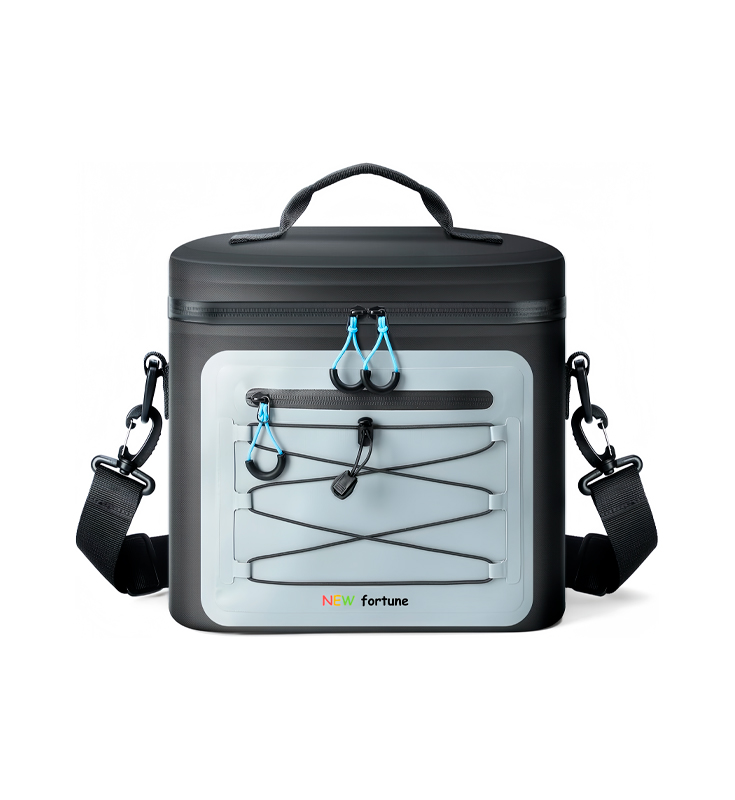
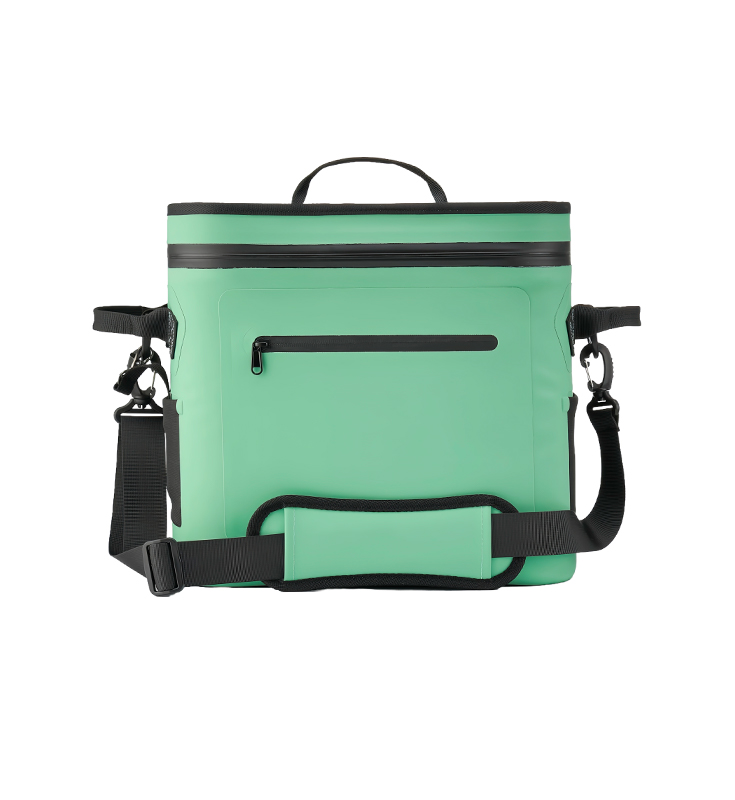
A 20-liter soft travel cooler that passes as a carry-on item removes the biggest luggage compromise of a flight or a road trip: packing a rigid cooler that eats half the trunk. The catch is that soft coolers are not all equal. The difference between a leaky weekend bag and a welded TPU cooler that holds ice for two full days comes down to a short list of specifications that you can verify before you buy.
The seven specifications that determine whether a soft travel cooler works on a specific trip are capacity, internal dimensions, ice retention, shell material, foam thickness, closure type, and finished weight. Each one changes the answer for a different travel scenario.
| Specification | Why It Matters | Travel Checkpoint |
| Capacity | Volume of food and drink that fits | 20-30 L for one person on a two-day trip |
| Internal dimensions | Whether the bag fits an airline sizer | Compare with 56 x 36 x 23 cm |
| Ice retention | How long food stays under 4 C | 24-48 h for welded TPU models |
| Shell material | Weight, abrasion, and cold cracking | TPU is the strongest balance |
| Foam thickness | Insulation and condensation | 15-25 mm closed-cell |
| Closure type | Leak and heat loss | Welded waterproof zipper |
| Finished weight | Mobility in transit | 1.5-3 kg for 20-30 L |
The carry-on sizer used by most major airlines is 56 x 36 x 23 cm. A 20-30 L soft cooler with those dimensions is the safe ceiling. A 40 L model will not fit into the sizer, but it works perfectly for a car trip where trunk volume is the only constraint.
An empty TPU cooler weighs between 1.5 and 3 kg, depending on the foam density and the hardware used. A lighter bag is easier to lift over a shoulder through an airport, but it may use thinner foam. Three kilograms for a 30 L model is still a good trade when the foam is 25 mm.
TPU is the strongest shell material for a soft travel cooler because it resists puncture, stays flexible at cold temperatures, and welds into a fully sealed membrane. PVC is a cheaper substitute, but it is heavier and stiffens in cold weather.
| Material | Abrasion resistance | Cold flexibility | Weight | Environmental profile |
| TPU | High | High, no cracking at -20 C | Moderate | Recyclable grades available |
| PVC | Moderate | Lower, can stiffen in cold | Heavier | PVC raises disposal concern |
| Oxford cloth | Low-moderate | High | Lightest | Needs coating to be waterproof |
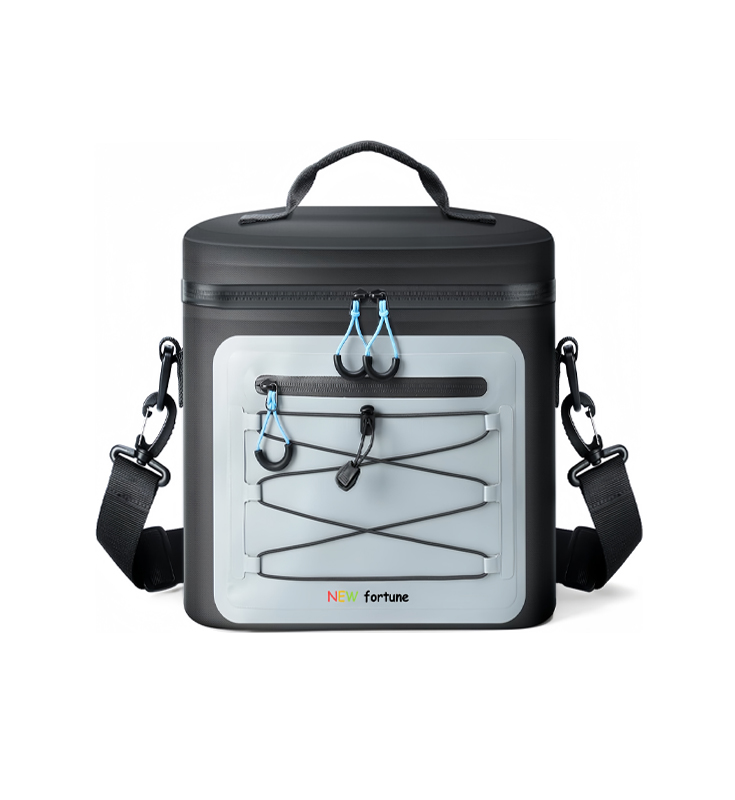 Waterproof TPU Soft Cooler Bag for Hiking and BoatingThis lightweight cooler holds 18 or 24 cans and features a TPU shell with airtight zippers, making it a reliable choice for outdoor trips where puncture resistance and waterproof performance are essential.View Product →
A soft travel cooler is allowed as a carry-on only when it fits an airline sizer and the contents pass security checks for solids versus liquids. The bag itself is never the problem; the contents are.
 Gray Waterproof Backpack Soft-Sided Cooler for Outdoor HikingDesigned as a backpack, this cooler combines TPU-coated fabric with NBR insulation and a leak-proof liner, offering hands-free transport and thermal efficiency for day hikes or commutes.View Product →
The zipper is the single biggest failure point on a soft travel cooler, so a welded waterproof zipper with a closed-cell gasket is non-negotiable for leakproof travel.
Condensation causes hundreds of water droplets on the outer shell. If the zipper is not welded, those droplets travel through the needle holes and reach the insulation. Over time, damp foam loses its thermal performance and the bag starts to smell. A welded zipper keeps the foam dry.
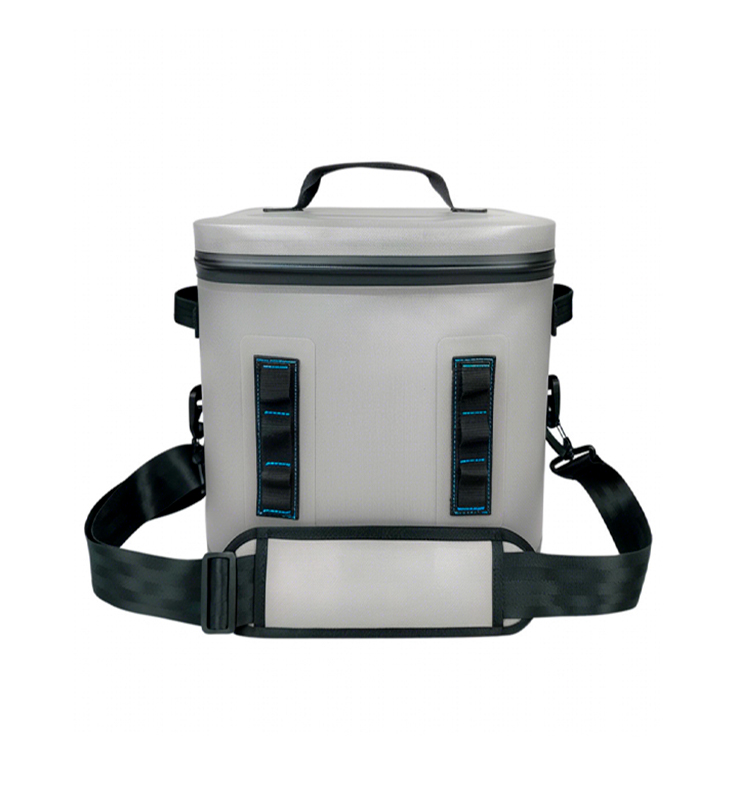
 Leak-proof TPU Soft Cooler with Waterproof Zipper for CampingAvailable in two sizes holding 18 or 24 cans, this lightweight cooler uses TPU and a welded waterproof zipper to prevent moisture ingress, ensuring reliable cooling during camping trips.View Product →
Ice retention in a soft travel cooler is heavily influenced by ambient air temperature and foam thickness, so a 48-hour rating at 30 C is the only figure worth benchmarking.
TPU soft coolers deliver roughly 40% of the ice retention of a rotomolded hard cooler while taking up far less space when empty and weighing about half as much. For overnight and 48-hour travel needs, that ratio is the right trade.
The test protocol also matters. A cooler tested with pre-chilled items, no air gaps, and a closed lid will always beat a real-world bag that is opened several times. To get an honest comparison, look for a test that states the ambient temperature and the time until the interior reaches 4 C.
Read a soft cooler spec sheet for foam thickness, ambient temperature, and closure type first. Ignore any rating that does not state its test conditions.
Yes, if the bag fits the airline sizer, usually near 56 x 36 x 23 cm, and you pack no liquids above 100 ml. Keep solid food in the main compartment and make sure any ice pack is fully frozen at the checkpoint.
A TPU soft travel cooler with a 25 mm foam core keeps ice for 36-48 hours at 30 C when unopened. PVC models with thinner foam drop to 24-30 hours.
Use a model with a welded waterproof zipper, avoid over-packing, and inspect the zipper for ice chips that can damage the seal. Keep the cooler upright when it is not being carried.
A 20-30 L TPU soft travel cooler weighs 1.5-3 kg empty. Pick the lighter end for carry-on trips and the heavier end for car camping, where durability matters more than weight.
Your email address will not be published. Required fields are marked *
* Your email is safe with us, we don't spam.

Professional R & D and manufacturing of outdoor sports, cycling, fishing, business, travelling sewing, high-frequency stamping series of luggage enterprises
E-mail: christine@fudabags.com
Phone: +86-13819351116
Add: No.2288 Xinggong Road, Pinghu City, Jiaxing City, Zhejiang Province, China
Copyright © 2025 by New Fuda Luggages & Bags Co., Ltd. Rights Reserved. Privacy Custom Durable Outdoor Travel Bag Manufacturers


 English
 Français
 Español