


Get A Quote

Content
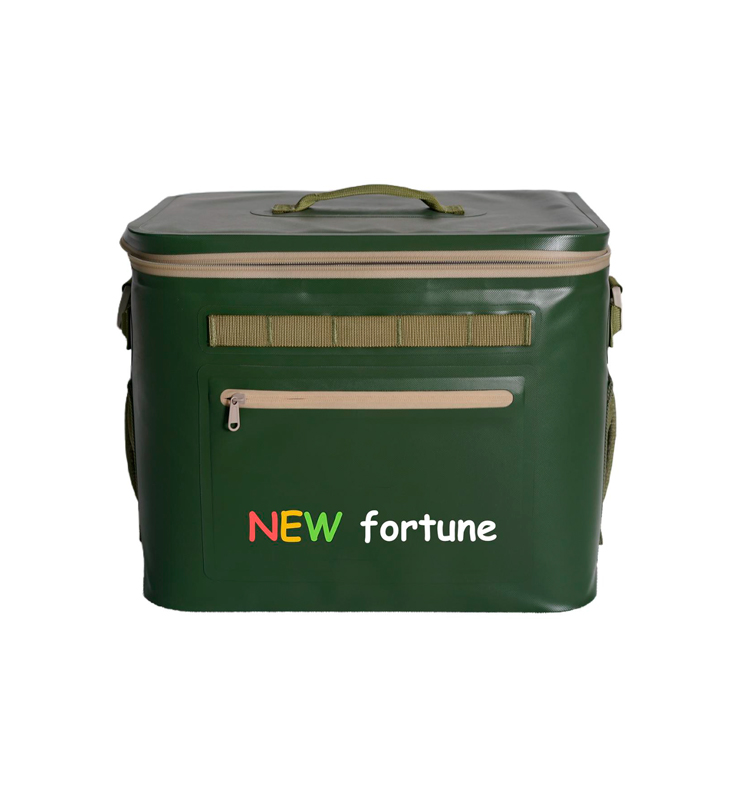
A soft pack cooler is a flexible, fabric-based insulated bag engineered to maintain cold temperatures for extended periods — without the bulk and weight of traditional rigid coolers. Whether you are heading to a beach, a trailhead, or a tailgate, understanding what separates a high-performance soft cooler from a basic insulated bag is the difference between cold drinks at mile 10 and warm ones at mile 3.
Soft pack cooler insulation performance depends on three variables: liner material, foam thickness, and zipper seal quality. Most entry-level coolers use a thin PEVA liner, which degrades quickly under UV exposure and offers minimal thermal resistance. Premium coolers, by contrast, use thermoplastic polyurethane (TPU) liners — a material originally developed for industrial waterproofing — combined with closed-cell EVA foam insulation rated at 0.5 to 1 inch of thickness.
Closed-cell foam is critical. Unlike open-cell foam, it does not absorb moisture, which means it maintains its insulating R-value even after dozens of wet packing cycles. Independent tests by outdoor gear reviewers show that TPU-lined coolers with 1-inch closed-cell foam retain ice up to 36 hours in 90°F ambient conditions — nearly three times longer than PEVA alternatives at the same size.
"Soft pack cooler insulation performance is primarily a materials science question: the liner determines leak resistance, the foam determines thermal resistance, and the zipper determines how long both stay relevant."
The zipper is frequently the weakest insulation point. Coil zippers allow cold air to escape through micro-gaps. High-performance models use waterproof molded-tooth zippers — the same standard used in drysacks and dive equipment — to create a near-airtight closure that actively traps cold air inside the cavity.
Soft pack cooler leak resistance is a function of the liner seam construction and material impermeability. A welded TPU liner — where seams are heat-bonded rather than stitched — eliminates the needle holes that make sewn seams a chronic leak point. This matters the moment ice begins to melt: the cooler transitions from a dry cargo environment to a standing water environment, and any seam weakness becomes immediately apparent.
For activities involving water — kayaking, beach days, wet market runs — a welded TPU liner is non-negotiable. For casual day-use, a quality PEVA liner may suffice, but its shorter lifespan makes it a lower-value long-term purchase.
Soft pack cooler portability is the category's defining advantage over hard-sided alternatives. A comparable 30-quart hard cooler weighs 14–18 lbs empty. A 30-quart soft cooler in the same insulation class weighs 3–5 lbs — a difference that becomes acutely relevant at the end of a 6-mile trail with 20 lbs of food and ice inside.
Beyond raw weight, soft coolers collapse flat when empty, making storage a non-issue in vehicles, closets, and under-seat compartments. Backpack-style models distribute load across both shoulders, and dual-carry designs switch between shoulder strap and top handle depending on terrain and fatigue.
Choose a 10–15L backpack cooler with padded shoulder straps and an external pocket for dry gear.
A 30L soft cooler with a shoulder strap handles group meals and drinks for a 2-day trip comfortably.
Opt for a waterproof-exterior model with welded seams — it doubles as a dry bag if submerged.
Soft pack cooler durability is determined by the exterior shell fabric, zipper quality, and attachment hardware. The industry benchmark for shell fabric is 840D nylon — the same weight used in ballistic-rated luggage. 600D polyester is acceptable for occasional use. Anything lighter risks abrasion failure on rocky terrain within one season of regular use.
Zipper pulls, D-rings, and buckles should be reinforced at their attachment points. Failure almost always occurs at the junction between hardware and fabric, not within the hardware itself. Double-stitched bartack reinforcement at all stress points extends the usable life of a soft cooler by years.
UV resistance is an underrated durability factor. Coolers left in truck beds or on docks are exposed to sustained direct sunlight. Fabrics treated with UV inhibitors retain their color and tensile strength significantly longer than untreated alternatives — a relevant consideration for anyone buying a cooler intended to last more than two summers.
The soft pack cooler vs hard cooler decision comes down to how you prioritize ice retention, packability, and price. Hard coolers win on maximum ice retention — rotomolded designs can hold ice for 7–10 days in controlled conditions. But they lose on every other dimension relevant to active outdoor use.
| Feature | Soft Pack Cooler | Hard Cooler |
| Weight (30qt empty) | 3–5 lbs | 14–18 lbs |
| Ice Retention | 24–36 hours (premium) | 5–10 days (rotomolded) |
| Packability | Collapses flat | Fixed rigid volume |
| Carry Options | Backpack, shoulder, tote | Handle or wheels only |
| Price Range | $40–$200 | $80–$500+ |
| Best Use Case | Hiking, travel, daily use | Base camp, road trips |
For most outdoor enthusiasts who are not running a 7-day backcountry expedition, a premium soft pack cooler delivers the right balance of performance, packability, and price. The 36-hour ice retention window covers the overwhelming majority of single-day to weekend outdoor activities without requiring the size, cost, or carry effort of a hard-sided alternative.
Matching a soft pack cooler for outdoor activities to your specific use case avoids overspending on capacity you will not use or underspending on insulation that fails when conditions get warm.
Insulation class, liner material, and shell durability should scale with the intensity and frequency of use. A casual picnic cooler does not need a welded TPU liner. A cooler you plan to take on 40 weekends a year absolutely does.
Your email address will not be published. Required fields are marked *
* Your email is safe with us, we don't spam.

Professional R & D and manufacturing of outdoor sports, cycling, fishing, business, travelling sewing, high-frequency stamping series of luggage enterprises
E-mail: christine@fudabags.com
Phone: +86-13819351116
Add: No.2288 Xinggong Road, Pinghu City, Jiaxing City, Zhejiang Province, China
Copyright © 2025 by New Fuda Luggages & Bags Co., Ltd. Rights Reserved. Privacy Custom Durable Outdoor Travel Bag Manufacturers


 English
 Français
 Español