


Get A Quote

Content
A procurement manager sourcing 3,000 custom TPU soft coolers for a fishing brand is asked to confirm nine parameters before production: material denier, coating weight, foam density, zipper grade, weld width, seam treatment, load capacity, food-grade compliance, and ice retention target. Any one of these can shift unit cost by 10 to 40 percent. Pinghu New Fuda Luggages & Bags Co., Ltd., an R&D and manufacturing supplier founded in 2006 and serving outdoor brands in Europe, America, and Japan, treats these specifications as the backbone of every custom soft cooler order.
A custom soft cooler is a flexible insulated container manufactured to a buyer's specification for material, insulation, size, hardware, and branding, rather than purchased from a standard catalog. In OEM manufacturing, the specification sheet is the contract. It controls not only visual appearance but also how the cooler handles heat, abrasion, water exposure, and prolonged use.
The two most common manufacturing backbones are sewing for soft-sided bags and high-frequency welding for TPU containers. High-frequency welding fuses thermoplastic layers into a sealed body, which is why it dominates the custom TPU soft cooler category. The weld zone must be measured, not guessed. A properly specified product ensures that the cooler holds ice, survives drops, and keeps food-contact surfaces safe.
TPU, thermoplastic polyurethane, is the default outer fabric for premium custom soft coolers because it combines abrasion resistance, foldability, and weldability in one material. The outer shell is usually layered with a 500D to 840D TPU-coated fabric, and the inner liner is a food-grade TPU or PEVA film. A 500D fabric is lighter and easier to fold, while 840D provides better puncture resistance and is more suitable for fishing and hunting. A typical TPU coating weight is around 200 to 300 grams per square meter.
Choosing raw materials is not a single-ticket decision. Buyers must specify fabric denier, coating thickness, and whether the material is TPU or PVC. These three factors determine weight, cold flexibility, and durability. A heavier denier improves puncture resistance but also increases weight and cost. A thinner coating reduces cost but shortens the welded seam life.
| Property | TPU | PVC |
| Abrasion resistance | High | Moderate |
| Cold flexibility | Flexible at -20C | Stiffens below -10C |
| Weld consistency | Very consistent | Variable, prone to pinholes |
| Environmental impact | Lower, some recyclable grades | Heavier carbon footprint |
| Cost comparison | Higher per meter | Lower per meter |
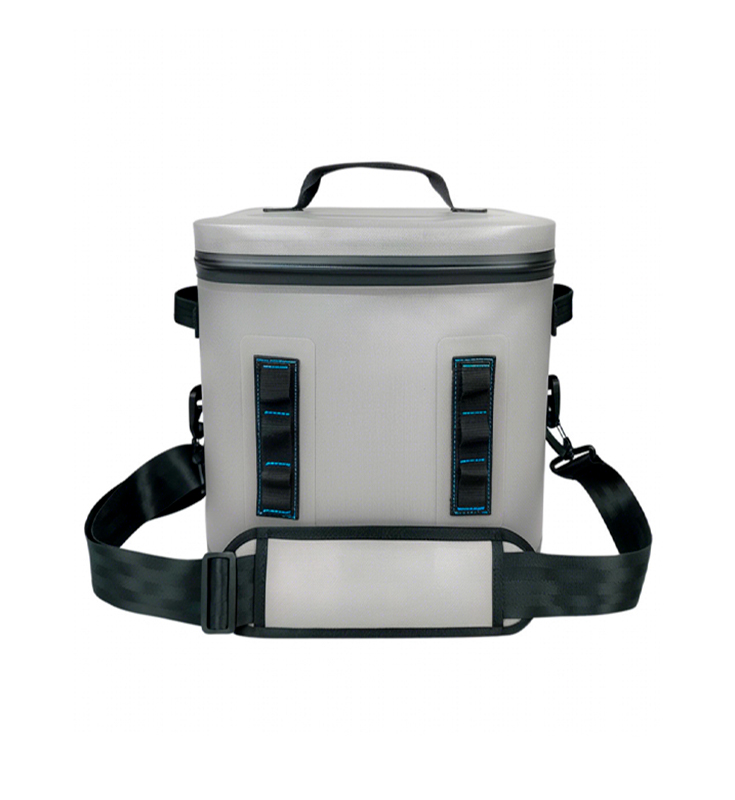
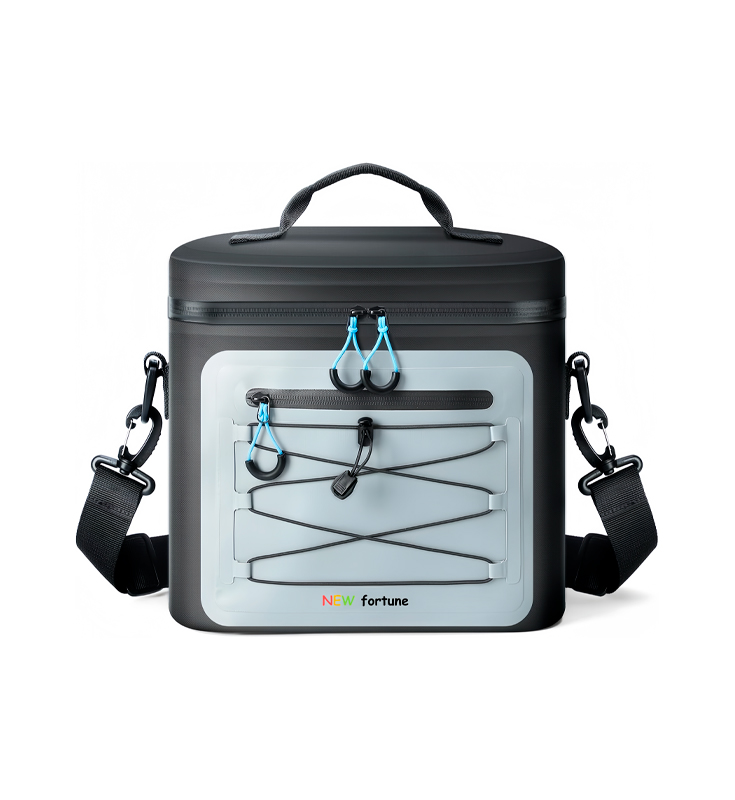
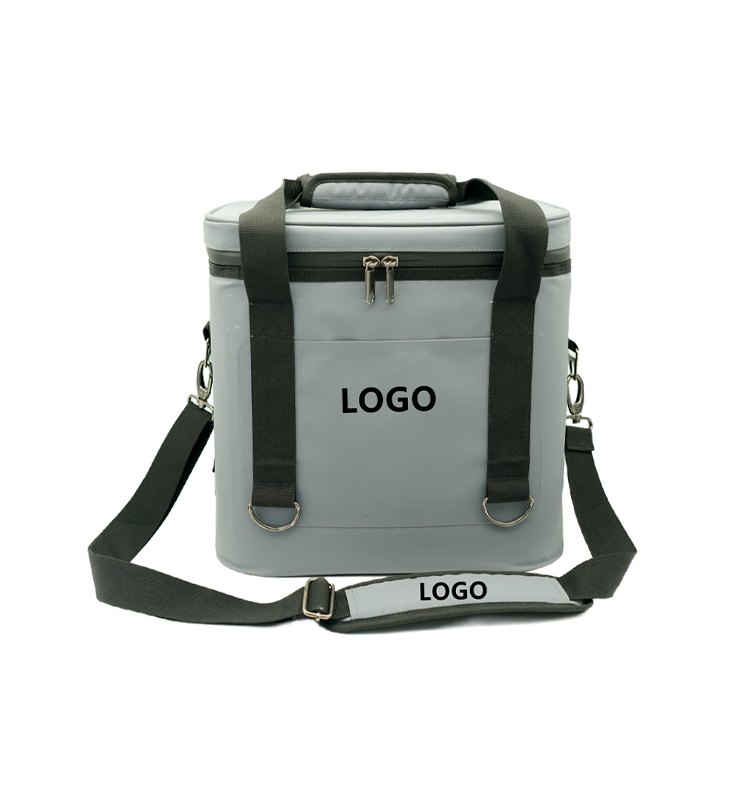 Gray Single Shoulder TPU Soft Cooler with Customizable Logo for Outdoor ActivitiesThis lightweight TPU soft cooler offers a stylish gray design with one-shoulder carrying, available in 18-can and 24-can capacities. Ideal for day trips and picnics, it features insulated lining and waterproof zippers to keep contents fresh and dry.View Product →
Ice retention in a custom soft cooler is determined by three variables: closed-cell foam density, foam thickness, and the quality of the perimeter weld or seam. Closed-cell foam does not absorb water, so it sustains insulation performance even in wet conditions. Capacity also matters. A 20-liter cooler is the standard size for a day trip, while 30-liter and 50-liter models are common for fishing and family camping. The internal volume must account for the ice and insulation thickness, so a 30-liter external capacity can deliver only 20 liters of usable storage.
The test protocol matters as much as the number. A reliable ice retention test fills the cooler with a 1:1 ice-to-product ratio, records ambient temperature, and measures the time until the beverage reaches 4C. Always ask the supplier for a test report with the ambient condition documented. Without this, a claim of 48 hours is just a number.
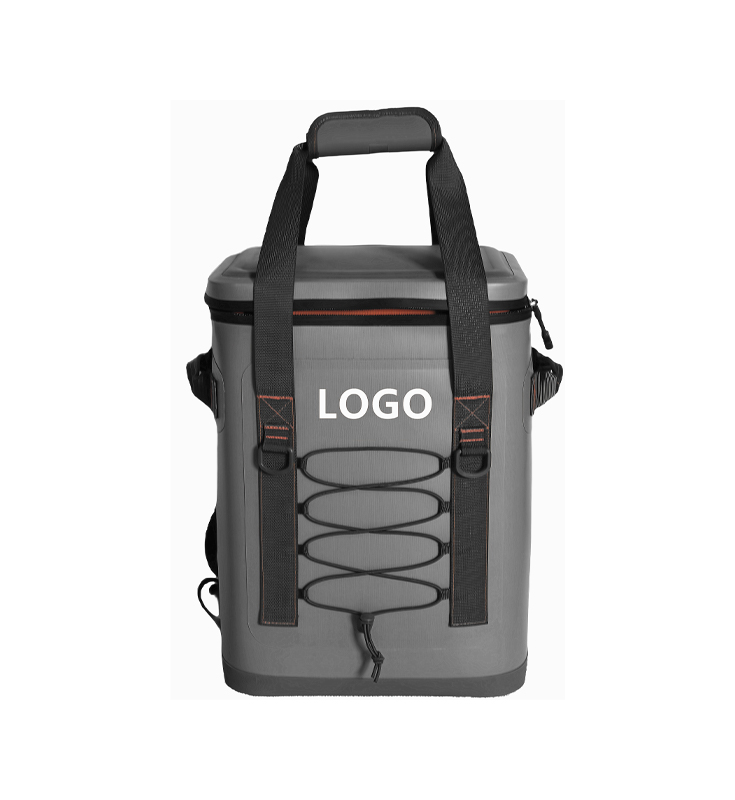
ice retention performance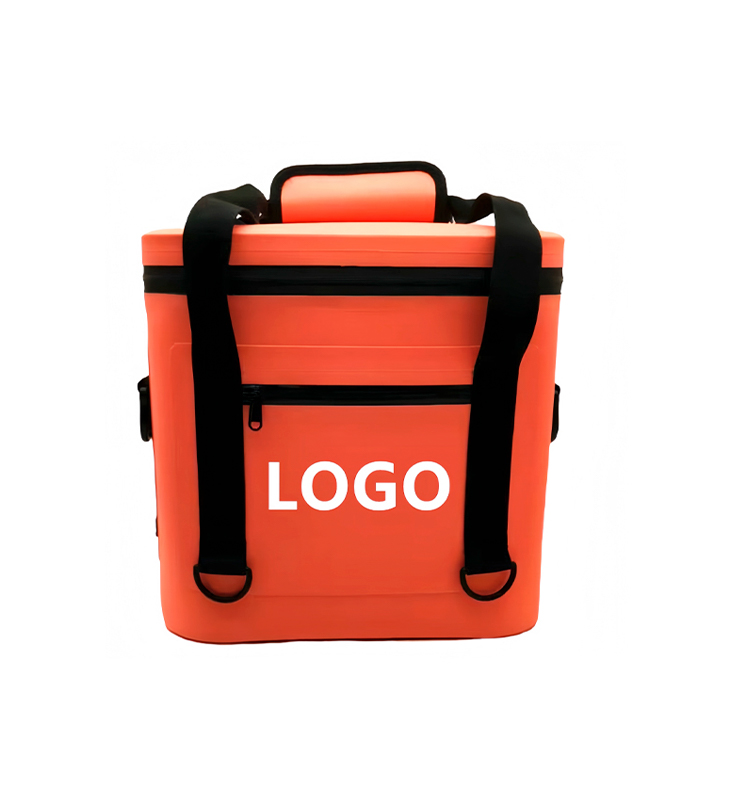 Waterproof Zipper Backpack TPU Soft Cooler with Customizable LogoA practical backpack-style cooler with TPU airtight and waterproof zippers, available in 18-can and 24-can sizes. Its lightweight design and customizable logo make it a versatile choice for outdoor events, ensuring reliable ice retention.View Product →
Zippers and welds are the most common failure points in custom soft coolers, so OEM buyers must specify both the waterproof zipper grade and the weld width on the engineering drawing. A broken zipper turns a 72-hour cooler into a 4-hour bag. Specify the zipper brand and model, not just the word waterproof. A TPU waterproof zipper in a #8 or #10 size with a sealing strip is the standard for serious ice retention. The weld should be at least 8mm wide and cannot have visible channeling or unsealed segments. For load-bearing areas, use reinforced handles and D-rings rated for the intended weight.
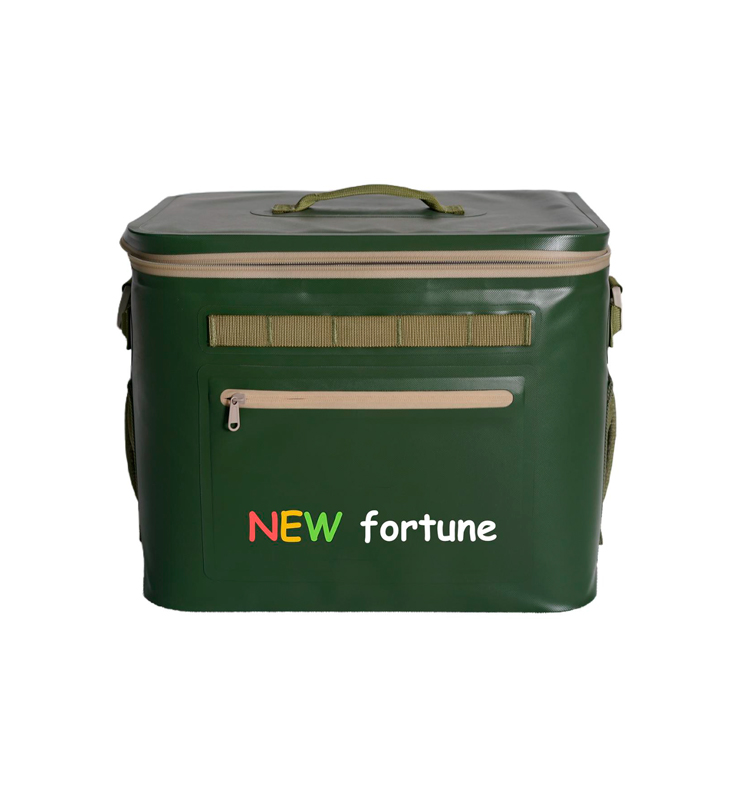 Large Capacity Foldable TPU Soft Cooler with Waterproof ZipperThis durable 40-can cooler features welded TPU construction and airtight zippers for superior ice retention. With a foldable design and reinforced handles, it suits parties and family trips, backed by quality control protocols.View Product →
A custom soft cooler intended for food contact should carry a recognized food-safety standard, and a batch test protocol should be part of the purchase order contract. The most common checks are migration tests, UV aging, and low-temperature flexibility. In production, enforce an AQL sampling plan, such as AQL 2.5 for critical defects and AQL 4.0 for major defects. Ask for an incoming material inspection report, an in-process welding check, and a final random sample inspection before packing. Review the test report against the agreed tolerance before authorizing shipment.
| Market | Standard | Key requirement |
| United States | FDA 21 CFR 177.2600 | Food-contact TPU rubber articles |
| European Union | EU 10/2011 | Plastic materials for food contact |
| Germany | LFGB Section 30 | Sensory and migration test |
| Global | REACH / SVHC | Restricted substances declaration |
The minimum order quantity for a custom soft cooler typically starts at 500 units, with a sample lead time of 5 to 7 days and mass production in 30 to 45 days after sample approval. For more complex structures, the MOQ can rise to 1,000 units. Custom options include Pantone-matched colors, logo printing or embossing, custom liners, specialized handles, and retail packaging.
For a full walkthrough of factory-side considerations, consult the TPU cooler bag wholesale guide.
The insulation enclosure, specifically foam density and thickness, combined with a quality waterproof zipper. These two factors determine whether the cooler stays cold and how long the product will last.
Most manufacturers set a minimum order quantity of 500 pieces for standard designs and 1,000 or more for complex structures or very large capacities. Sample orders are available before bulk production.
Sample production typically takes 5 to 7 days. After sample approval, mass production usually takes 30 to 45 days depending on order quantity and design complexity.
TPU is more durable, remains flexible at low temperatures, and produces more consistent leak-proof welds. PVC is cheaper but less resistant to cold and abrasion and carries a heavier environmental footprint.
Your email address will not be published. Required fields are marked *
* Your email is safe with us, we don't spam.

Professional R & D and manufacturing of outdoor sports, cycling, fishing, business, travelling sewing, high-frequency stamping series of luggage enterprises
E-mail: christine@fudabags.com
Phone: +86-13819351116
Add: No.2288 Xinggong Road, Pinghu City, Jiaxing City, Zhejiang Province, China
Copyright © 2025 by New Fuda Luggages & Bags Co., Ltd. Rights Reserved. Privacy Custom Durable Outdoor Travel Bag Manufacturers


 English
 Français
 Español