


Get A Quote

Content
A brand owner once sent a 15-cubic-foot soft top cargo bag to a dealer in Germany. After three highway trips, water pooled in the rear seam, and the buckle base pulled through the fabric. The bag was not a material failure. It was a manufacturing specification failure.
For OEM manufacturing, a soft top cargo bag is a flexible, vehicle-mounted storage container that must survive sun, rain, vibration, and owner abuse. The material and stitching requirements determine whether it becomes a reliable product or a warranty claim. New Fuda Luggages & Bags Co., Ltd., a soft baggage manufacturer in Pinghu, China, builds car roof bags and related cargo carriers to these production standards.
Soft top cargo bag material selection starts with the shell fabric, and the coating must be written into the same specification as the base cloth.
Chosen at the wrong point, fabric can tear, coating can peel, and water can wick through needle holes within a few months. For volume production, most OEM programs use one of these three material families:
Before you finalize fabric specs, see the complete roof storage bag buyer guide to align your capacity and safety expectations.
| Material | Typical denier | Water resistance | Main seam type | Best use |
| 500D modified PVC | 500D | 800 mm hydrostatic head | Lapped stitch and tape | Budget roof bags |
| 840D nylon PU coated | 840D | 600 mm hydrostatic head | Stitched and taped | Mid-range cargo bags |
| TPU welded composite | 400–1000D | 2500 mm with sealed welds | High-frequency weld | Premium waterproof bags |
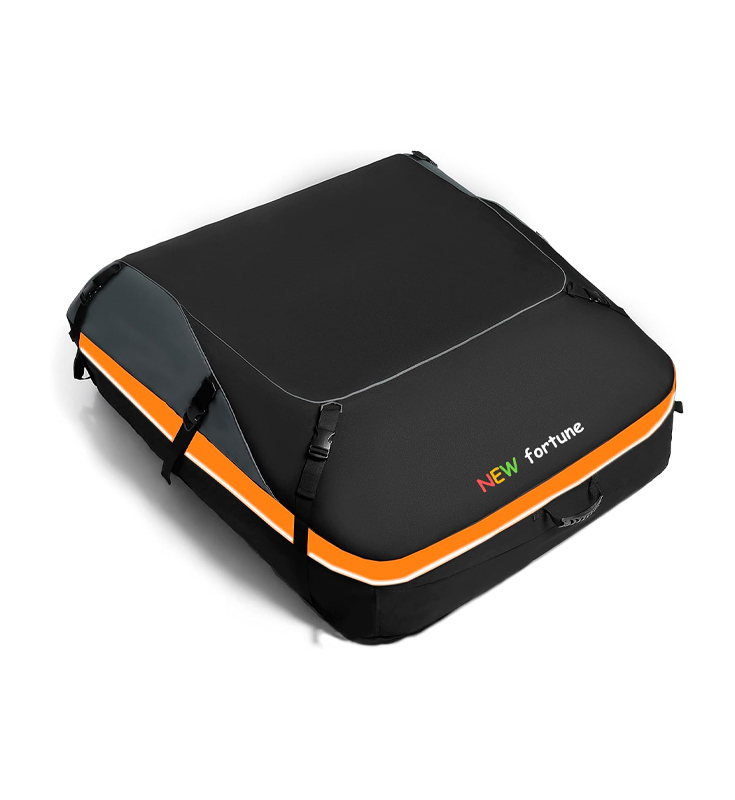
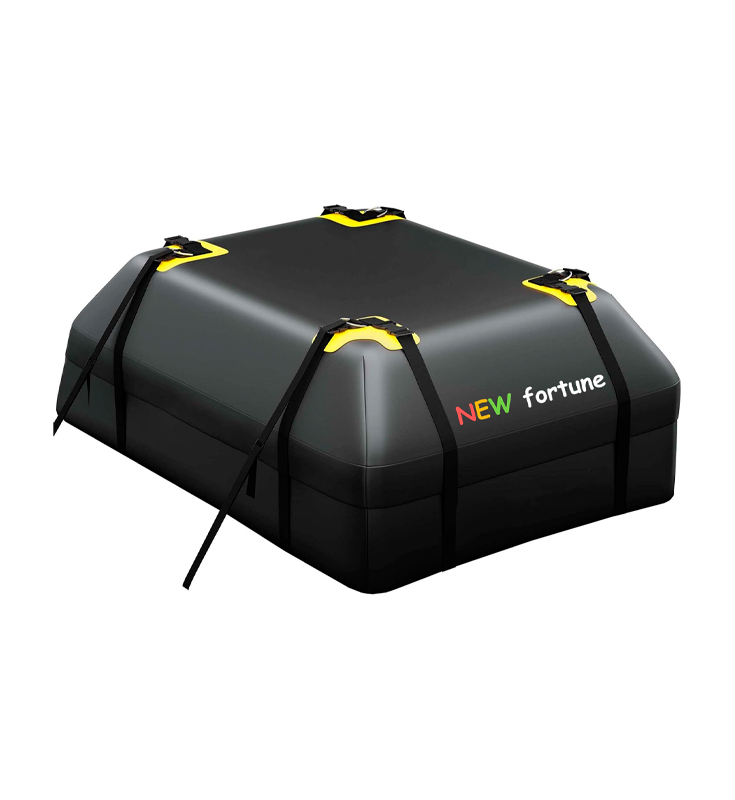 FO-12 15 Cubic Foot Waterproof PVC Roof Storage Bag for SUVsThis 15-cubic-foot roof bag uses 500D grid PVC and heat-sealed seams for weather resistance. It comes with protective pads, door hooks, locks, and a drawstring bag, making it a practical choice before finalizing fabric specifications.View Product →
Hydrostatic head values used as starting points in OEM material specifications.
Stress seams on a soft top cargo bag need a locked stitch, spec-approved thread, and reinforcement at every hardware attachment.
A bag can look clean on the bench and still fail on a car roof because the seam is pulled by wind pressure and cargo weight at the same time. The stitching specification must include all four of these elements:
Field rule: if a strap anchor is stitched only once, it will fail within 50 loading cycles. Add a 3-inch webbing loop, four bar tacks, and an internal reinforcing patch at each attachment point.
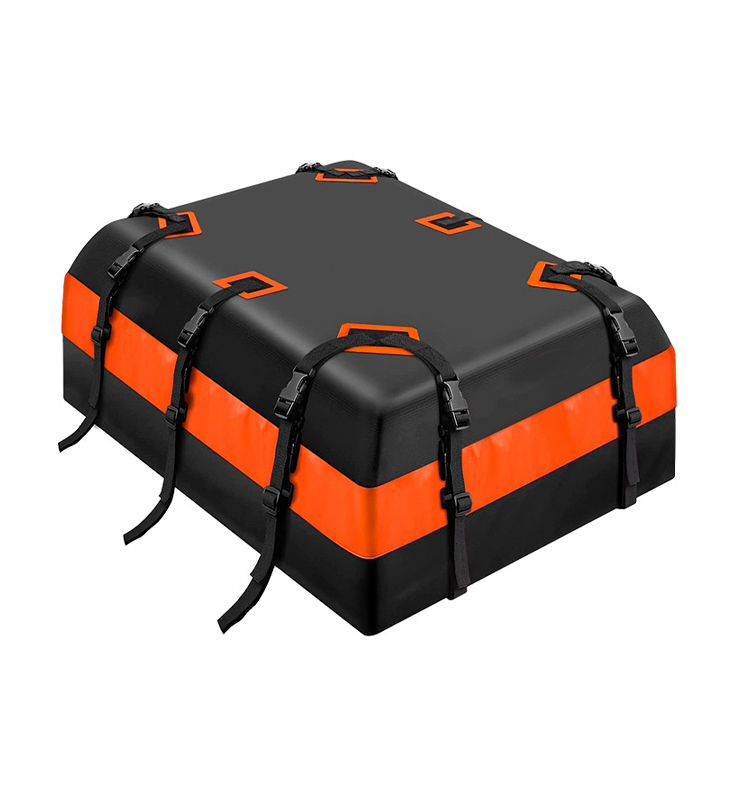
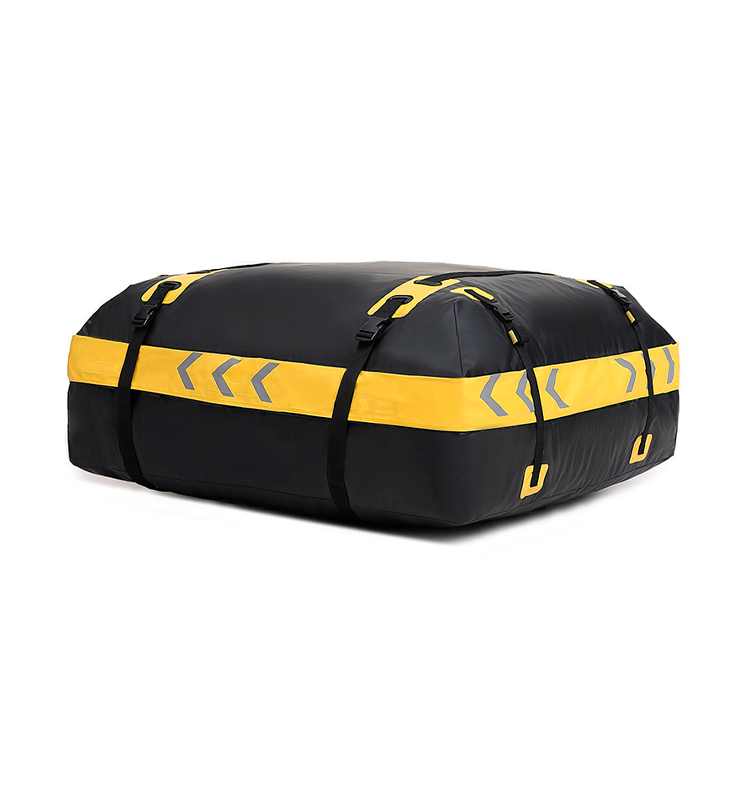 FO-13 15 Cubic Foot Weather-Resistant Car Roof Bag with Reinforced SeamsThis roof bag offers 15 cubic feet of storage with weather-resistant 500D PVC and heat-welded seams. Its included accessories and strap system support secure rooftop mounting, relevant when evaluating seam construction methods for high-wind conditions.View Product →
For materials that are difficult to tape, high-frequency welding is a better route. New Fuda uses both sewing and high-frequency processes, so the seam construction can be chosen by the material rather than by habit.
OEM buyers should require documented testing for seam strength, water pressure, and UV resistance before mass production.
Visual inspection cannot catch seam separation or coating peel. A structured QC protocol protects both sides of the contract and gives the buyer a clear pass/fail gate before shipment.
| Test | Method | Minimum pass |
| Main seam strength | ISO 13935-1 | 30 N per 50 mm |
| Hydrostatic head | ISO 811 | 600 mm nylon / 800 mm PVC |
| Coating abrasion | Taber abrasion | No coating loss after 500 cycles |
| UV aging | ASTM G154 | No cracking after 100 hours |
Design for manufacturing means setting repeatable seam allowances, tolerances, and hardware positions that the sewing team can hit every shift.
Many OEM samples fail only when the factory tries to reproduce them at scale. The easiest way to avoid this is to keep the design simple and give the factory fixed guidelines.
Review the production-ready product range on the New Fuda website to see how roof bags are built in volume.
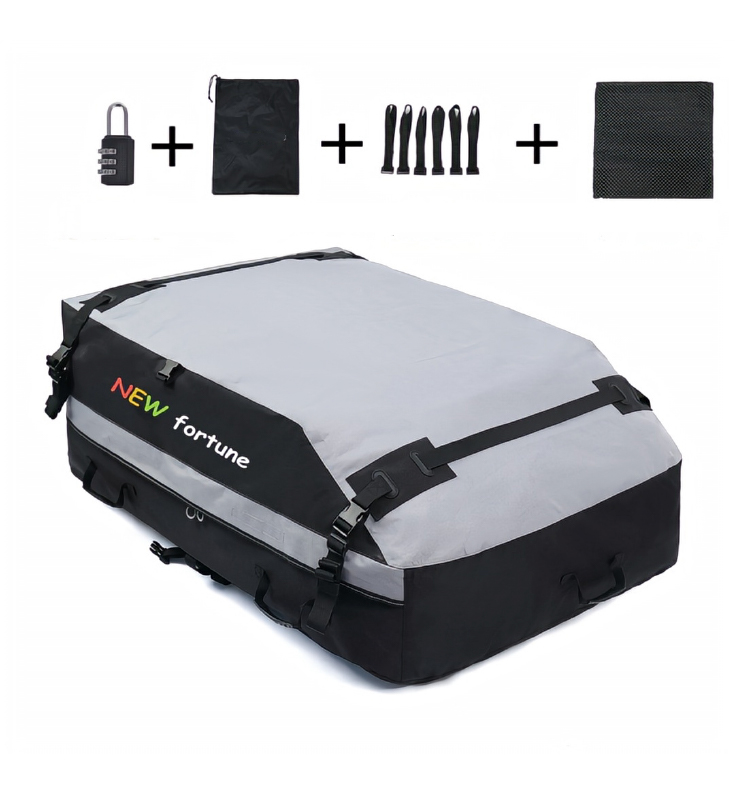
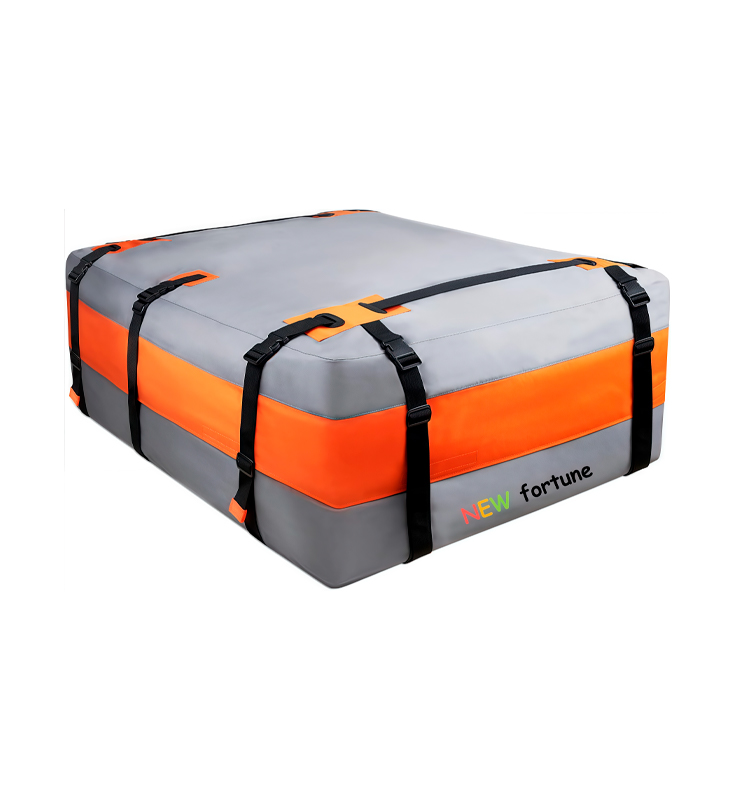 FO-11 20 Cubic Foot Oxford Cloth Waterproof Roof Bag for Outdoor TripsWith 20 cubic feet of capacity, this Oxford cloth roof bag suits larger outdoor loads. It includes protective pads, door hooks, locks, and drawstrings, and is built for volume production, aligning with high-frequency welding and sewing capabilities.View Product →
New Fuda Luggages & Bags Co., Ltd. has both sewing and high-frequency welding under one roof, which keeps material and seam specifications aligned.
Founded in 2006, New Fuda develops and manufactures outdoor, cycling, fishing, and travel soft bags. The factory positions itself as an R&D-driven production supplier, not a trader, and exports to Europe, the Americas, and Japan.
For volume production, 500D modified PVC gives the best waterproofing at a competitive price. For a lighter bag with cleaner print, use 840D Oxford nylon with a PU or PVC coating. TPU is the premium choice when you want full seam sealing through welding.
Use 6–8 stitches per inch for main seams on heavy coated fabrics and 8–10 stitches per inch on edge binding and curved gussets. Combine this with bonded nylon thread and seam tape on all needle holes.
Yes. A stitched seam leaves micro-holes in PVC or nylon that leak under wind pressure. Apply seam tape, PU film, or use high-frequency welding on TPU products.
Cut two production samples open at the strap anchors and zipper corners, then measure seam allowance and count SPI. Also ask for a 48-hour water immersion test before approving the first mass production batch.
Your email address will not be published. Required fields are marked *
* Your email is safe with us, we don't spam.

Professional R & D and manufacturing of outdoor sports, cycling, fishing, business, travelling sewing, high-frequency stamping series of luggage enterprises
E-mail: christine@fudabags.com
Phone: +86-13819351116
Add: No.2288 Xinggong Road, Pinghu City, Jiaxing City, Zhejiang Province, China
Copyright © 2025 by New Fuda Luggages & Bags Co., Ltd. Rights Reserved. Privacy Custom Durable Outdoor Travel Bag Manufacturers


 English
 Français
 Español