


Get A Quote

Content
In the world of professional outdoor gear, thermal efficiency is the ultimate metric of engineering success. For enthusiasts engaged in multi-day cycling, fishing, or remote traveling, a TPU cooler bag is more than an accessory—it is a critical piece of hardware. New Fuda Luggages & Bags Co., Ltd., established in 2006, has been at the forefront of this evolution. By integrating high-frequency welding technology and advanced R&D in the production of ice bucket bags and waterproof panniers, we have become a preferred supplier for cross-border markets in Europe, America, and Japan. This guide analyzes the technical variables that dictate how long your supplies stay frozen in the wild.
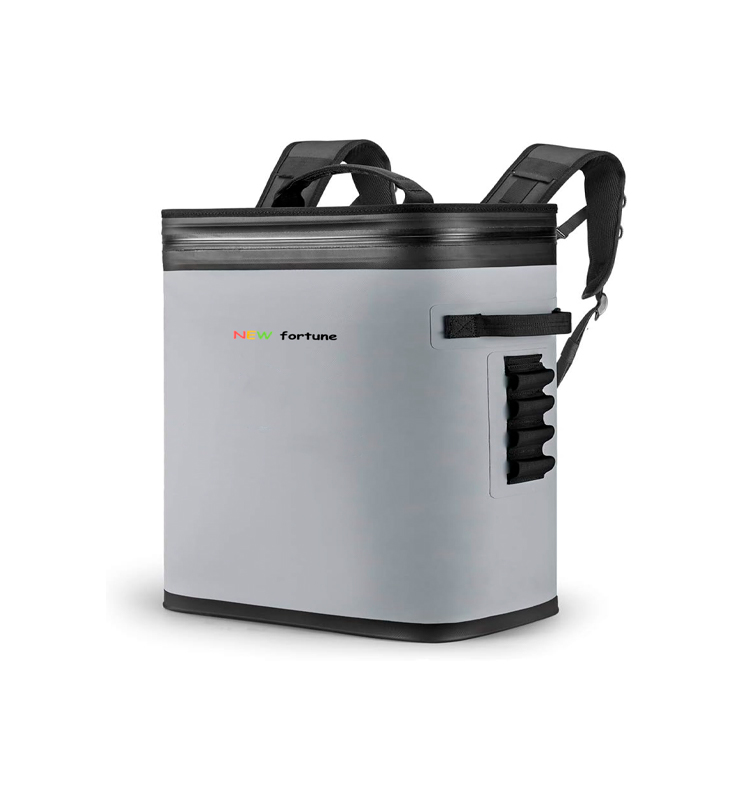
The core performance of a TPU cooler bag stems from the molecular density of Thermoplastic Polyurethane. Unlike traditional PVC, which can become brittle and lose its seal under thermal stress, TPU remains flexible and provides a superior airtight barrier. When comparing TPU vs PVC cooler bag durability, TPU is significantly more resistant to punctures and UV degradation, which prevents micro-tears that lead to thermal leakage. Furthermore, the high-frequency pressing series manufactured by New Fuda ensures that the seams are fused at the molecular level, creating a hermetic seal that traditional sewing cannot replicate.
While PVC is a cost-effective alternative, TPU offers nearly double the abrasion resistance and significantly better environmental stability in extreme temperatures.
| Feature | Standard PVC Cooler | High-Performance TPU Cooler Bag |
| Tensile Strength | Moderate | High (Engineered for heavy loads) |
| Cold Crack Resistance | Poor (Brittle below 0°C) | Excellent (Flexible to -30°C) |
| Environmental Impact | High (Contains Phthalates) | Low (Eco-friendly & Recyclable) |
| Air Tightness | Medium (Often Sewn) | Total (High-Frequency Welded) |
A frequent question among professional explorers is: what is the average ice retention time for soft coolers made of TPU? Under controlled laboratory conditions (25°C), a premium TPU cooler bag can maintain ice for 48 to 72 hours. However, in "extreme outdoor adventures" where ambient temperatures exceed 35°C, this window is dictated by the thickness of the closed-cell NBR (Nitrile Butadiene Rubber) foam insulation sandwiched between the TPU layers. The closed-cell structure prevents convection currents within the insulation, effectively trapping the cold air inside.
Increasing the foam thickness linearly improves thermal resistance, but engineers must balance this against the portability required for cycling and traveling.
| Foam Thickness | Expected Retention (35°C Ambient) | Ideal Use Case |
| 15mm Closed-Cell | 24 - 36 Hours | Day trips, Cycling panniers |
| 25mm Closed-Cell | 48 - 60 Hours | Weekend Camping, Fishing |
| 30mm+ Closed-Cell | 72+ Hours | Extreme expeditions, Roof bags |
The longevity of a cooler's thermal performance is also tied to its ability to remain 100% waterproof. If water enters the insulation layer, the thermal conductivity increases, and the bag fails. New Fuda Luggages & Bags utilizes waterproof TPU insulated bags technology that employs high-frequency pressing rather than traditional stitching. This ensures that the outer shell is entirely impervious to rain, river water, and melted ice from within. This is why our TPU cooler bag series has become the choice for cross-border head sellers looking for "zero-failure" outdoor gear.
To maximize ice retention for TPU soft coolers, users must understand the thermodynamic principle of "pre-cooling." Placing warm items into a cooler immediately triggers a phase change in the ice. Engineers recommend a 2:1 ice-to-contents ratio for maximum efficiency. Furthermore, the benefits of TPU coating for outdoor bags extend to their reflective properties; many high-performance bags feature a light-colored or metallic TPU finish to reflect radiant heat from the sun during long exposures on boat decks or roof racks.
Extreme adventures often involve physical impacts. One of the common maintenance tips for TPU coolers is the use of zipper lubricant. High-performance bags utilize airtight, waterproof zippers that require regular maintenance to ensure the vacuum seal remains intact. Because TPU is a thermoplastic, it can be patched in the field using heat-activated adhesives, unlike PVC which often requires complex chemical bonding agents.
In summary, a high-performance TPU cooler bag can maintain ice for up to 72 hours, provided it utilizes advanced high-frequency welding and high-density closed-cell insulation. New Fuda Luggages & Bags Co., Ltd. continues to lead the industry by combining 18 years of R&D with state-of-the-art pressing technology. Whether you are navigating a cycling trail or an offshore fishing spot, our TPU series ensures your supplies remain at the required temperature, regardless of the external environment.
For portability, yes. While rotomolded coolers offer longer retention (5-7 days), TPU soft coolers are significantly lighter and more flexible, making them ideal for cycling and roof bag storage where space and weight are at a premium.
TPU is naturally resistant to microbes. Simply use mild soap and warm water. Avoid harsh chemicals as the non-porous surface of the TPU allows for easy decontamination without deep scrubbing.
TPU is 100% waterproof and does not absorb moisture. In rainy conditions, the bag remains lightweight because the outer fabric does not become "water-logged," a common issue with traditional nylon bags.
Generally, no. Dry ice sublimates into gas and can create internal pressure that might damage the airtight seams of a soft cooler. Always check the specific manufacturer guidelines for gas-release valves.
Car trunks can reach 50°C-60°C. In these environments, ice retention will drop to 12-24 hours. It is always best to keep your cooler in a ventilated area or under a reflective cover.
Your email address will not be published. Required fields are marked *
* Your email is safe with us, we don't spam.

Professional R & D and manufacturing of outdoor sports, cycling, fishing, business, travelling sewing, high-frequency stamping series of luggage enterprises
E-mail: christine@fudabags.com
Phone: +86-13819351116
Add: No.2288 Xinggong Road, Pinghu City, Jiaxing City, Zhejiang Province, China
Copyright © 2025 by New Fuda Luggages & Bags Co., Ltd. Rights Reserved. Privacy Custom Durable Outdoor Travel Bag Manufacturers


 English
 Français
 Español