


Get A Quote

Content
For outdoor enthusiasts engaged in kayaking, fishing, or rugged camping, the reliability of gear is non-negotiable. A TPU cooler bag has become the gold standard in portable refrigeration due to its unique molecular properties and advanced manufacturing techniques. Unlike traditional PVC or nylon bags, a TPU cooler bag offers a combination of elasticity and extreme toughness. New Fuda Luggages & Bags Co., Ltd., established in 2006, has been at the forefront of this evolution, specializing in high-frequency welding and R&D for outdoor sports gear. As a preferred supplier for global cross-border leaders, our production technology ensures that every waterproof TPU soft cooler for kayaking can withstand internal pressure and external abrasion. This article explores the engineering factors that define TPU cooler bag durability and leak-proof integrity.
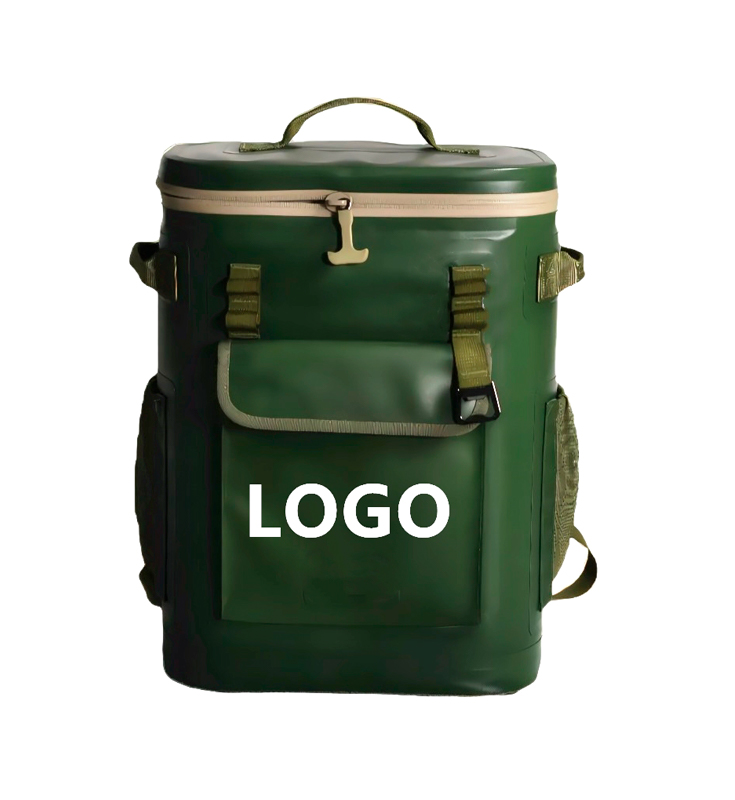
The primary reason a TPU cooler bag achieves a 100% leak-proof rating is the transition from mechanical stitching to High-Frequency (HF) welding. Traditional sewing creates thousands of needle holes that must be taped, which eventually fail under stress. In contrast, high frequency welded seams in TPU coolers use electromagnetic energy to fuse the material at the molecular level, creating a bond stronger than the surrounding fabric. This leak-proof soft cooler technology is essential when the bag is tossed into a kayak or compressed in a car trunk. When comparing TPU vs PVC cooler bags for camping, TPU remains flexible in sub-zero temperatures, whereas PVC becomes brittle and prone to seam failure. Understanding how high frequency welding works for TPU bags is key to recognizing why these products do not delaminate over time.
| Construction Feature | Traditional Sewn/Taped Seams | High Frequency Welded TPU Seams |
| Leak-Proof Reliability | Moderate (Prone to tape peeling) | 100% Hermetic (Fused structure) |
| Puncture Resistance | Lower (Fiber stress points) | Exceptional (Solid polymer barrier) |
| Cold-Weather Performance | Poor (Stitches can snap) | Superior (Maintains elasticity at -30°C) |
A bag is only as waterproof as its opening. To ensure a TPU cooler bag is truly submersible, engineers utilize airtight, gas-tight zippers. These specialized zippers feature a TPU-coated tooth structure that creates a vacuum seal when closed. Furthermore, the puncture-resistant TPU material used in the outer shell (typically 840D or 1680D TPU-coated nylon) is designed to resist sharp rocks, fish hooks, and rugged terrain. When analyzing why TPU is better for outdoor cooler bags, one must consider its high abrasion resistance index compared to standard polyester. Additionally, the TPU cooler bag insulation performance is enhanced by a multi-layer sandwich construction: a tough TPU outer shell, a thick NBR (Nitrile Butadiene Rubber) foam core, and a food-grade TPU inner liner.
| Component | Standard Soft Cooler | TPU Cooler Bag (New Fuda Standard) |
| Zipper Type | Nylon Coil (Water-resistant only) | Airtight/Gas-tight (Fully waterproof) |
| Shell Fabric | 600D Polyester with PVC coating | 840D/1680D Nylon with Dual-sided TPU |
| Tear Strength | Average | Highest in Category |
In kayaking, gear is frequently exposed to UV rays, salt water, and constant moisture. TPU cooler bag UV resistance is a critical engineering advantage, as it prevents the material from yellowing or cracking under intense sun exposure. For those planning a trip, knowing how to maintain a TPU cooler bag—such as lubricating the airtight zipper and rinsing salt residue—will extend its life significantly. Whether it is used as an ice bucket bag for camping or a pannier for cycling, the TPU cooler bag remains lightweight yet structurally rigid. Our manufacturing process at New Fuda ensures that these bags are not just "water-resistant" but ready for the most demanding "pressing series" required by global outdoor enthusiasts.
The combination of puncture-resistant TPU material, high-frequency welding, and airtight sealing makes the TPU cooler bag the ultimate choice for kayaking and camping. By choosing a product engineered with leak-proof soft cooler technology, you ensure your provisions stay cold and your gear stays dry. New Fuda Luggages & Bags Co., Ltd. continues to adhere to high standards of quality and innovation, exporting premium outdoor supplies to Europe, America, and Japan. When performance is the priority, TPU is the material that delivers.
Yes. By utilizing high frequency welded seams in TPU coolers and airtight zippers, the bag becomes a hermetically sealed vessel that can be turned upside down without leaking a single drop of water.
The high-denier (840D+) TPU-coated nylon shell is specifically designed to resist sharp objects typical of fishing and kayaking environments, making it far more durable than standard fabric coolers.
Rinse with fresh water after salt-water exposure, air dry completely to prevent mold, and occasionally apply silicone lubricant to the airtight zipper teeth to maintain a smooth, waterproof seal.
TPU is more eco-friendly, has higher abrasion resistance, does not "off-gas" harmful chemicals, and remains flexible in extreme cold, whereas PVC often cracks in freezing temperatures.
Due to the combination of airtight seals and high-density NBR foam, a premium TPU cooler bag can maintain ice for 48 to 72 hours, depending on external temperatures and usage.
Your email address will not be published. Required fields are marked *
* Your email is safe with us, we don't spam.

Professional R & D and manufacturing of outdoor sports, cycling, fishing, business, travelling sewing, high-frequency stamping series of luggage enterprises
E-mail: christine@fudabags.com
Phone: +86-13819351116
Add: No.2288 Xinggong Road, Pinghu City, Jiaxing City, Zhejiang Province, China
Copyright © 2025 by New Fuda Luggages & Bags Co., Ltd. Rights Reserved. Privacy Custom Durable Outdoor Travel Bag Manufacturers


 English
 Français
 Español