


Get A Quote

Content
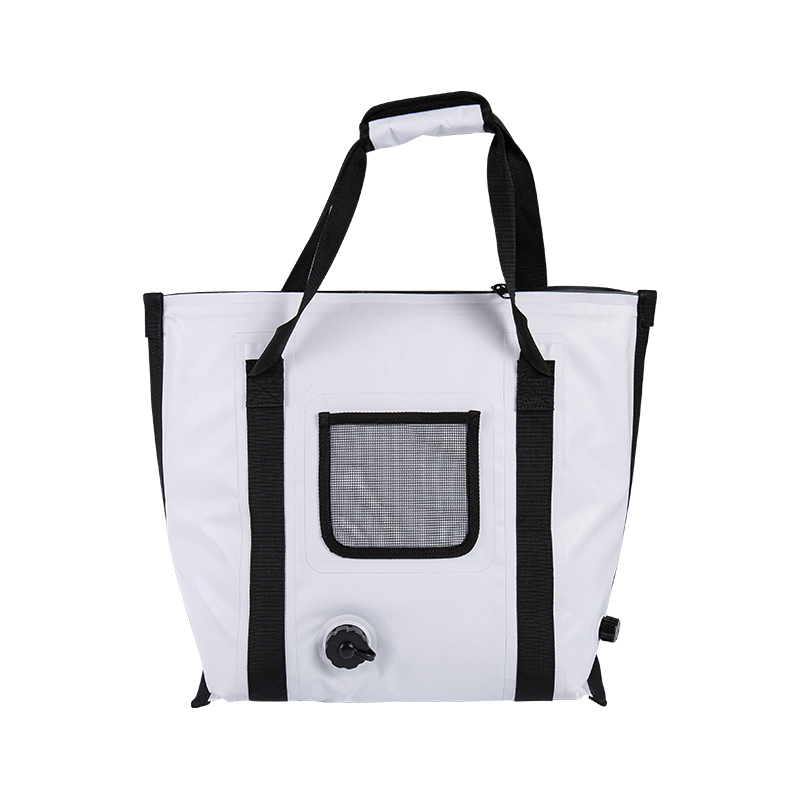
For any serious angler, a fish kill bag cooler is an indispensable tool for preserving the quality of the catch. However, the organic nature of fish blood, slime, and scales creates a high-risk environment for microbial proliferation if the bag is not maintained with engineering-level precision. At New Fuda Luggages & Bags Co., Ltd., we have specialized in the R&D of outdoor and fishing bag solutions since 2006. Our production utilizes advanced high-frequency welding technology to create leak-proof, airtight seams that prevent fluids from seeping into the insulation layer. This article provides a professional framework on how to manage the hygiene of your insulated fish kill bag for saltwater, ensuring that your equipment remains sterile and odor-free for years of service.
Odors in a fish kill bag cooler are primarily caused by the metabolic byproduct of bacteria breaking down trimethylamine oxide (TMAO) found in fish tissue. When comparing PVC vs TPU fish kill bags, TPU often offers superior resistance to microbial adhesion due to its smoother molecular surface. However, regardless of the material, if biological residue is left in the corners, it will putrefy. Utilizing an easy to clean fish kill bag with a tapered bottom or high-frequency pressed seams—like our pressing series preferred by global head sellers—significantly reduces the areas where bacteria can hide. Understanding how to remove fish smell from cooler bags requires a two-step process: mechanical removal of solids and chemical neutralization of the TMA molecules.
| Material Property | Sewn Construction | High-Frequency Pressed (New Fuda) |
| Seam Integrity | Porous (Stitch holes) | Airtight/Fluid-proof |
| Bacteria Resistance | Low (Traps residue) | High (Smooth surface) |
| Cleaning Effort | Intensive (Scrubbing seams) | Efficient (Wipe-down ready) |
To prevent bacteria growth in fish bags, the cleaning process must begin immediately after the catch is removed. A heavy duty fish kill bag with drain plug is essential for this, as it allows for the initial flushing of blood and slime without cross-contaminating your workspace. Many users ask what is the best cleaner for fish kill bags; while mild detergents work for surface dirt, an enzymatic cleaner or a diluted white vinegar solution is required to break down the protein-based odors. When comparing bleach vs vinegar for cleaning fish bags, vinegar is generally preferred for long-term maintenance because bleach can degrade the UV-resistant coatings and specialized leak proof fish cooler bag liners over time.
| Cleaning Agent | Effectiveness on Odor | Impact on Material Longevity |
| Mild Dish Soap | Moderate (Removes grease) | Safe for all liners |
| Chlorine Bleach | Excellent (Disinfectant) | Harsh (May cause cracking) |
A long lasting fish kill bag cooler is an investment. Odors often linger because of microscopic tears in the inner liner—a result of sharp fins from species like snapper or mahi-mahi. Choosing a puncture resistant fish kill bag with a high denier count (e.g., 1000D PVC) prevents these micro-tears from becoming bacterial breeding grounds. At New Fuda, our research into portable fish kill bag for offshore fishing has led us to implement dual-layer insulation and reinforced heat-pressed seams that withstand the pressure of heavy ice loads and large pelagic fish. Proper fish kill bag maintenance and storage also involves lubricating zippers with food-grade silicone to ensure the airtight seal remains intact during 24/7 use.
Properly cleaning and deodorizing your fish kill bag cooler is not merely about aesthetics; it is about food safety and equipment longevity. By using an easy to clean fish kill bag manufactured with high-frequency welding and following a disciplined sanitation protocol, you ensure that your catch remains fresh and your gear remains professional. New Fuda Luggages & Bags Co., Ltd. continues to lead the way in R&D, providing world-class insulated fish kill bag for saltwater solutions to head sellers and passionate anglers across Europe, America, and Japan.
A mixture of hydrogen peroxide and water is highly effective for organic stains. However, for general odors, an enzyme-based cleaner specifically designed for marine use is the most effective technical solution.
While a heavy duty fish kill bag with drain plug can handle moderate pressure, you should avoid high-PSI settings directed at the zipper or heat-welded seams to prevent delamination of the waterproof layers.
Fill the bag with warm water and a heavy concentration of baking soda. Let it soak for 4-6 hours, then rinse and sun-dry briefly (UV rays help kill bacteria, but do not leave it too long to avoid UV damage).
Yes, at New Fuda, we use food-grade, non-toxic liners that are safe for direct contact with fish, ensuring that your best kill bag for tournament fishing meets all health and safety expectations.
Never store a bag while damp. Prop the bag open using a plastic spacer and hang it in a cool, dry place. Storing a closed, wet fish kill bag cooler will lead to irreversible mold and mildew growth.
Your email address will not be published. Required fields are marked *
* Your email is safe with us, we don't spam.

Professional R & D and manufacturing of outdoor sports, cycling, fishing, business, travelling sewing, high-frequency stamping series of luggage enterprises
E-mail: christine@fudabags.com
Phone: +86-13819351116
Add: No.2288 Xinggong Road, Pinghu City, Jiaxing City, Zhejiang Province, China
Copyright © 2025 by New Fuda Luggages & Bags Co., Ltd. Rights Reserved. Privacy Custom Durable Outdoor Travel Bag Manufacturers


 English
 Français
 Español