


Get A Quote

Content
Two soft cargo carrier bags can leave the same factory with the same 500D PVC-coated oxford shell and still differ by a factor of four in measured waterproof performance. The gap comes from three numbers: coating weight in grams per square metre, the seam sealing method, and the IP rating of the zipper. For a retail buyer placing a container order, those three numbers drive return rates far more than the unit price on the purchase order.
The coating, not the fabric name, sets how waterproof a cargo carrier bag can ever be: 500D PVC-coated oxford typically tests between 2,000 and 5,000 mm hydrostatic head under ISO 811, while 210D polyester with a thin PU coating rarely clears 600 mm. Before comparing quotes, collect four values from every offer: substrate denier, coating chemistry, coating weight in GSM, and hydrostatic head with the test method named.
A specification sheet that says only waterproof oxford is the most common source of mismatch between an approved sample and a delivered container, because coating weight is exactly the number that phrase hides.
| Construction | Hydrostatic head | Coating weight | Cost index | Retail tier |
| 210D polyester, PU coating | 600 mm | 60 to 90 GSM | 100 | Budget day bag |
| 420D oxford, PVC coating | 1,500 to 3,000 mm | 200 to 300 GSM | 130 | Mid-tier cargo bag |
| 500D oxford, PVC coating | 2,000 to 5,000 mm | 300 to 450 GSM | 165 | Mainstream roof bag |
| 600D oxford, PVC or TPU | 5,000 to 8,000 mm | 450 to 600 GSM | 200 | Heavy duty roof bag |
| 840D TPU laminate, welded | 8,000 to 10,000 mm | 600 to 800 GSM | 260 | Premium welded line |
Hydrostatic head by construction, ISO 811 test method (mm)
Coating weight drives both the waterproof ceiling and the fabric bill, so the coating line on the specification sheet should be signed off before the sample round starts.
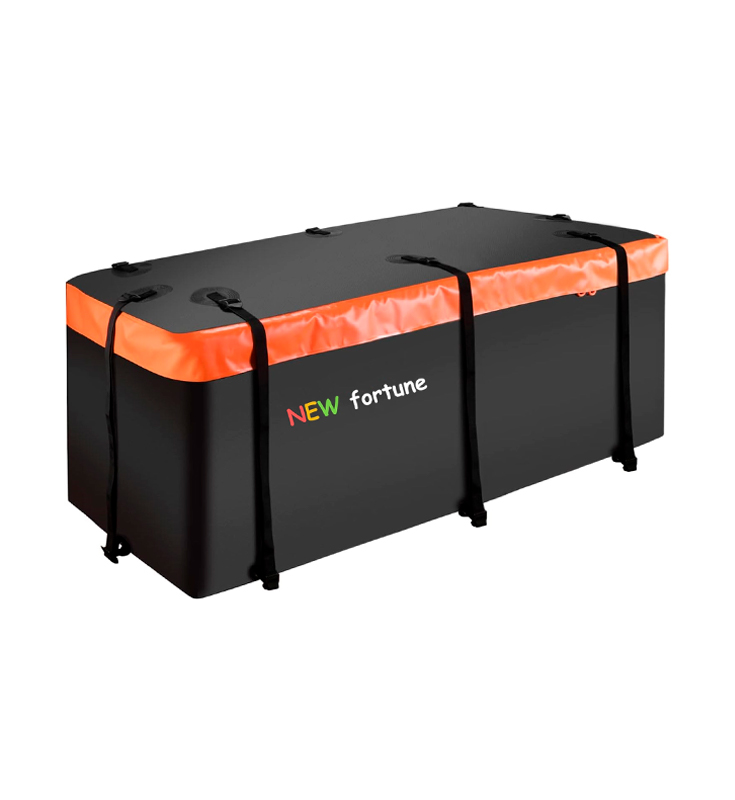
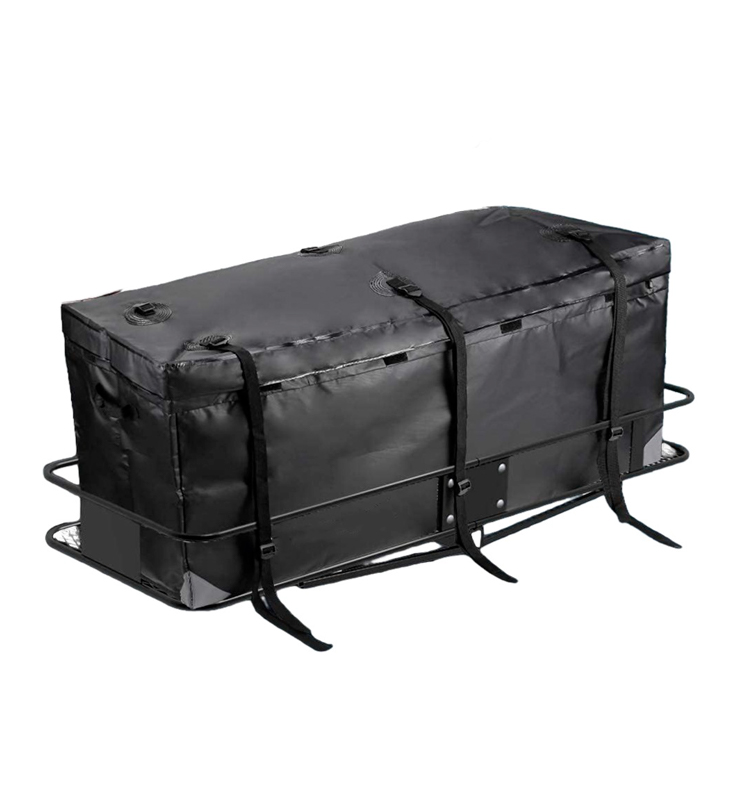
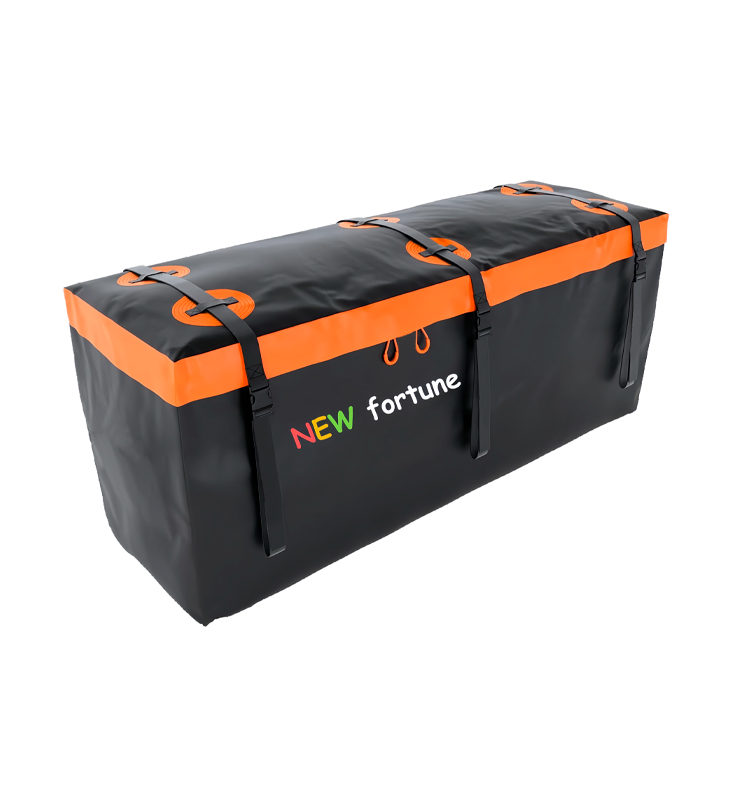
The 20 cubic foot waterproof cargo carrier bag in our cargo carrier range shows how these material bands land in a shippable SKU at the mainstream tier.
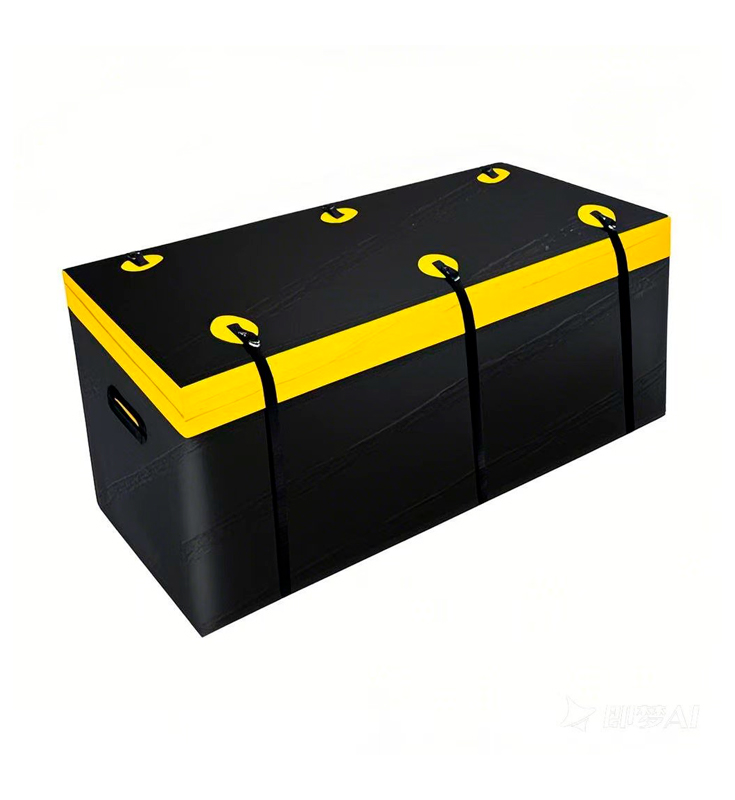 FO-27 20 Cubic Foot Waterproof Rooftop Cargo Carrier Bag500D grid PVC and heat-sealed seams support the 20 cu ft capacity; adjustable straps and locks suit mainstream B2B roof cargo demand.View Product →
Water enters a cargo carrier bag at seams, zipper tracks and flap edges rather than through the middle of a panel. A 4,000 mm shell stitched with untaped seams behaves like a 300 to 500 mm shell on the roof, because every needle perforation becomes a channel once wind-driven rain presses against the fabric.
Two production routes dominate. PVC-coated oxford is stitched and then heat-taped along the seam, usually with tape 20 to 25 mm wide. TPU is welded on high-frequency equipment, which fuses the panels into a joint with no needle holes at all. New Fuda Luggages & Bags Co., Ltd., a Pinghu-based manufacturer established in 2006, runs stitching and high-frequency welding on one production floor and supplies waterproof cargo carrier bags to cross-border sellers and importers in Europe, the Americas and Japan.
A waterproof zipper claim only means something with a rating attached. Under IEC 60529, IPX6 certifies resistance to powerful water jets tested with a 12.5 mm nozzle at 100 kPa for three minutes, and IPX7 certifies 30 minutes of immersion at one metre. PU-coated coil zippers reach IPX6; welded TPU tracks are specified where IPX7 is required.
A buyer can test a sample without a laboratory: load the bag with paper towels, strap it to a roof rack and play a hose across it at an angle for 20 minutes. Seam and zipper failures appear quickly, and a flat hydrostatic test on a fabric swatch never reveals them.
Capacity only means something when both units are printed: 1 cubic foot equals 28.3 litres, so a 15 cubic foot bag is 425 litres and a 20 cubic foot bag is 566 litres. North American listings expect cubic feet, EU and UK listings expect litres.
Universal-fit roof bags are built to a nominal footprint such as 110 x 85 x 45 cm, and a workable cut tolerance is plus or minus 3 percent, because coated oxford relaxes after cutting, coating and welding. A bag specified for a 1.2 m crossbar spread still has to fit after finishing, and returns happen when it does not.
Load to the lowest of three ceilings: the vehicle roof dynamic rating, commonly 50 to 75 kg; the crossbar pair rating, often 68 to 75 kg; and the bag's own rated capacity.
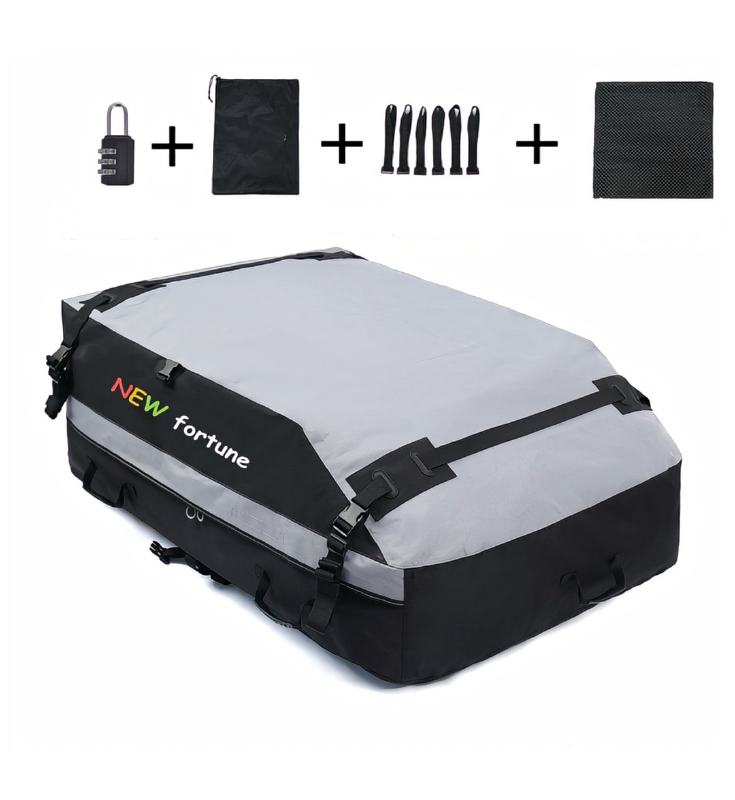
A 15 cubic foot soft shell waterproof cargo carrier bag is a practical entry SKU, because sedan and small SUV owners drive most universal-fit demand.
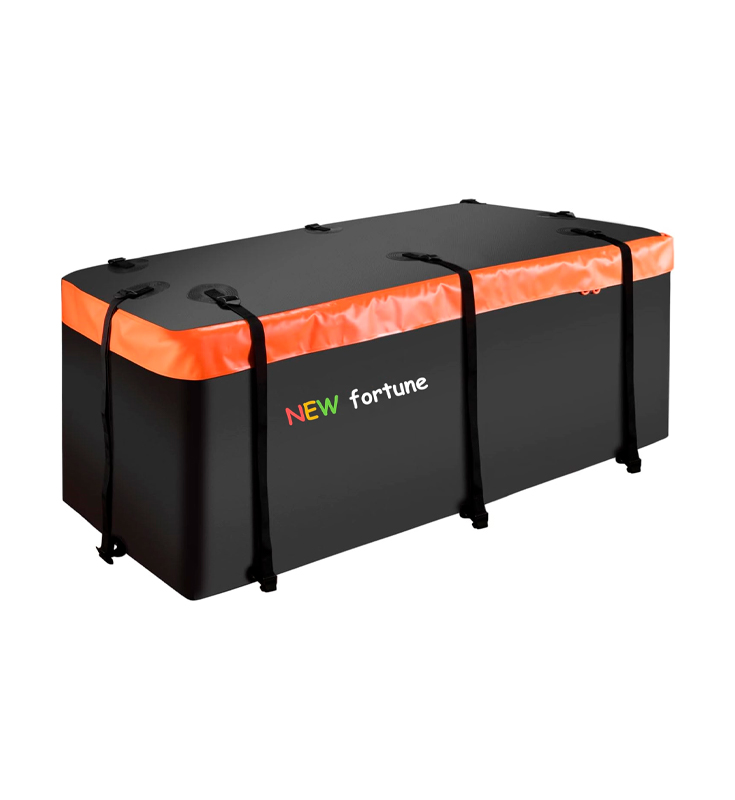 FO-26 15 Cubic Foot Soft-Shell Waterproof Cargo Carrier Bag500D grid PVC, high-frequency welded seams, and movable straps make this 15 cu ft bag a practical entry SKU for sedans and small SUVs.View Product →
Every waterproof claim needs a test method behind it. Hold three documents before a container ships: a hydrostatic report referencing ISO 811, a coated-fabric resistance report referencing ASTM D751 Procedure B, and closure IP data referencing IEC 60529.
Match claim to method. IPX6 zipper, 4,000 mm hydrostatic head shell, taped seams is defensible in a marketplace dispute; 100 percent waterproof is not.
A waterproof cargo bag programme usually runs on a 15 to 20 day pre-production sample, a 30 to 45 day production window after sign-off, and a pre-shipment inspection at AQL 2.5 major and 4.0 minor under ISO 2859-1.
Specification sheet: material, coating weight, seam method, zipper rating, dimensions with tolerance, packaging artwork.
Quotation and MOQ: MOQ is quoted per colourway and per coating run, so two colours raise the minimum.
Pre-production sample: 15 to 20 days on final material, with test reports attached.
Counter-sample sign-off: the approved sample becomes the bulk inspection reference for both parties.
Mass production: 30 to 45 days, with welding or taping parameters logged per batch.
Pre-shipment inspection: AQL 2.5 major per ISO 2859-1, plus a leak test on random finished bags.
Buyers who want the technical background before writing the sheet can read our breakdown of soft-top cargo bag materials and stitching requirements for OEM programmes.
Heavy-duty models such as a heavy-duty carrier rooftop cargo carrier storage bag are where the seam and webbing specification earns its cost, because load forces scale with capacity.
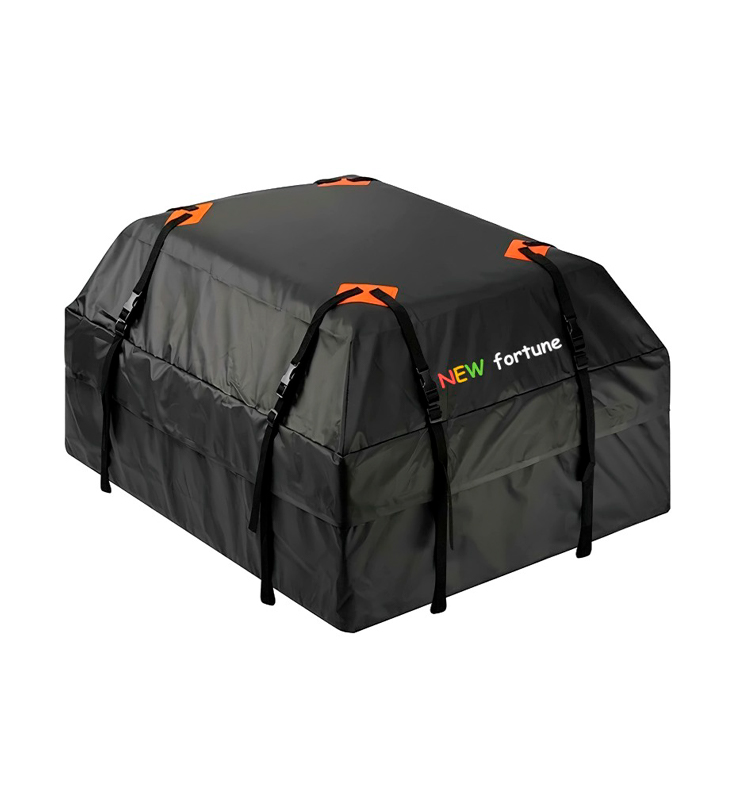 FO-2 Heavy-Duty Waterproof Rooftop Cargo Bag500D PVC, heat-sealed seams, and universal strap/door-hook mounting make this heavy-duty 15 cu ft bag suited to camping, travel, and bulky gear.View Product →
Material is the largest controllable cost line in a waterproof cargo carrier bag. The relative index in the table above runs from 100 for a 210D PU shell to 260 for an 840D welded TPU laminate, a 2.6x spread that usually exceeds the labour-cost gap between two factories quoting the same design.
Margin planning works backwards from the shelf. A common importer rule of thumb lands a bag at 25 to 30 percent of its target retail price, leaving room for marketplace fees, freight and markdowns, so the material band chosen for the shell decides the retail tier before the artwork exists.
If the shelf price cannot carry a 500 GSM coating and taped seams, do not specify waterproof. A water-resistant bag with honest labelling outsells a waterproof claim that generates returns.
At least 1,500 mm for a waterproof claim and 3,000 mm or more for roof use, where wind-driven rain reaches the shell at speed. The figure should come from an ISO 811 report on production fabric.
IPX6 as a minimum under IEC 60529, certifying resistance to powerful jets from a 12.5 mm nozzle at 100 kPa for three minutes. Specify IPX7 where the bag may sit in standing water.
Load to the lowest of three limits: the vehicle roof dynamic rating, commonly 50 to 75 kg; the crossbar pair rating, often 68 to 75 kg; and the bag's own rating.
Four items in writing: coating weight in GSM with an ISO 811 report, seam method with taping width, closure IP rating, and the inspection standard of AQL 2.5 major under ISO 2859-1.
Your email address will not be published. Required fields are marked *
* Your email is safe with us, we don't spam.

Professional R & D and manufacturing of outdoor sports, cycling, fishing, business, travelling sewing, high-frequency stamping series of luggage enterprises
E-mail: christine@fudabags.com
Phone: +86-13819351116
Add: No.2288 Xinggong Road, Pinghu City, Jiaxing City, Zhejiang Province, China
Copyright © 2025 by New Fuda Luggages & Bags Co., Ltd. Rights Reserved. Privacy Custom Durable Outdoor Travel Bag Manufacturers


 English
 Français
 Español