


Get A Quote

Content
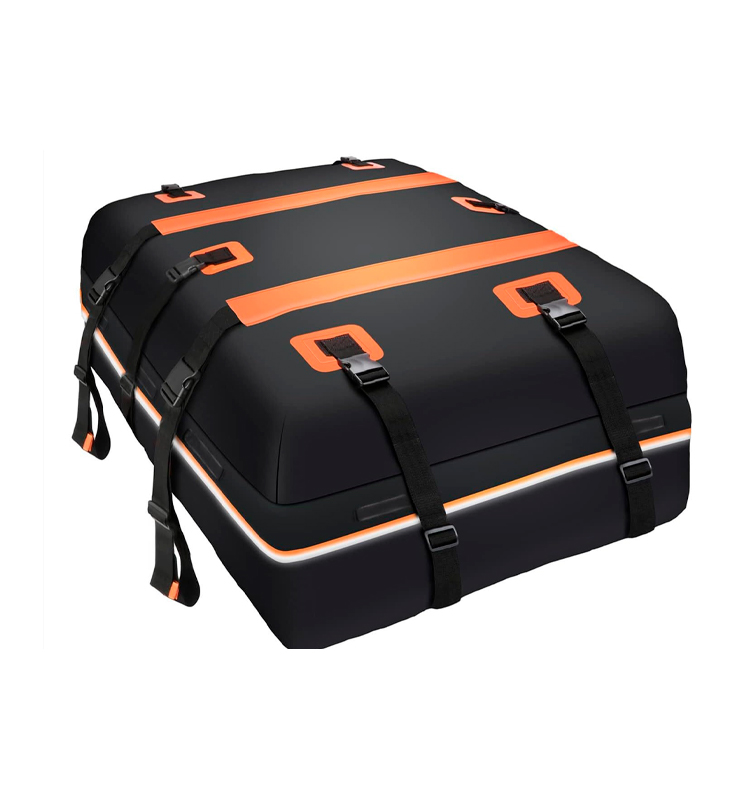
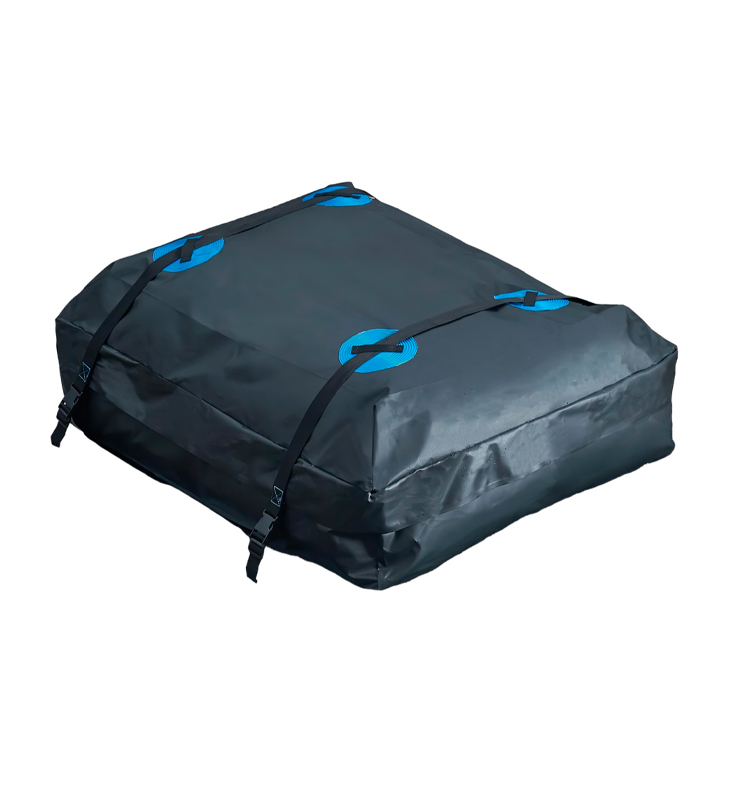
A car roof storage bag is the fastest way to reclaim cabin space on long drives, road trips, and family holidays — without committing to permanent roof rack hardware. But not all roof bags are equal. Waterproofing standards vary wildly, capacity claims are frequently overstated, and rack compatibility is a detail many buyers discover too late. This guide cuts through the noise on all four questions that matter before you buy.
Waterproofing is the most misrepresented spec in the roof bag category. "Water-resistant" and "waterproof" are used interchangeably in product listings, but they describe fundamentally different levels of protection. At highway speeds, a roof bag faces sustained water pressure that exceeds casual rain exposure — a splash-resistant coating fails in under 20 minutes of motorway driving in heavy rain.
If a product listing states "waterproof" without specifying either an IP rating or fabric coating weight, assume it is water-resistant. A genuine waterproof roof bag will always specify its material construction — this is a marketable spec that legitimate manufacturers highlight prominently.
Roof bag capacity is measured in litres, but litres alone do not tell the full story. Usable volume depends on the bag's internal structure, opening design, and how the stated capacity relates to your vehicle's roof dimensions.
| Capacity Range | Footprint | Best For | Typical Load |
| 15–30L | Small / compact | Weekend trips, hatchbacks, smaller SUVs | 2–3 soft bags, sleeping bag, light camping gear |
| 40–60L | Medium | Family saloons, mid-size crossovers | 4–5 soft bags, ski gear, bulky outerwear |
| 70–100L | Large / XL | Full-size SUVs, MPVs, 7-seat vehicles | Full family luggage, tent + sleeping gear, sports equipment |
| 100L+ | Extra-large | Long-haul road trips, vans, large 4x4s | Complete camping kit, kayak accessories, roof-load maximisation |
One practical rule: never fill a roof bag beyond 85% of its stated capacity. Overfilling stresses the zipper closure, distributes weight unevenly across the straps, and increases wind resistance enough to affect fuel consumption noticeably at speeds above 90 km/h. Most manufacturers' weight limits sit between 50–75 kg — but your vehicle's roof load rating (found in the owner's manual) always takes precedence.
Typical roof bag maximum load rating — but always cross-check against your vehicle's roof load limit, which on many passenger cars is as low as 75 kg including the bag, rack, and all cargo combined.
No — the majority of car roof storage bags are designed to attach directly to the vehicle without roof racks, using a strap-and-hook system that routes through the door frames. This rack-free design is one of the category's core selling points for drivers who do not want permanent hardware installations.
Six to eight nylon straps pass through the front and rear door gaps, securing directly to the interior door frame or door sill. This works on virtually any passenger car, SUV, or MPV. The key requirement is a non-porous roof surface — a bare metal or factory paint roof. Panoramic glass roofs require an additional non-slip mat (most quality bags include one) to prevent lateral movement.
Limitation: strap tension is lower than rack-mounted systems, making rack-free bags less suitable for sustained motorway speeds above 130 km/h or off-road use where vibration and jolting are continuous.
Roof bags with integrated rack loops or buckle tie-down points attach to crossbars for a significantly more secure connection. Rack-mounted bags handle higher speeds, heavier loads, and rougher terrain more reliably. They are the correct choice for vehicles already fitted with roof bars — the additional stability reduces zipper stress and extends bag lifespan.
Most mid-to-premium roof bags support both attachment methods. If purchasing for a vehicle with existing roof bars, confirm the bag's strap spacing matches your crossbar spread (typically 60–90 cm between bars).
Selecting a car roof storage bag comes down to matching five variables to your specific use case. Running through these in order eliminates most of the wrong options before you reach the purchase decision.
Measure your usable roof length and width before selecting a bag size. A 100L bag on a compact hatchback will overhang the roof edges, creating aerodynamic drag and strap angle problems. Most manufacturers list bag footprint dimensions (L × W × H) alongside litre capacity — use these, not the litre figure alone.
Check for PVC coating weight, seam construction (welded vs stitched), and zipper type. If you drive in regions with frequent heavy rain or plan multi-day trips, IPX6 rated bags with heat-taped seams are the minimum acceptable standard. Budget bags with DWR-only coatings are acceptable for occasional dry-weather use only.
Verify whether your vehicle has roof rails, crossbars, or neither. For bare-roof vehicles, count the number of straps provided — six is the minimum for stable motorway use; eight is preferable for larger bags. Confirm strap length is sufficient for your vehicle's door frame height, as some deep-frame SUVs require longer straps than standard kits provide.
Occasional users (one to two trips per year) can select 420D Oxford fabric constructions at a lower price point. Frequent users and commercial operators should specify 600D minimum, with reinforced corner stitching and a separate base panel. UV resistance rating matters for vehicles parked outdoors — inferior coatings chalk and crack within two seasons of sun exposure.
Top-opening bags require ladder or step access and are difficult to load solo on taller vehicles. Side-opening or dual-access bags allow loading from either side of the vehicle, significantly easier in car parks and tight spaces. Wide-mouth openings with a full perimeter zipper maximise usable volume by eliminating dead corners that narrow openings create.
Your email address will not be published. Required fields are marked *
* Your email is safe with us, we don't spam.

Professional R & D and manufacturing of outdoor sports, cycling, fishing, business, travelling sewing, high-frequency stamping series of luggage enterprises
E-mail: christine@fudabags.com
Phone: +86-13819351116
Add: No.2288 Xinggong Road, Pinghu City, Jiaxing City, Zhejiang Province, China
Copyright © 2025 by New Fuda Luggages & Bags Co., Ltd. Rights Reserved. Privacy Custom Durable Outdoor Travel Bag Manufacturers


 English
 Français
 Español