


Get A Quote

Content
Custom outdoor bag programs rarely fail inside the design review. They fail three shipments later, when the TPU film approved at 0.55 mm arrives at 0.45 mm, or when a 25 cubic foot roof bag that passed a static load test splits a seam on a customer's first road trip. The manufacturing model a brand picks, OEM or ODM, decides who owns the pattern, who pays for the engineering, and which side carries that risk.
OEM (original equipment manufacturing) means the factory builds to the brand's own pattern, dimensions and material specification. ODM (original design manufacturing) means the factory supplies a pattern it already owns and has already validated, and the brand customizes colorway, logo, trim and packaging on top of it. The difference is not quality. It is who pays for development and who owns the geometry.
Working definition for sourcing teams: OEM transfers design ownership to the buyer and development cost to the buyer's budget, while ODM transfers design time to the factory and keeps the pattern inside the factory's bill of materials. A brand that needs a 28 cubic foot roof bag with a custom anti-slip base and an integrated lock is running an OEM program. A brand that wants a proven 15 cubic foot roof bag in its own colorway is running ODM.
An ODM pattern has already been through tooling, sampling and field returns, so the brand buys variation instead of validation. Size changes are normally limited to what the existing pattern can absorb, usually within 3 percent of the original dimensions, and anything beyond that moves the project back into OEM territory.
| Criterion | OEM program | ODM program |
| Pattern ownership | Buyer holds the pattern and bill of materials | Factory holds the validated pattern |
| First order quantity | 500 to 1,000 pieces per colorway | 300 to 500 pieces per colorway |
| Development cycle | 12 to 16 weeks | 6 to 9 weeks |
| Pattern and tooling cost | Charged to the buyer and amortized over orders | Absorbed in the unit price |
| Differentiation ceiling | Geometry, materials and hardware are open | Color, logo, trim and packaging |
| Substitution risk | Low, the specification is contractual | Higher, the factory sources equivalent materials |
A custom outdoor bag reaches its first bulk shipment through seven gates, and material approval plus the pilot run cause most of the delays. Both are scheduling problems, not engineering problems, and both can be planned around.
Two process families carry almost all outdoor bag production: cut-and-sew assembly for woven shells, and high-frequency welding for TPU and coated film structures. A factory with only sewing machines cannot quote a welded soft cooler honestly, and a factory with only welding equipment cannot build a 25 cubic foot roof bag.
A TPU soft cooler is not stitched. The shell is welded at radio frequency, so the seam becomes part of the material instead of a line of needle holes. That is why a welded cooler can pass water spray testing while a sewn bag with the same coating cannot. The cost sits in the film and in the welding fixture, and both raise unit price and minimum order quantity.
Seam integrity, not fabric, is the failure point in welded soft coolers. A 0.6 mm TPU sheet can hold a hydrostatic head well above 10,000 mm; the welded seam beside it is what a buyer should test, and what a lot-linked test report should cover.
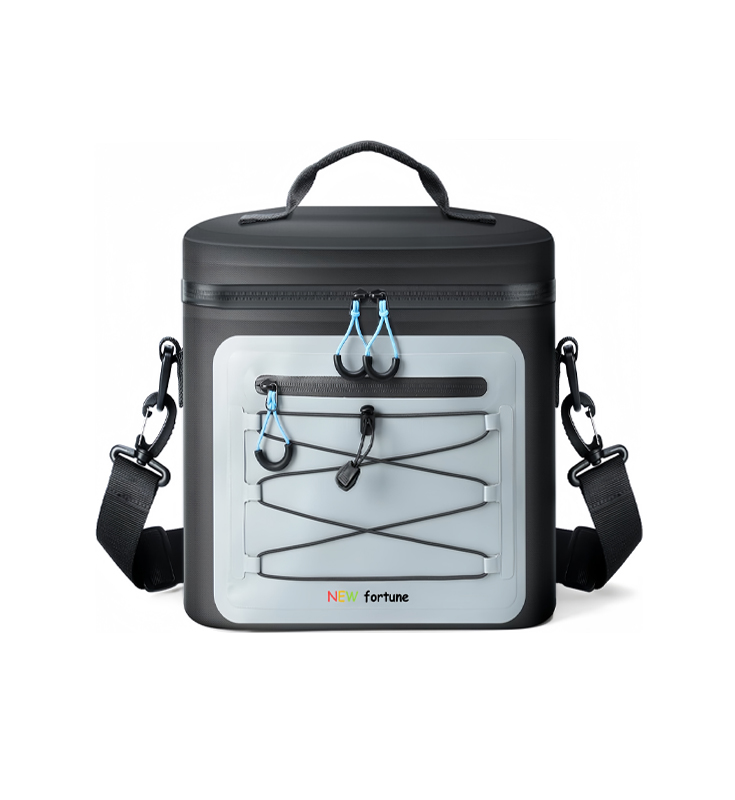 F-005 Small Soft Cooler Bag for Hiking and BoatingWaterproof TPU soft cooler with welded seams in two sizes, holds 18 or 24 cans. Seam-sealed and leak-proof, available for wholesale and private label.View Product →
Retail and e-commerce buyers gate custom outdoor bag programs on five document sets: a quality system certificate, inspection records, a transit test report, chemical compliance and a social audit result. A missing document usually stops the order at the receiving warehouse, not at the factory.
| Document or standard | What it verifies | Typical requirement |
| ISO 9001:2015 | Factory quality management system | Requested by most European and North American retail chains |
| AQL 2.5 to ISO 2859-1 | Defect rate at inline and final inspection | Major defects capped at 2.5 percent of the inspected sample |
| ISTA 3A | Product and packaging survive parcel transit | Standard for Amazon and most direct-to-consumer channels |
| REACH SVHC at 0.1 percent w/w | Substance control for EU market entry | Declaration under Article 33 of EU REACH |
| BSCI or Sedex audit | Labor and social compliance | Requested by several EU brands and retail groups |
One rule settles most disputes: a material test report proves the lot it was drawn from, not the lot you will receive. Buyers who require lot-linked reports on fabric, zipper and TPU film remove the largest single source of specification drift in OEM production.
The decision comes down to two numbers: how many pieces one colorway can carry, and how long the brand can wait for revenue. ODM wins on the second, OEM wins on margin once volume absorbs the pattern cost.
Most global brands settle on a hybrid: ODM for the first one or two SKUs in a category, then OEM once a single SKU can carry its own colorway minimum and differentiation starts to drive repeat purchase. Load-bearing programs such as roof bags and welded coolers move to OEM earlier, because their geometry is exactly what makes the product defensible.
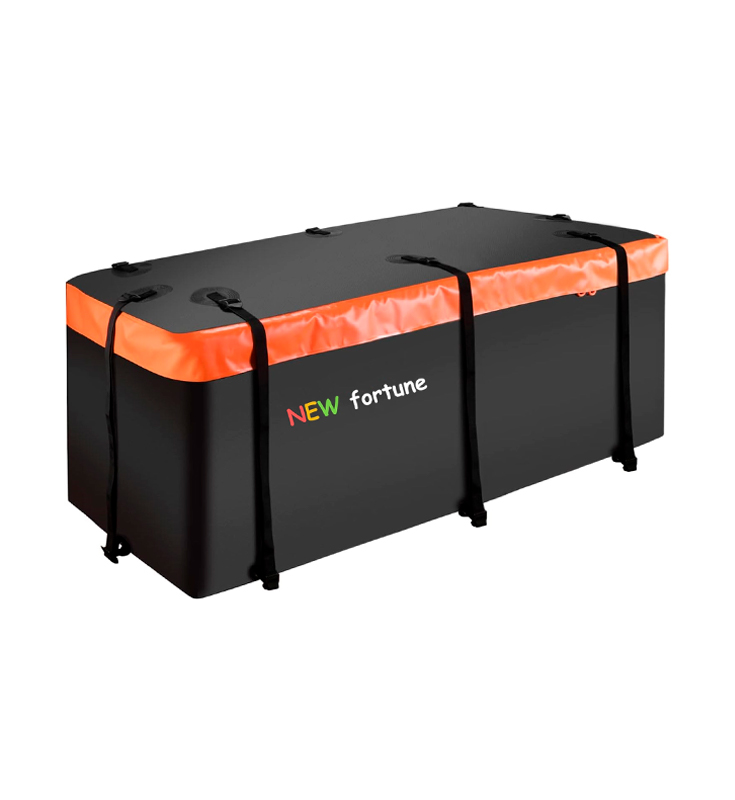
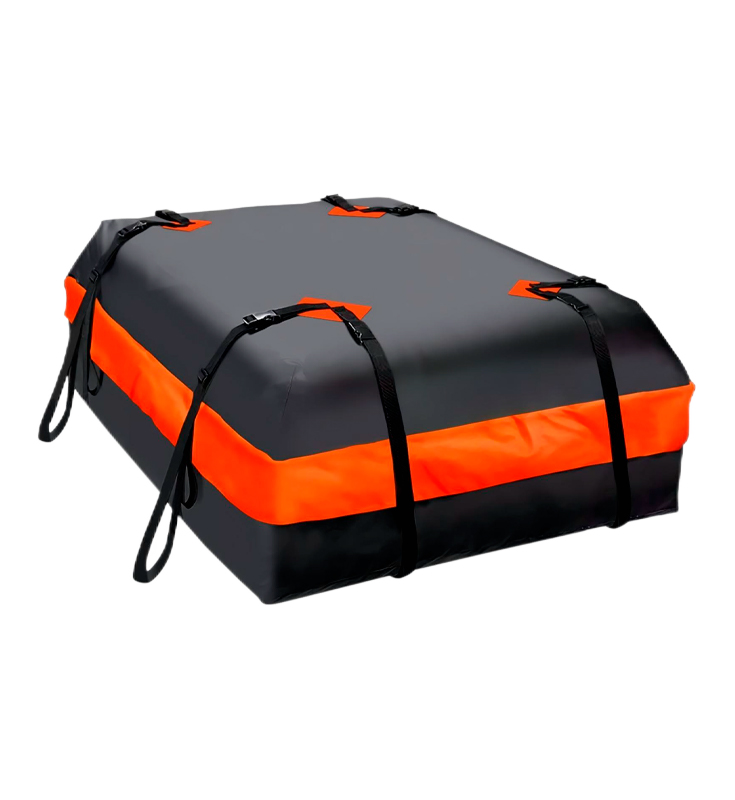 FO-5 Large Capacity Roof Rack Soft Bag425 L roof rack soft bag with heat-sealed seams and UV-resistant coating. For overlanding, road trips, and OEM programs where geometry matters.View Product →
A partner that supports both models has to hold design capability, both process families and the documentation in one plant. New Fuda Luggages and Bags Co., Ltd., established in 2006 in Pinghu City, Zhejiang Province, China, manufactures outdoor, cycling, fishing and travel bags using sewing and high-frequency welding, and exports to Europe, the Americas and Japan.
The company states that its pressure-glued, high-frequency welded series has become a preferred supply line for cross-border sellers, and its own notes on custom roof top bag manufacturing solutions set out the material and welding decisions behind OEM roof bag programs. The catalogue, spanning 15 to 28 cubic foot roof bags, TPU soft coolers and fishing bags, is listed at New Fuda Luggages and Bags Co., Ltd.
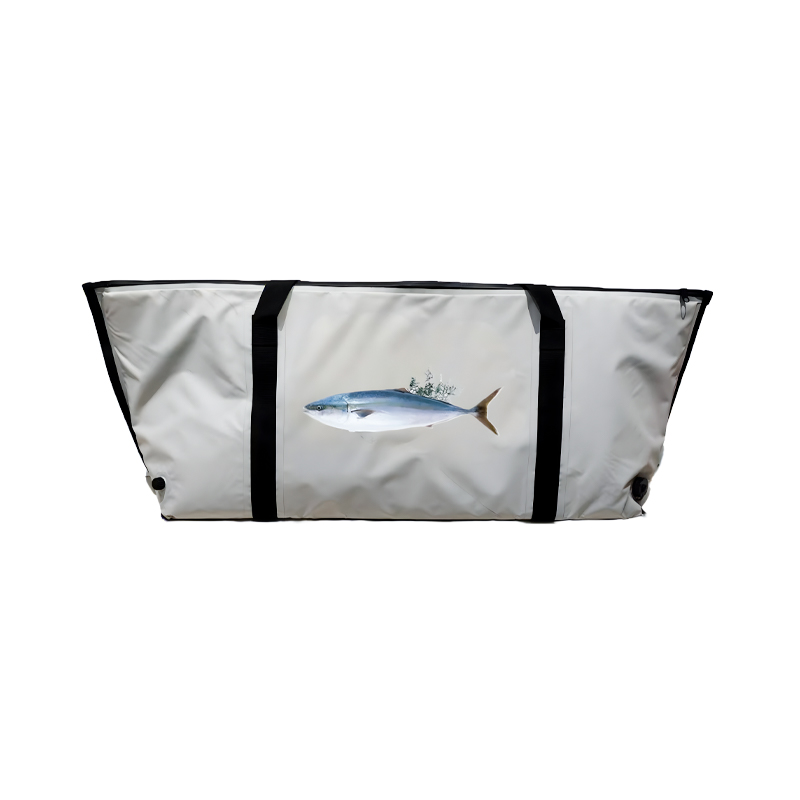 FI-06 Outdoor Waterproof Fish Kill BagWaterproof PVC mesh fish kill bag with high-frequency welded seams, leak-proof and easy to clean. Available for wholesale and private label with zipper options.View Product →
An OEM manufacturer builds to the buyer's pattern and material specification, so the brand owns the design and pays for development. An ODM manufacturer owns an already validated pattern and sells customization on top of it. Development runs 12 to 16 weeks for OEM against 6 to 9 weeks for ODM, and first order quantities run 500 to 1,000 pieces per colorway against 300 to 500.
Plan for 300 to 500 pieces per colorway on an ODM program and 500 to 1,000 on OEM. Welded TPU cooler programs sit at the upper end of both ranges, because each pattern needs its own radio frequency welding fixture and that fixture cost has to be spread across the run.
Six to nine weeks for an ODM program and 12 to 16 weeks for OEM, measured from approved tech pack to ex-factory date. Add three to five weeks of ocean freight to Europe or North America, and add two to four weeks if a second or third prototype round is required.
Request the ISO 9001:2015 certificate, the AQL 2.5 inspection plan written to ISO 2859-1, the ISTA 3A transit test report, a REACH SVHC declaration covering the 0.1 percent w/w threshold, and lot-linked material test reports for fabric, zipper and TPU film. Those five documents answer the compliance questions asked by EU and US retail buyers.
OEM puts the pattern in the brand's hands. ODM puts the calendar in the factory's hands. Either way, the welded seam or the stitched seam is what the customer judges, and that is the specification worth writing into the purchase order.
Your email address will not be published. Required fields are marked *

* Your email is safe with us, we don't spam.

Professional R & D and manufacturing of outdoor sports, cycling, fishing, business, travelling sewing, high-frequency stamping series of luggage enterprises
E-mail: christine@fudabags.com
Phone: +86-13819351116
Add: No.2288 Xinggong Road, Pinghu City, Jiaxing City, Zhejiang Province, China
Copyright © 2025 by New Fuda Luggages & Bags Co., Ltd. Rights Reserved. Privacy Custom Durable Outdoor Travel Bag Manufacturers


 English
 Français
 Español