


Get A Quote

Content
You mount a 15-cubic-foot roof top bag on your crossbars, load it with camping gear, and drive through rain at highway speed. If the bag was built properly, the seams stay tight, the zipper stays dry, and the load stays put. If it was not, your first clue is a wet seat cushion or a seam that starts to separate after a few hundred miles.
Roof top bags are produced through a structured manufacturing sequence: material selection, precision cutting, sewing or high-frequency welding, hardware installation, and multi-stage quality control. Most soft cargo carriers sold by outdoor brands are manufactured by specialized bag factories rather than general luggage plants. The ability to combine conventional sewing with RF welding is the single biggest factor that determines whether a roof bag performs in real weather.
This guide walks through each step of how roof top bags are made, which materials actually matter, how waterproofing is achieved, and what to verify before sourcing a product line.
The outer shell of a typical roof top bag is PVC-coated polyester fabric, usually 500D or 600D. The denier number refers to the thread weight per 9,000 meters of fiber; 500D and 600D are the most common for roof carriers because they balance tear resistance with manageable packed weight. Lighter fabrics such as 300D Oxford work for occasional use but sacrifice abrasion resistance when a bag is dragged over a roof or rubbed against a rack.
PVC-coated polyester is preferred for the base and lower side walls because the coating forms a continuous waterproof layer. The coating thickness typically ranges from 0.3 mm to 0.5 mm and is applied before cutting. Oxford fabric, by contrast, is a plain-weave polyester that folds more compactly. Many entry-level roof bags use Oxford with a PU or PVC backing, which handles light rain but cannot match the abrasion and puncture resistance of a 500D PVC-coated shell.
Thermoplastic polyurethane (TPU) is increasingly used in roof bag construction because it can be heat-bonded into a fully sealed structure. TPU films, typically 0.2 mm to 0.5 mm thick, are used for foldable panels, zipper flanges, and welded bottom trays. Since TPU is welded rather than sewn, there are no stitch holes to leak, which is why TPU-based roof bags and soft coolers with welded seams outperform stitched-only designs in heavy rain.
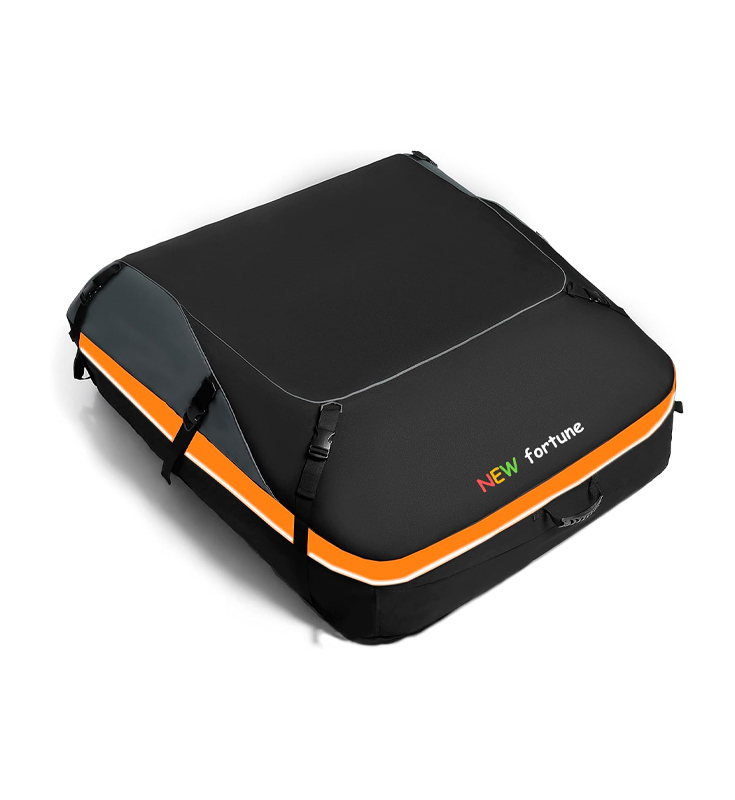
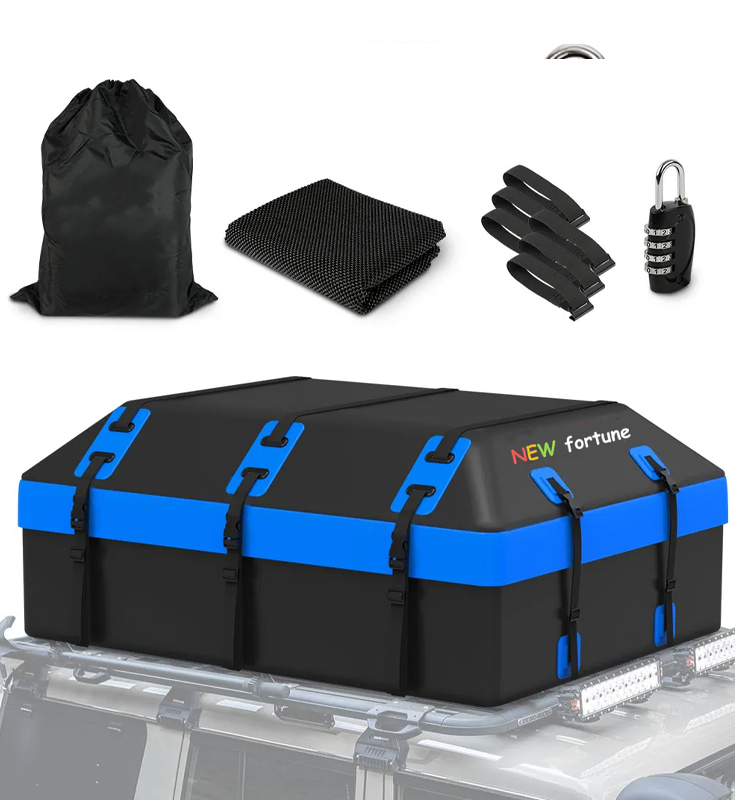
Material selection has a direct effect on how many seasons a carrier will survive. A comparison of outdoor roof luggage bag durability and performance looks at the trade-offs in more detail. One practical example is the 15 cubic foot 500D PVC roof top cargo bag, which pairs a PVC-coated grid fabric shell with a welded PVC bottom tray.
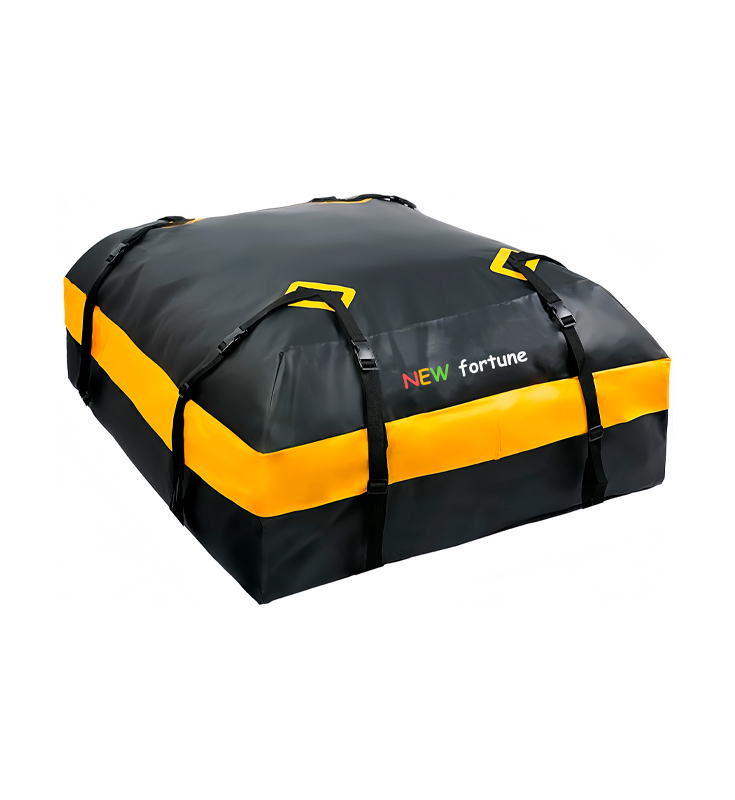 Wholesale Private Label FO-10 Waterproof 15 Cubic 500D Grid PVC Carrier Car RoofNew Fuda Luggages & Bags Co., Ltd is China Wholesale Private Label FO-10 Waterproof 15 Cubic 500D Grid PVC Carrier Car Roof Bag, SUV Roof...View Product →
| Material | Typical Specification | Primary Function | Location in Bag |
|---|---|---|---|
| PVC-coated polyester | 500D / 600D, 0.3–0.5 mm coating | Waterproof outer shell, abrasion resistance | Main body, lower side walls |
| Oxford polyester | 300D–600D | Lightweight shell, compact folding | Entry-level bodies, side panels |
| TPU film | 0.2–0.5 mm | Welded seams, leak-proof sealing | Welded gussets, zipper flanges |
| Nylon webbing | 25–50 mm width | Load transfer, tie-down points | Straps, handle loops |
| Foam-backed PVC mat | 3–6 mm foam core | Paint protection, slip resistance | Underside of the bag |
Before cutting, the fabric is inspected for coating defects and weave irregularities, then relaxed so the material does not distort during cutting. Patterns are laid out with the fabric grain aligned, because a loaded roof bag places stress along the length of the vehicle. A standard 15-cubic-foot roof bag requires two side panels, a top panel, a bottom panel, and several gusset strips to create the three-dimensional shape.
Most medium-scale manufacturers use CNC fabric cutters or die-cutting presses. Panel-to-panel tolerance is typically around ±2 mm. When panels are cut off-spec, the finished bag develops wrinkles, load distributes unevenly, and seam wear accelerates.
Assembly starts with sewing the main panels using a flatbed sewing machine with lockstitch or double-stitched seams. Load-bearing points are reinforced with bartack stitches, the dense multi-pass stitching visible at the ends of webbing loops. The sewing stage matters more than most buyers realize: if the stitch density is too low, the seam fails under load even when the fabric is high quality. A well-made roof bag uses roughly four to five stitches per centimeter at stress points, and the needle holes are sealed afterward.
The production sequence follows a clear order:
Waterproof performance does not come from the thread. Stitch holes are the weakest point in any sewn construction, which is why weatherproof roof bags add a second line of defense: seam taping, folded seam construction, or welded gussets.
High-frequency welding, also called RF welding or dielectric welding, is the most important waterproofing technique in modern roof bag production. A high-frequency electromagnetic field excites the molecules in PVC or TPU films, heating them until the layers fuse. No adhesive and no thread are used, so the result is a seam that is genuinely watertight and often stronger than the surrounding material.
In practice, RF welding is used for three jobs: bonding TPU bottom trays to the body, sealing zipper flanges, and creating fold lines that survive repeated collapse. For sewn-only bags, a waterproof zipper and seam tape are acceptable substitutes, though they do not perform as well after years of UV exposure and flexing.
A roof top bag is only as reliable as its attachment points. Most straps are 25 mm to 50 mm wide nylon webbing, stitched from inside the bag so that load transfers to the fabric through a reinforced patch. Buckles are usually side-release plastic on lighter bags; heavy-duty models use metal cam buckles or coated steel hooks.
The anti-slip bottom mat, usually foam-backed PVC, is bonded to the underside of the bag. It does two jobs: it protects the vehicle's paintwork and stops the bag from sliding sideways when cornering under load.
Security is also part of the hardware package. Some models integrate a lockable zipper bridge so both zipper pulls can be locked together when the vehicle is parked, such as this roof top bag with integrated safety lock. For vehicles without crossbars, the guide on installing a waterproof roof bag without a roof rack covers mounting limits and tensioning steps.
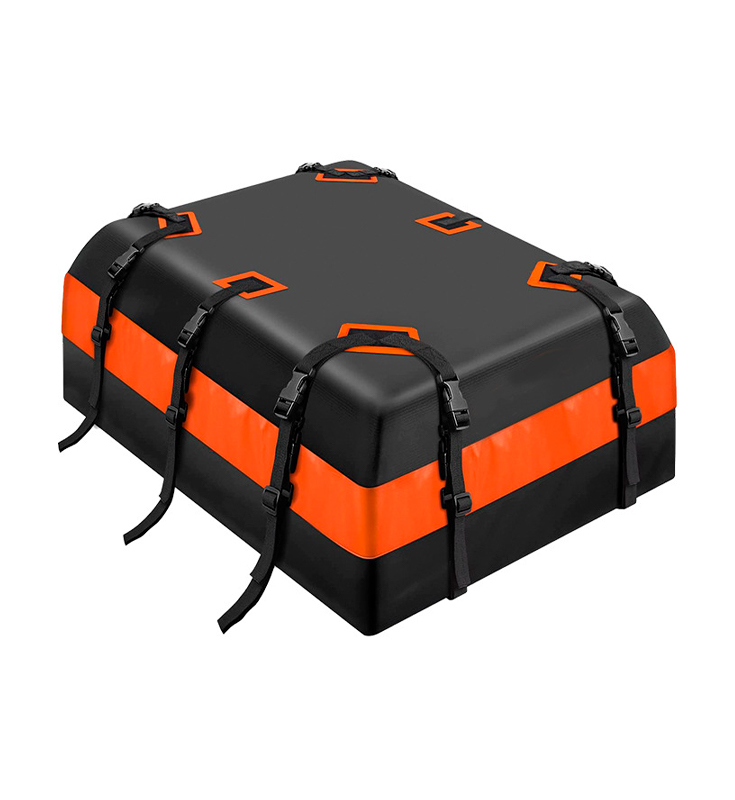 Wholesale Private Label FO-1 Waterproof Soft Rooftop Cargo Bag, Car Roof Bag WitNew Fuda Luggages & Bags Co., Ltd is China Wholesale Private Label FO-1 Waterproof Soft Rooftop Cargo Bag, Car Roof Bag With Safety Lock ...View Product →
The production process does not end at the sewing line. A factory with proper quality control runs every batch through standardized checks before packing.
The most important finished-product tests for roof top bags are:
For bags rated between 15 and 25 cubic feet, typical load limits are 110 to 175 pounds. The actual safe number depends on the attachment system, not just the fabric. A car roof storage bag load capacity guide explains how to match the rating to real vehicle conditions.
When evaluating a production partner, do not rely only on product photos. Ask about the welding process, the coating thickness, the stitch density, and the load test procedure they use. A manufacturer that combines sewn construction with RF-welded waterproofing is far more likely to deliver a bag that survives season after season. An example of that combined capability is a heavy-duty 500D PVC roof top cargo box, which uses a PVC-coated body, welded bottom tray, and reinforced strapping points.
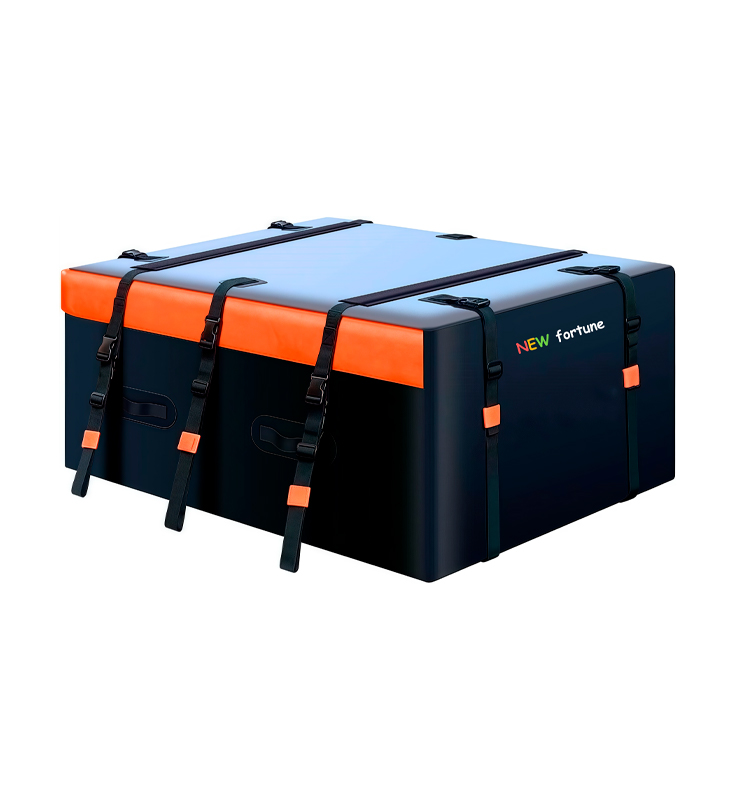 Wholesale Private Label FO-9 Heavy-duty Large Capacity 500D Durable Waterproof PNew Fuda Luggages & Bags Co., Ltd is China Wholesale Private Label FO-9 Heavy-duty Large Capacity 500D Durable Waterproof PVC Car Roof Bo...View Product →
Knowing how roof top bags are made changes how you evaluate a product. Instead of comparing only size and price, you can look at the details that predict performance: the denier and coating of the outer fabric, the presence of welded seams, the width of the webbing, the stitch density at stress points, and whether the factory runs real water and load tests.
For brands and importers, the decision goes beyond a single bag. A factory with in-house sewing and high-frequency welding capability can produce roof bags with different material combinations without outsourcing critical steps. That shortens sampling time, keeps quality under one roof, and makes it easier to respond when a customer reports a seam or zipper problem.
Roof top bag manufacturing is not a secret process, but it is a disciplined one. The difference between a bag that lasts one season and one that lasts five is visible in how carefully each step is executed.
Your email address will not be published. Required fields are marked *
* Your email is safe with us, we don't spam.

Professional R & D and manufacturing of outdoor sports, cycling, fishing, business, travelling sewing, high-frequency stamping series of luggage enterprises
E-mail: christine@fudabags.com
Phone: +86-13819351116
Add: No.2288 Xinggong Road, Pinghu City, Jiaxing City, Zhejiang Province, China
Copyright © 2025 by New Fuda Luggages & Bags Co., Ltd. Rights Reserved. Privacy Custom Durable Outdoor Travel Bag Manufacturers


 English
 Français
 Español