


Get A Quote

Content
A buyer comparing three quotes for private-label car carrier bags will quickly notice that the same product can be described three different ways: welded PVC, 500D Oxford with PU coating, or soft-shell cargo carrier. All three may claim 15 cubic feet of capacity, yet packed dimensions, empty weight, and seam construction can differ enough to change freight cost, durability, and return rates. This guide translates those specification differences into the criteria a B2B buyer should evaluate before issuing a purchase order.
A car carrier bag is a collapsible soft-luggage container designed to sit on a roof rack, hitch platform, or inside a cargo carrier frame, carrying gear that does not fit in the vehicle cabin or trunk. For B2B buyers, the category includes roof bags, cargo carrier bags, and hitch-mounted cargo bags, all of which share the same supply chain and quality control concerns.
Carrier bags are sold under several names, and those names affect the hardware you need to specify. Roof bags attach directly to crossbars with straps or hook-and-loop systems. Hitch carrier bags are shaped to fit a steel platform that slides into a receiver hitch. Cargo carrier bags are sized to the footprint of a flat cargo carrier and usually include an anti-slip mat. If a supplier groups all three under "cargo bags," confirm the mounting system before ordering.
Spec sheets also differ in what they measure. Installed dimensions describe the volume the bag displaces on the vehicle; packed dimensions describe the folded size for retail packaging. A B2B order must state both, otherwise the carton size may be quoted wrong and the container cost will climb. For a detailed look at how weight limits affect safety, read our cargo carrier bag weight-limit safety guide.
Always request both installed and packed dimensions in the same spec sheet. If a factory only quotes cubic feet, ask them to confirm length, width, height, and folded size in centimeters.
Most commercial car carrier bags use one of three materials: PVC-coated polyester, PU-coated Oxford nylon or polyester, and TPU. PVC-coated fabrics are heavy, abrasion resistant, and weldable with high-frequency machines, which is why they dominate entry-level waterproof roof bags. Oxford fabric is lighter and packs smaller, but ordinary stitched Oxford bags rely on seam taping or rain covers to stay waterproof. TPU sits at the premium end: it welds into leak-proof seams, stays flexible in cold weather, and supports stronger environmental claims at a higher unit cost.
Denier numbers (500D, 600D, 1000D) describe yarn thickness, not waterproofing. A 500D grid PVC fabric with proper coating can outperform a 1000D Oxford that lacks lamination. When evaluating quotes, compare grams per square meter and coating type, not just the number printed on the datasheet.
Cubic feet is the standard capacity unit, but it is not a regulated measurement. One factory's 15-cubic-foot bag may use a different interior-volume calculation than another factory's, so always ask for volume in liters and compare it against installed dimensions.
Static load ratings describe what a bag holds when parked; dynamic load is what matters on the road. A roof bag holding 110 pounds at rest can experience several times that force during braking and vibration. European crossbar systems commonly recommend 75 kg (165 lb) per bar set, and the bag rating must not exceed the vehicle roof limit.
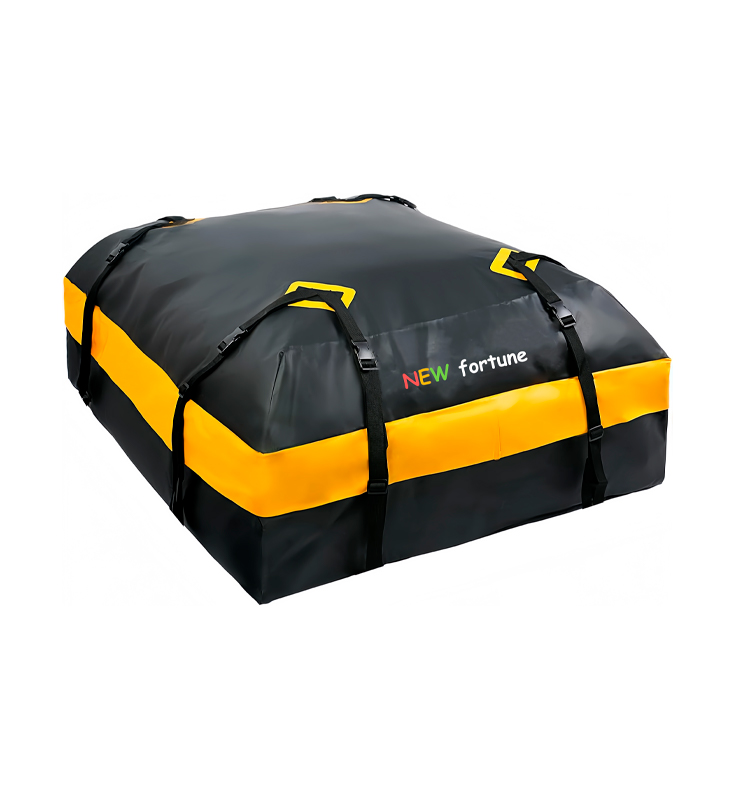 FO-10 Waterproof 15 Cubic 500D Grid PVC Carrier Car Roof BagThis 15-cubic-foot roof bag suits family sedans and SUVs, with 500D grid PVC construction and heat-sealed seams for weather resistance. Its dynamic load rating should be checked against vehicle roof limits before use.View Product →
The 15-cubic-foot class is the best-selling segment in private-label car carrier bag programs because it fits family sedans and SUVs without exceeding typical roof load limits.
Before committing to a capacity class, check the roof-load specifications of the target vehicles and confirm the bag rating against them. Our cargo carrier bag product range lists tested capacities directly.
Waterproofing claims without a test method are marketing copy. The three relevant questions are how the seams are joined, which zipper is used, and how the bag was tested. High-frequency welding fuses PVC or TPU layers into a monolithic seam; stitched seams need seam tape applied before they can resist heavy rain. A waterproof zipper with a welded flap is the difference between a damp interior and a dry one.
Have the factory state the test procedure: a 30-minute shower test at a defined angle, a submersion test, or a dry-storage test. For B2B orders, also specify zipper cycling tests of at least 500 open-close cycles to avoid early failures in the field.
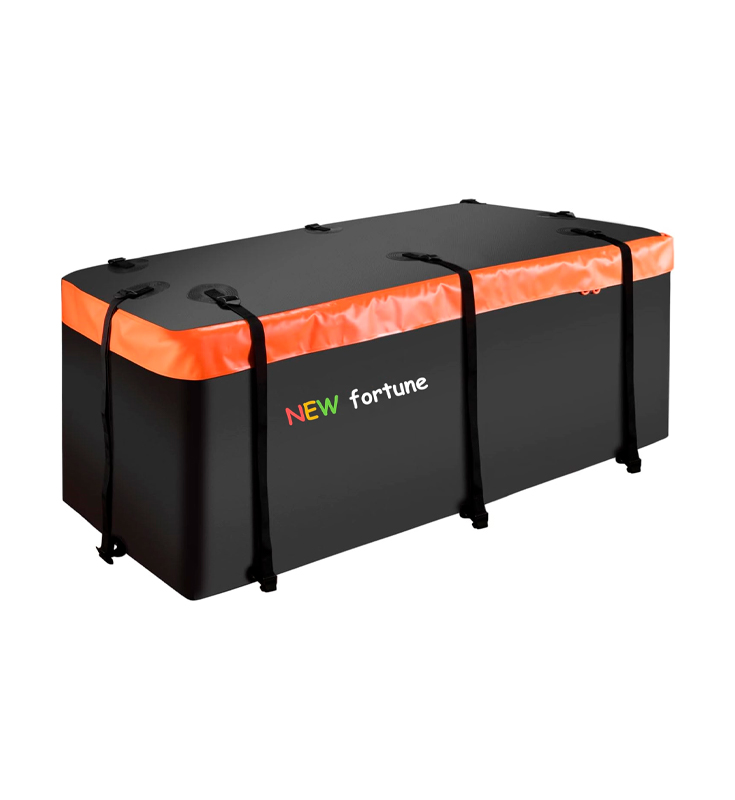 FO-26 15 Cubic Foot Soft Shell Waterproof Car Rooftop Cargo Carrier BagOffering 15 cubic feet of cargo space, this soft-shell bag uses 500D grid PVC for rain and road spray resistance. Verify its waterproofing test method and zipper durability for B2B orders.View Product →
A waterproof rating in the soft-bag industry normally refers to resistance to rain and road spray, not submersion. A bag that survives a 30-minute heavy-rain test is not a dry bag for kayaking.
| Component | What to verify | Failure symptom in field |
| Seam type | Confirmed welded or taped | Water enters through needle holes |
| Zipper | Waterproof zipper or rain flap | Moisture collects at zipper line |
| Pull tab | Metal or reinforced plastic | Pull breaks after 200 cycles |
| Base fabric | Coated weight per square meter | Fabric saturates in heavy rain |
Straps and buckles decide whether the bag stays on the vehicle. A 2.5-centimeter polyester webbing strap with a rated breaking strength of 200 kg is typical; check that buckles are made from engineering-grade plastic or metal, not recycled nylon that cracks in cold weather.
Pull-test every strap. Apply rated load and check the stitching around anchor points.
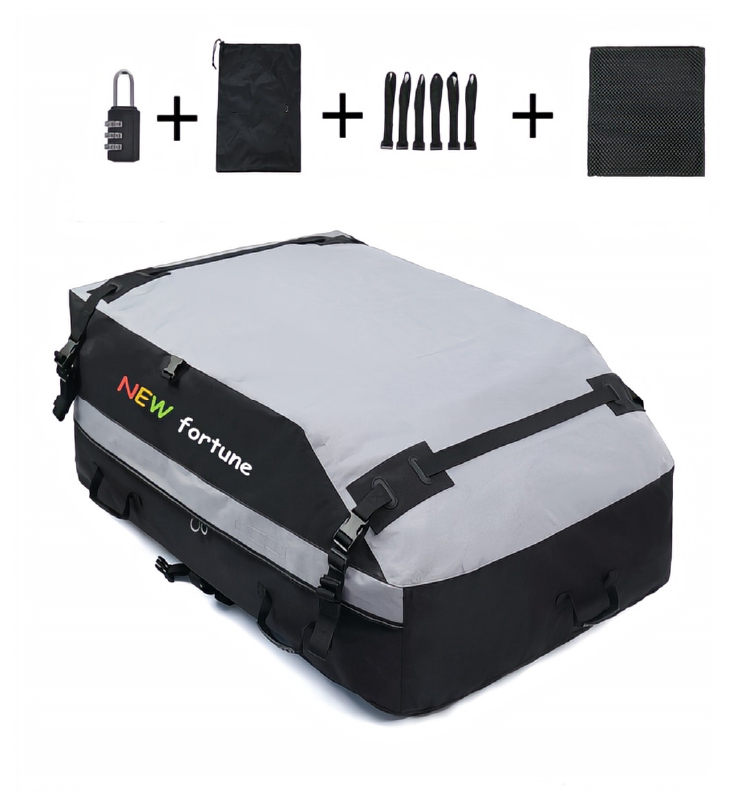
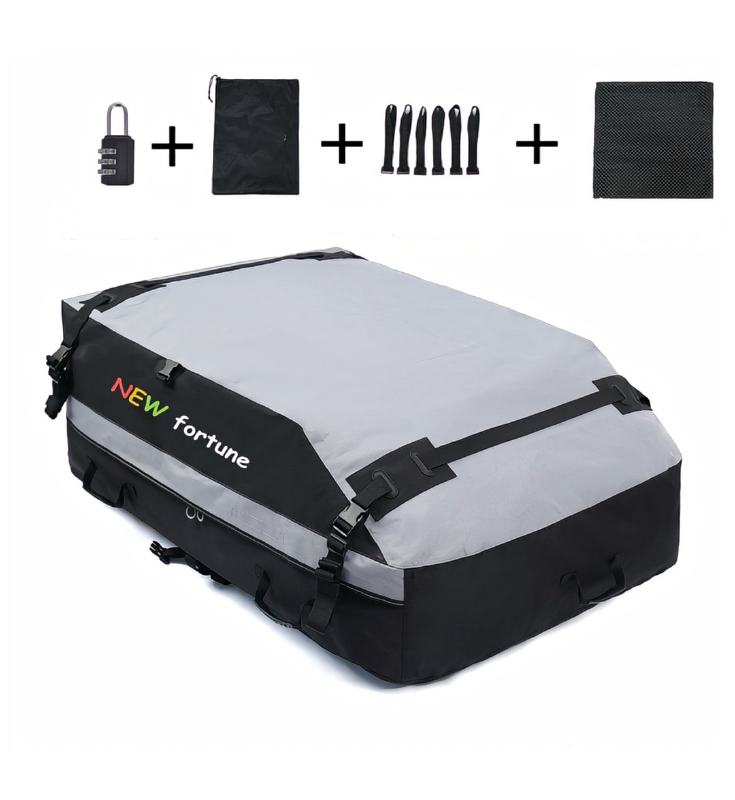
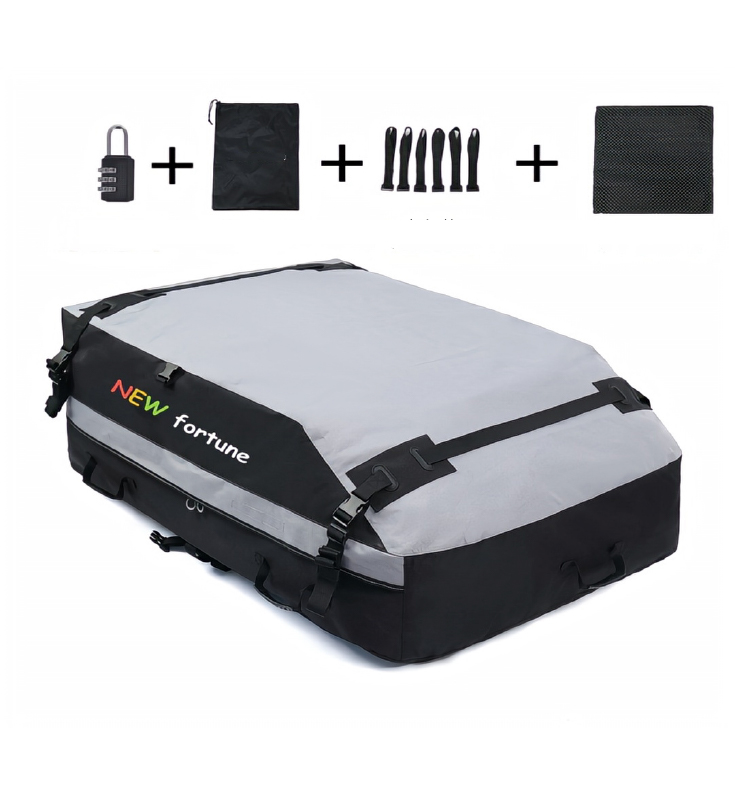
Check the anti-slip mat. A PVC backing or rubberized pad stops the bag from sliding on painted roofs.
Verify buckle compatibility. Confirm hooks fit crossbar diameters up to 4 cm.
Order spare parts. Include extra straps and repair patches in the production order for after-sales support.
Anti-slip is not a feature, it is a safety function. A bag without a mat can shift forward during hard braking and wear through the roof paint in one long trip.
Before committing container space, the supplier should deliver three things: a pre-production sample with a written spec sheet, test reports for the coated fabric and zipper, and an approved quality-inspection plan. New Fuda Luggages & Bags Co., Ltd., a manufacturer founded in 2006 with sewing and high-frequency welding capabilities, builds car carrier bags and related soft luggage for export markets in Europe, the Americas, and Japan. That factory profile matters because seam welding and material sourcing are the two capabilities that decide whether a private-label program fails on returns or scales cleanly.
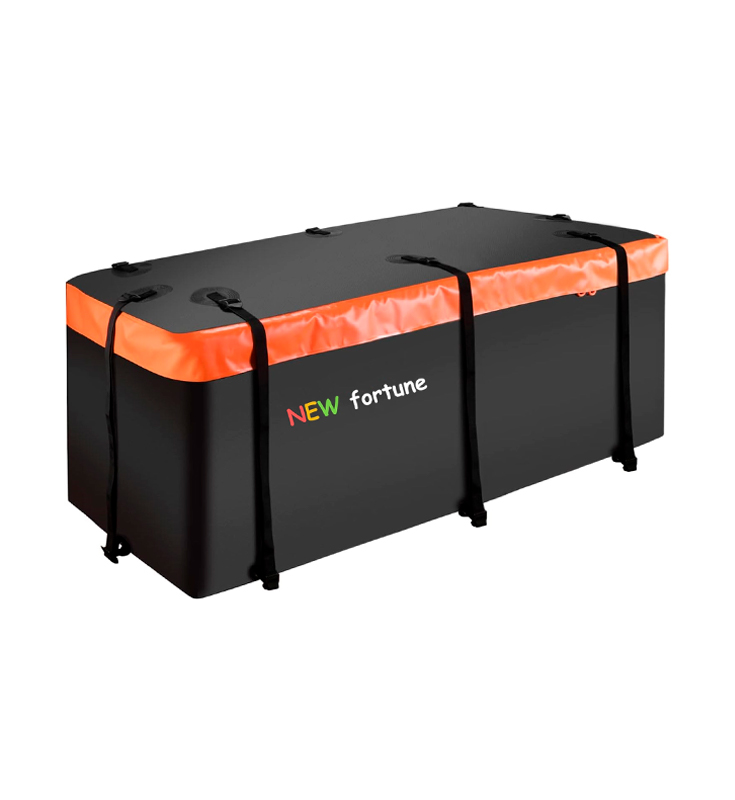 FO-19 Heavy Duty Waterproof SUV Cargo Carrier Bag for Outdoor ActivitiesWith 20 cubic feet of capacity and durable clamped mesh PVC, this heavy-duty bag is built for outdoor gear. Consider its 3.66 kg unit weight and packaging when planning shipping and MOQ requirements.View Product →
Most soft-bag factories quote a minimum order quantity between 500 and 3,000 pieces per SKU. Confirm MOQ, lead time, and per-unit weight tolerance before sampling; a 5% weight variance can upset your shipping cost model.
A roof bag mounts directly on roof crossbars, while a cargo carrier bag fits a flat cargo carrier or hitch platform. The difference affects strapping layout, base reinforcement, and the anti-slip mat design.
For rain-exposed markets, PVC-coated polyester with welded seams offers the highest water resistance at the most competitive price. For buyers prioritizing light weight and foldability, PU-coated Oxford with taped seams is acceptable when a rain cover is included.
Ask for the test method and run a contract sample: 30 minutes of simulated heavy rain at a fixed angle, then check the interior for water. Require the result to be recorded in the quality inspection report.
The 15-cubic-foot class is the safest entry point because it fits most sedans and SUVs, stays under common roof load limits, and matches the largest buyer demand. Add an 11-cubic-foot and a 25-cubic-foot variant after the first sell-through data.
Your email address will not be published. Required fields are marked *

* Your email is safe with us, we don't spam.

Professional R & D and manufacturing of outdoor sports, cycling, fishing, business, travelling sewing, high-frequency stamping series of luggage enterprises
E-mail: christine@fudabags.com
Phone: +86-13819351116
Add: No.2288 Xinggong Road, Pinghu City, Jiaxing City, Zhejiang Province, China
Copyright © 2025 by New Fuda Luggages & Bags Co., Ltd. Rights Reserved. Privacy Custom Durable Outdoor Travel Bag Manufacturers


 English
 Français
 Español