


Get A Quote

Content
An automotive accessory buyer handed a reference sample and a target price can only judge a car cargo carrier bag by its specifications. Rated volume, fabric system, seam construction, closure hardware, and mounting geometry are the variables that succeed or fail at highway speed and in weather that no showroom sample will reveal.
This article defines the key specifications that belong in an OEM sourcing document for a car cargo carrier bag, covering capacity, materials, waterproofing, mounting compatibility, and first-article quality control. It is written for product managers, engineers, and procurement leads who must turn an accessory concept into measurable factory requirements.
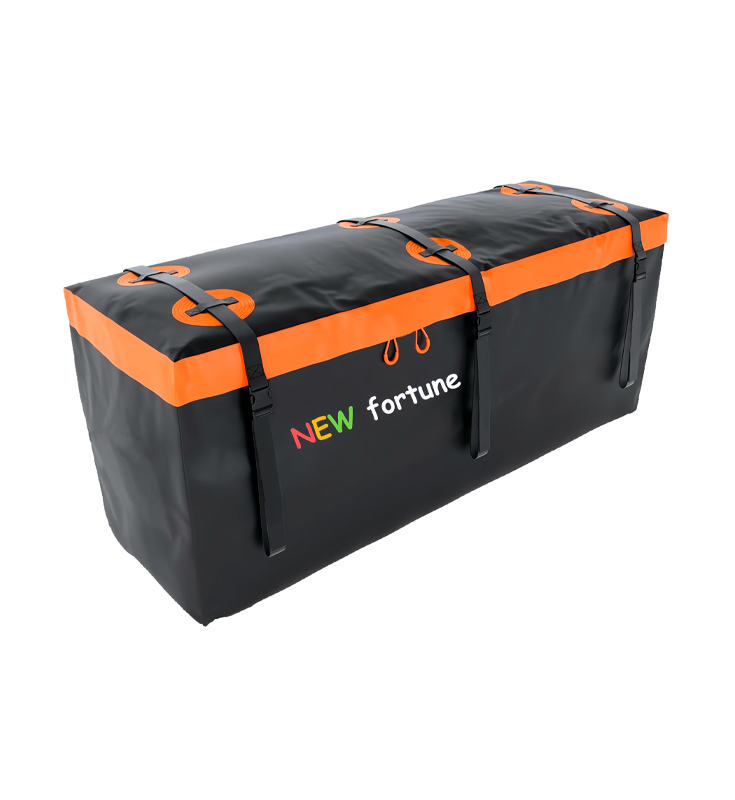
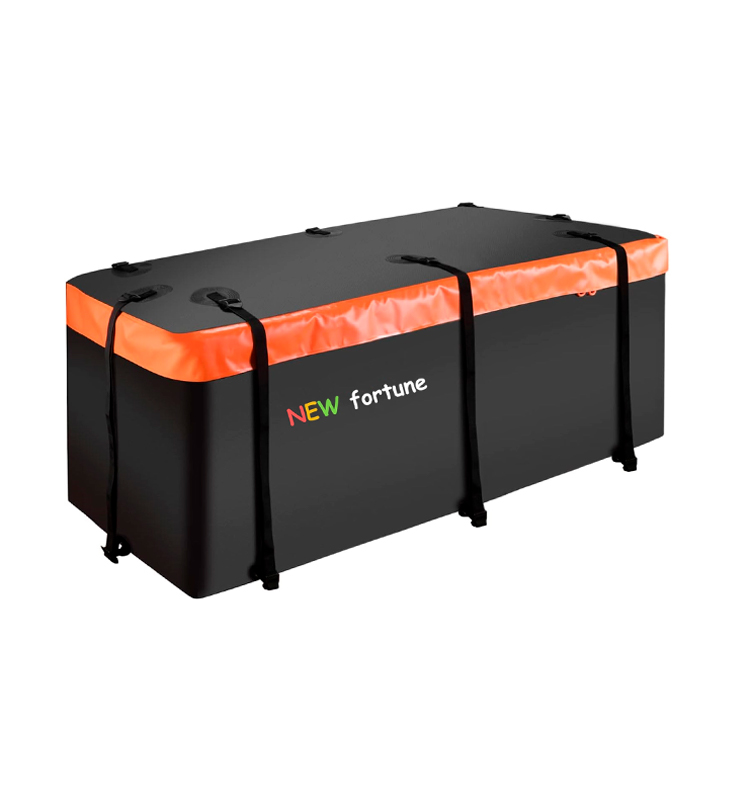 FO-19 SUV Cargo Carrier Bag with 20 Cubic Feet CapacityThis large 20-cubic-foot soft cargo bag uses 500D clamped mesh PVC for durability and waterproofing, with movable straps, locks, and drawstring bags. It suits buyers specifying measured capacity and material requirements for roof-mounted luggage.View Product →
A car cargo carrier bag is a soft-sided, collapsible storage container designed to mount on a roof rack, a hitch-mounted cargo platform, or a rear cargo carrier. Unlike a hard-shell box, a soft bag collapses flat for storage, costs less per cubic foot of load space, and adapts to different crossbar widths. The trade-off is that all load retention depends on fabric, straps, and seam integrity, which is precisely why OEM specifications must be written with measured values.
Capacity is the first specification to lock because it drives pattern cutting, fabric area, packaging size, and landed cost per unit.
Most OEM programs for car cargo carrier bags work in cubic feet, with 11, 15, 20, and 25 cu ft as the standard ladder. One cubic foot equals 28.3 liters, so a 15 cu ft bag holds roughly 425 liters of load volume, which is the mainstream size for a family of three to four on a one-week road trip. The table below shows the reference dimensions an OEM should request at first-article inspection.
| Rated capacity | Reference L x W x H (in) | Typical mounting position | Recommended use |
| 11 cu ft | 39 x 33 x 15 | Roof or rear hitch | Weekend trips, sedan owners |
| 15 cu ft | 44 x 36 x 16 | Roof rack | Mainstream family travel |
| 20 cu ft | 50 x 39 x 18 | Roof rack or large platform | Longer tours, bulky camping gear |
| 25 cu ft | 55 x 41 x 19 | Roof rack on SUV or wagon | Expedition-style loading |
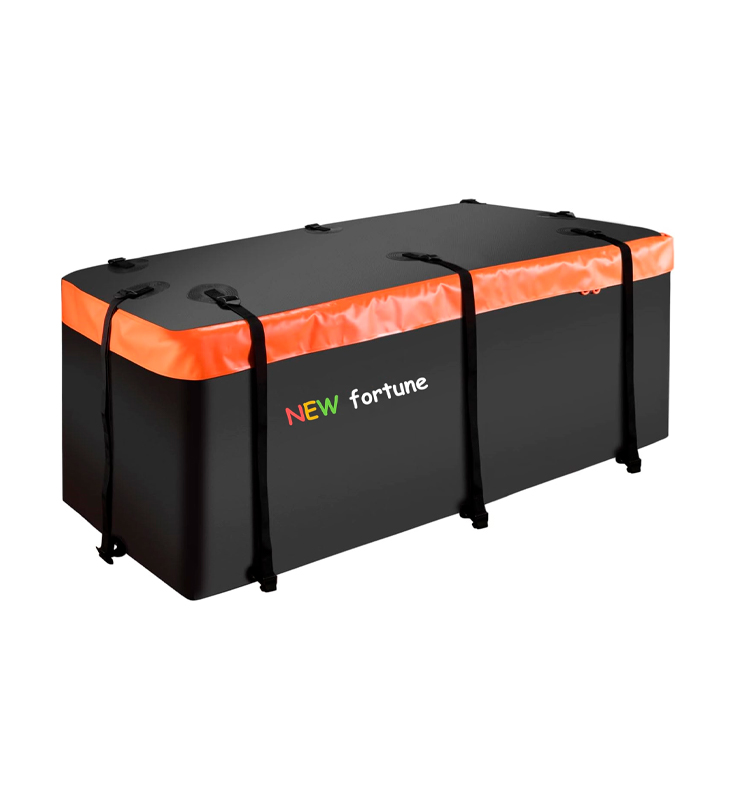 FO-26 15 Cubic Foot Waterproof Soft-Shell Rooftop Cargo BagA 15-cubic-foot rooftop carrier made of 500D grid PVC with a soft, tough build and waterproof finish. Includes straps, locks, and drawstring bags, fitting the article's focus on capacity verification and first-article inspection dimensions.View Product →
Specify that rated capacity is measured as the main compartment interior volume, excluding side pockets and document sleeves. The OEM tolerance should hold external length, width, and height to plus or minus 2 cm, verified on a flat surface with the bag empty and unbuckled. A broader selection framework for vehicle luggage is available in our guide on how to choose luggage cargo carrier bags.
Fabric selection governs water resistance, tear strength, UV aging, and abrasion life, so it is the first material decision in a cargo carrier bag specification.
For roof-mounted bags, the industry baseline is a 500D or 600D polyester base fabric with a heavy PVC coating or a polyurethane-coated Oxford weave. The most common construction in commercial programs is 500D PVC-coated polyester, which balances tear strength, stiffness during loading, and cost. TPU-laminated fabrics are specified when the same production line must deliver welded, fully waterproof structures such as soft coolers, a capability that requires high-frequency welding rather than stitching alone.
| Property | 500D PVC-coated polyester | 600D Oxford with PU coating | TPU laminate |
| Water resistance | Excellent | Good, lower hydrostatic head | Excellent, weldable seams |
| Tear strength | Superior for exterior roof use | Moderate | High |
| High-frequency welding | Not typical | No | Yes, full seam welding |
| UV aging | Moderate, needs coating barrier | Moderate | Good |
| Typical OEM use | Heavy-duty cargo carrier bags | Light-duty rear carrier bags | Cross-category waterproof goods |
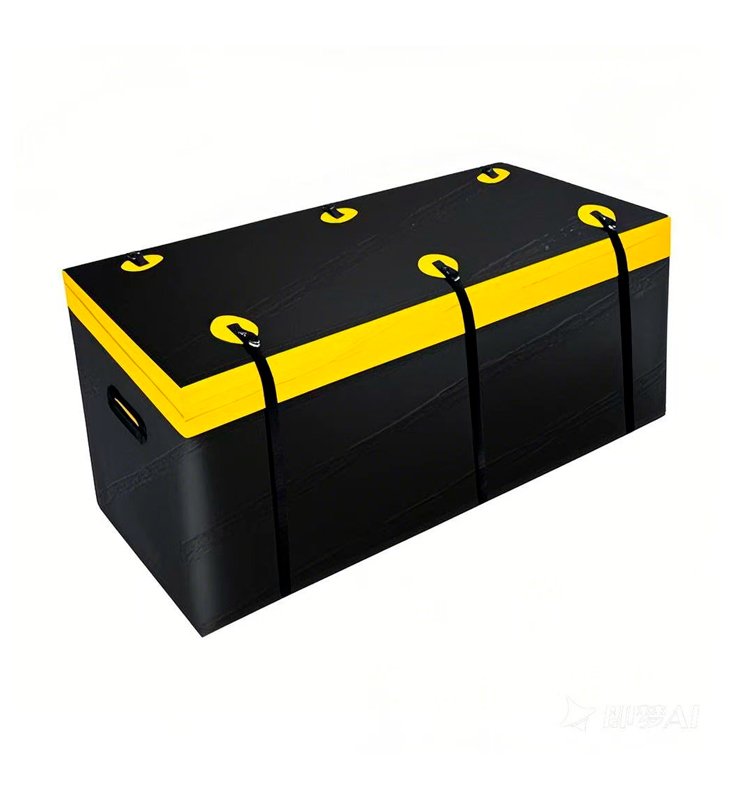 FO-27 20 Cu Ft Waterproof Rooftop Cargo Carrier BagThis 20-cubic-foot carrier features strong 500D grid PVC construction for rainproof durability, plus movable straps, locks, and drawstring bags. It aligns with the article's discussion on fabric strength and welded versus stitched construction for roof bags.View Product →
Below 420D coated fabric, flex cracking and abrasion damage typically appear within 12 to 18 months of regular highway use. A manufacturer with both sewing and high-frequency welding capability, such as New Fuda Luggages & Bags Co., Ltd. (New Fuda), can switch between stitched PVC-coated bags and welded TPU constructions on the same project, which shortens prototyping time when a buyer is building a wider automotive accessory line.
A soft cargo carrier bag fails in rain at exactly three points: the zipper, the seam line, and the strap anchor patches, and each point is controlled by a specific specification.
Weight limits and weather performance are closely related. A bag rated for 50 kg of cargo must carry that load in a sustained downpour without seam stretch, which is why the waterproofing specification belongs next to the load rating rather than on a separate page. Our detailed analysis of cargo carrier bag waterproofing, weight limits, and safety covers the failure modes in more depth.
The mounting system converts a fabric container into a vehicle accessory, and the OEM specification must define strap strength, crossbar compatibility, and rackless installation options.
For hitch-mounted and rear cargo platform applications, the same bag body can be used with a shorter strap set and a heavier base reinforcement. If your project spans roof and hitch positions, require the manufacturer to validate both configurations at the sample stage rather than assuming one bag fits both mounting modes.
First-article inspection for a cargo carrier bag should verify dimensional deviation, fabric weight, seam strength, zipper cycling, and strap anchorage before production ramp-up begins.
The most important specifications are rated capacity, fabric system (500D PVC-coated polyester or equivalent), seam construction, zipper size with rain-flap protection, strap anchor reinforcement, and mounting compatibility with roof, hitch, and rackless configurations. Quality-control tolerances, such as plus or minus 2 cm dimensional deviation and a 100 kg anchor pull test, should be written into the sampling plan.
They belong to the same product category. Roof bag refers to mounting on roof crossbars, while car cargo carrier bag is the broader term that also covers hitch-mounted and rear cargo platform installations. In an OEM sourcing document, cargo carrier bag is the safer term because it does not limit the mounting position.
Yes. A rackless installation uses four or more door-hook straps with padded hooks combined with an anti-slip base mat. The OEM specification should require padded hooks with a minimum contact area to avoid paint damage, and should state that the rated payload is reduced when no roof rack is present to distribute the load.
A 15 cu ft car cargo carrier bag is the mainstream choice for family road trips and provides roughly 425 liters of load volume. Many OEM programs offer a two-size ladder of 15 and 20 cu ft to cover both sedans and larger SUVs, with 11 cu ft reserved for entry-level or rear-hitch applications.
Your email address will not be published. Required fields are marked *




* Your email is safe with us, we don't spam.

Professional R & D and manufacturing of outdoor sports, cycling, fishing, business, travelling sewing, high-frequency stamping series of luggage enterprises
E-mail: christine@fudabags.com
Phone: +86-13819351116
Add: No.2288 Xinggong Road, Pinghu City, Jiaxing City, Zhejiang Province, China
Copyright © 2025 by New Fuda Luggages & Bags Co., Ltd. Rights Reserved. Privacy Custom Durable Outdoor Travel Bag Manufacturers


 English
 Français
 Español