


Get A Quote

Content
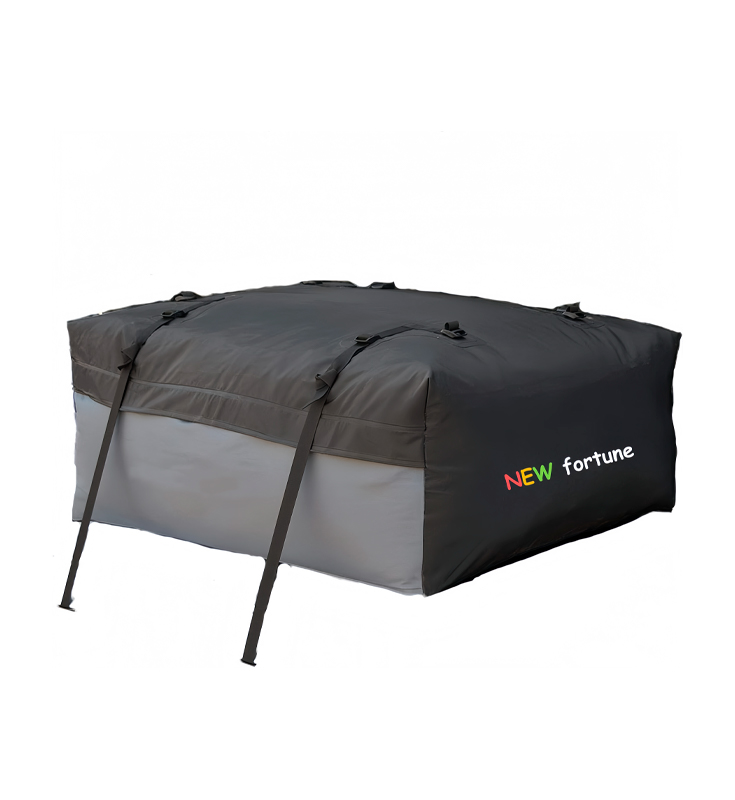
Packing a 50 kg family load into a 15 cubic foot car top carrier bag seems straightforward until the first crosswind hits. The bag's surface sits roughly 1.5 m above the vehicle's roll axis, and every kilogram in that bag becomes a lever arm that changes how the car responds to steering inputs. New Fuda Luggages & Bags Co., Ltd. has been manufacturing soft roof cargo bags since 2006, and the design questions that come up most often from buyers and cross-border sellers are not about color or appearance. They are about what happens when the load moves.
The physical relationship between the bag, the roof rack, and the cargo inside it is what determines whether the product performs safely at highway speeds. A rooftop bag with an uneven load does not just look wrong. It changes the tire contact patch, increases the lateral load on the suspension, and can gradually loosen straps that were tight when the trip started.
Load distribution is the single most important factor in how a car top carrier bag behaves on the road.
When a bag carries 50 kg, the fabric stretches under that weight. A 1.5 m span of 500D PVC material can elongate by 2-3% under sustained load. That may sound small, but over the length of a roof bag it produces several centimeters of sag. The sag moves the load away from the center, which makes the bag tilt at a specific corner and changes the strap tension at the front and rear.
To plan capacity more precisely, see our guide on how to choose a car roof storage bag load capacity.
Three construction factors determine whether a car top carrier bag holds its shape and stays watertight under a full load: denier rating, seam method, and strap layout.
The denier of the fabric decides how much weight the bag can carry without perforating. 500D PVC grid is the accepted baseline in soft roof cargo manufacturing because it balances weight and tear strength. Fabrics below 420D tend to stretch more than 3% under a 50 kg load, which pushes the bag's bulging corner into the wind.
A sewn seam leaves needle holes, and even with seam-taping tape, those holes can migrate into leaks after the bag is folded repeatedly. High-frequency welding avoids this problem by fusing PVC layers without creating perforations. New Fuda Luggages & Bags Co., Ltd. applies both sewing and high-frequency welding, depending on the material being used, because each process controls a different failure mode.
A bag carrying more than 45 kg should be held by at least four straps connected to the roof rack, routed diagonally. Two parallel straps do not resist forward braking forces. An anti-slip mat placed between the bag and the roof adds friction that reduces lateral creep when the vehicle turns.
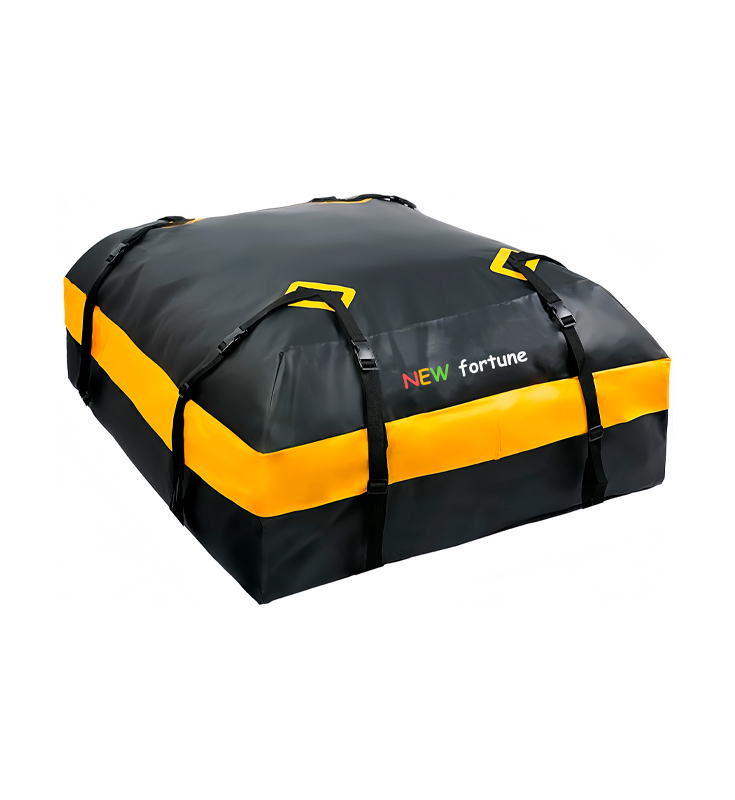 FO-10 Waterproof 15 Cubic 500D Grid PVC Carrier Car Roof Bag, SUV Roof Cargo BagThis Waterproof 15 Cubic 500D Grid PVC Carrier Car Roof Bag has clear functional parameter indicators. Its specification is 112×86×43cm, the internal space reaches 15 ...View Product →
The correct way to load a car top carrier bag follows a step-by-step sequence that keeps the center of gravity low and centered.
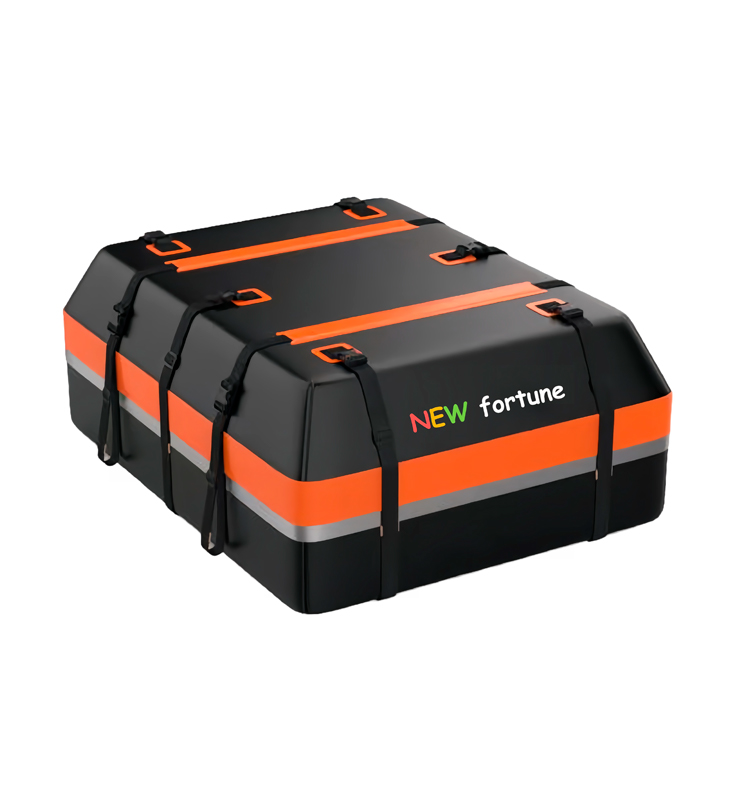 FO-14 Large Capacity Universal Waterproof Car Roof Cargo Luggage Carrier Bag With Anti SliLarge capacity Universal Waterproof Car Roof Bag With Anti Slip Mat, practical and comprehensive. Its specification is 132×102×46cm, with an ultra-large capacity of 21...View Product →
The size of a car top carrier bag changes how many anchor points are needed and how much internal structure is required to keep the load spread evenly.
| Bag size | Typical load range | Recommended strap setup |
| 11 cu ft | 35-45 kg | 2-4 straps, low profile |
| 15 cu ft | 50-60 kg | 4 straps, center-heavy |
| 25 cu ft | 65-75 kg | 4-6 straps, cross-mounted |
For the full setup process with a roof rack, read our ultimate guide to rooftop cargo carriers.
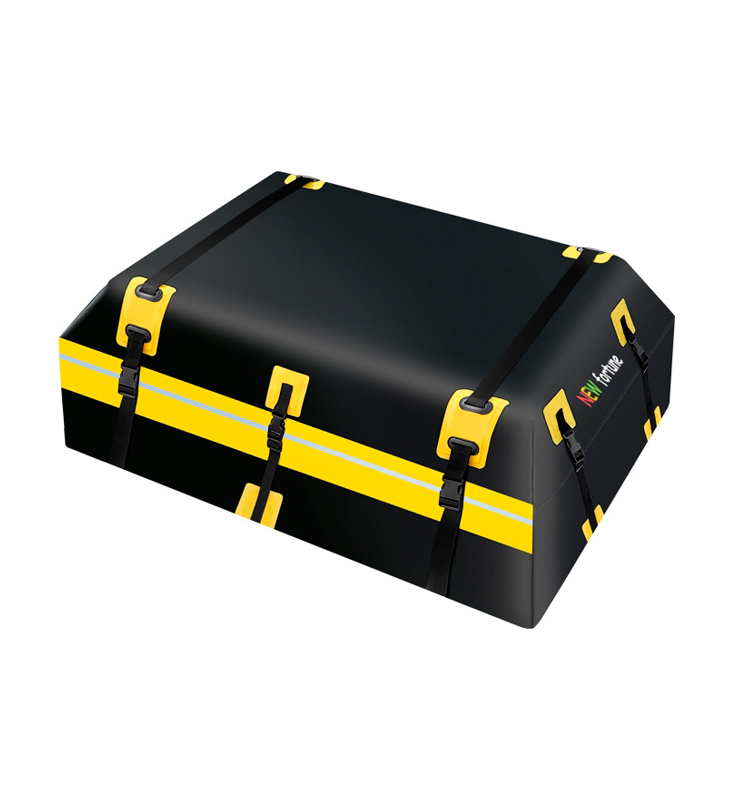 FO-30 28 Cubic Foot Large capacity PVC Waterproof Car Top Roof Bag, Roof Rack Travel BagsThis 28 cubic foot Large capacity PVC Waterproof Car Top Roof Bag is an excellent helper for travel storage. Its specifications are 132×100×61cm, with 28 cubic feet of...View Product →
A roof bag's cargo should follow a distribution profile that places at least half the weight in the center section.
The center section is the only area that does not shift the vehicle's front-to-rear weight balance. By keeping 50% of the load inside that center zone, a roof bag maintains a narrower effective center of gravity and reduces the steering correction a driver has to apply in gusty conditions.
The safe limit depends on the material, the seam construction, and the strap count. A 15 cu ft bag made from 500D PVC with four straps typically holds 50-60 kg when the manufacturer's rating is respected. If you plan to drive at highway speeds for more than a few hours, keep the load at around 80% of the rated capacity.
Yes. A bag with a low profile and a tapered front surface creates less turbulence. Uneven loading causes the bag to sag and bulge, which enlarges the frontal area and increases wind noise at speeds above 80 km/h.
No. A completely packed bag with heavy items has no room for the fabric to flex, which concentrates stress at the straps. Fill the bag to about 85% of its volume and use soft, compressible items to hold the load in place.
Yes, welded PVC seams are visually sealed and do not leak. A sewn bag with seam tape may eventually fail because the tape detaches after repeated folding and exposure to road grit.
Your email address will not be published. Required fields are marked *
* Your email is safe with us, we don't spam.

Professional R & D and manufacturing of outdoor sports, cycling, fishing, business, travelling sewing, high-frequency stamping series of luggage enterprises
E-mail: christine@fudabags.com
Phone: +86-13819351116
Add: No.2288 Xinggong Road, Pinghu City, Jiaxing City, Zhejiang Province, China
Copyright © 2025 by New Fuda Luggages & Bags Co., Ltd. Rights Reserved. Privacy Custom Durable Outdoor Travel Bag Manufacturers


 English
 Français
 Español