


Get A Quote

Content
After the fourth weekend trip of the season, a mid-size SUV simply runs out of space: one 30 L camping backpack, a 45 L cooler, a tent bag longer than 1.5 m, and three duffels. A soft luggage carrier for the top of the car adds 15 to 25 cu ft of weather-protected volume for a fraction of the cost and weight of a molded hard shell. Because the bag has no rigid frame, its fabric, seams, straps, and attachment system carry the entire job. The right material keeps a soft carrier dry and stable for years; the wrong one turns it into a sagging, flapping hazard at highway speed.
A soft luggage carrier is a collapsible, waterproof cargo bag mounted on roof crossbars and secured by straps, offering removable storage without the permanent footprint of a hard shell box.
The material of a soft roof carrier sets the limits for load capacity, waterproofing, UV resistance, and folding durability, so it is the first specification to check before purchase.
Most roof bags on the market use one of three fabrics. PVC-coated polyester, typically 500D or 600D, is the mainstream choice because it is fully waterproof and resistant to abrasion. Plain Oxford polyester, usually 300D to 600D, folds smaller and weighs less but depends on its coating to repel rain. TPU-laminated fabric combines waterproofing with higher UV and low-temperature tolerance, at a premium price.
Manufacturers such as New Fuda Luggages & Bags Co., Ltd., which produces roof bag lines with both sewn and high-frequency welded construction, specify 500D PVC-coated polyester as the standard body fabric across most of the car roof bag series.
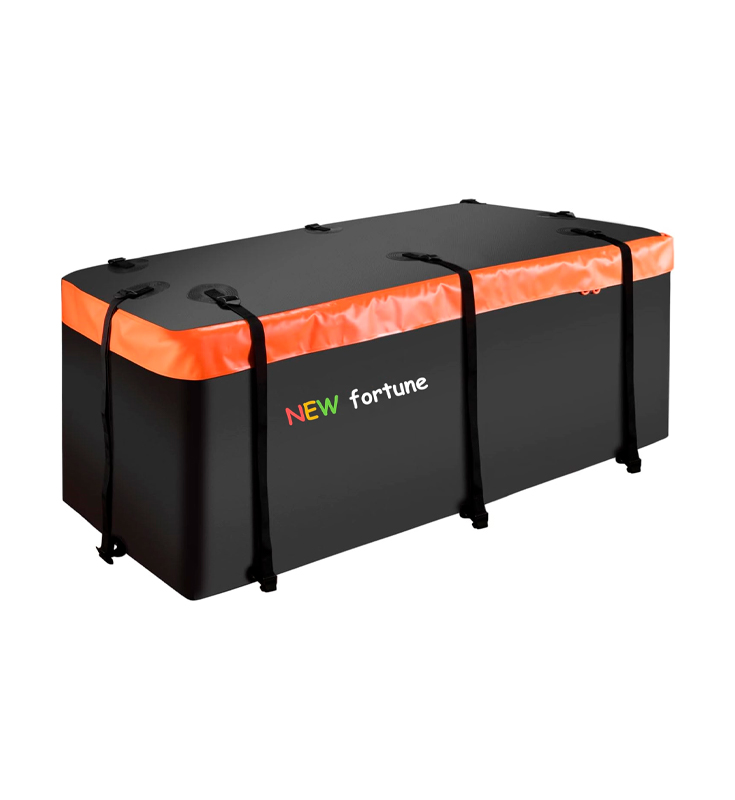
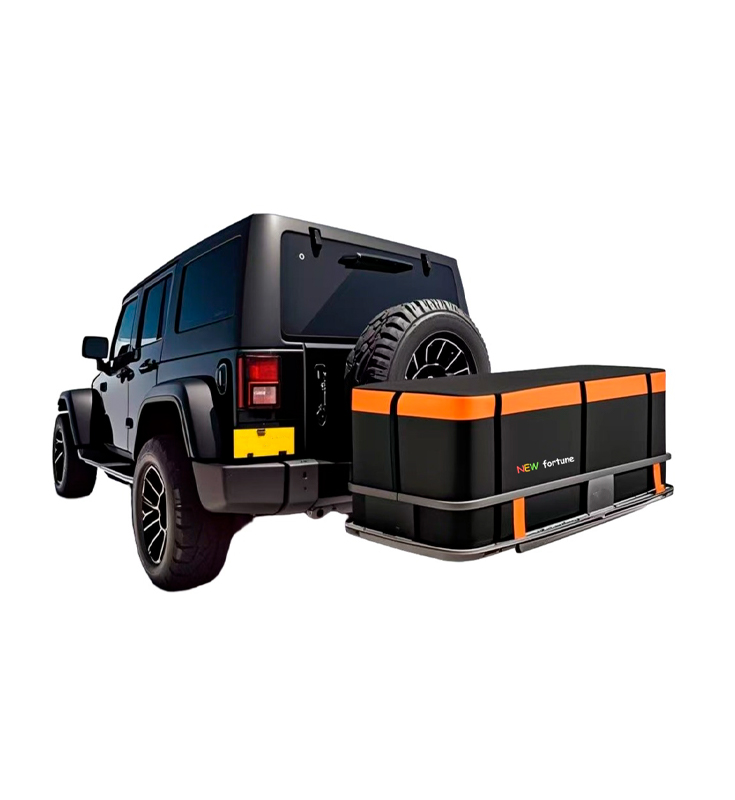
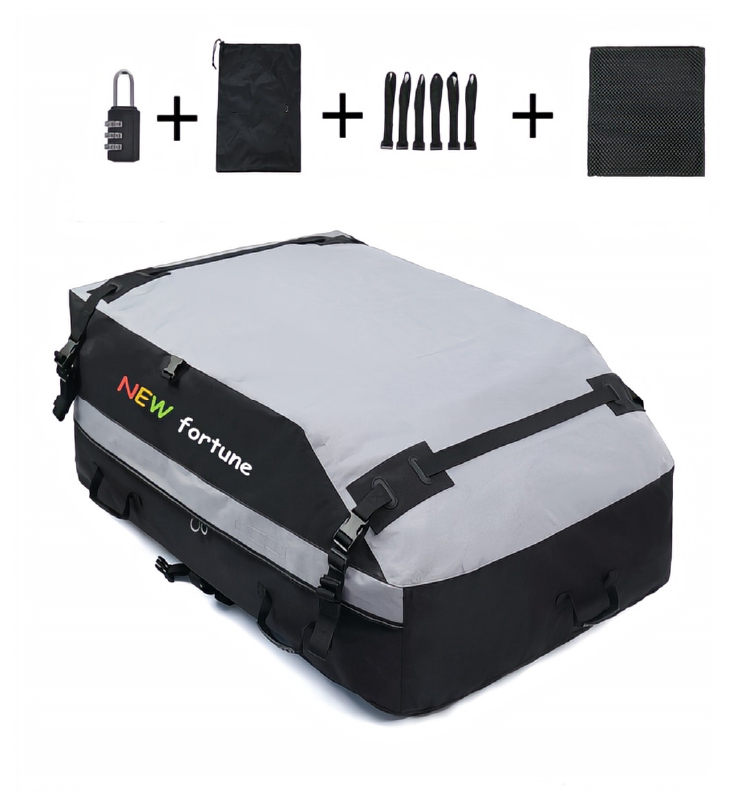
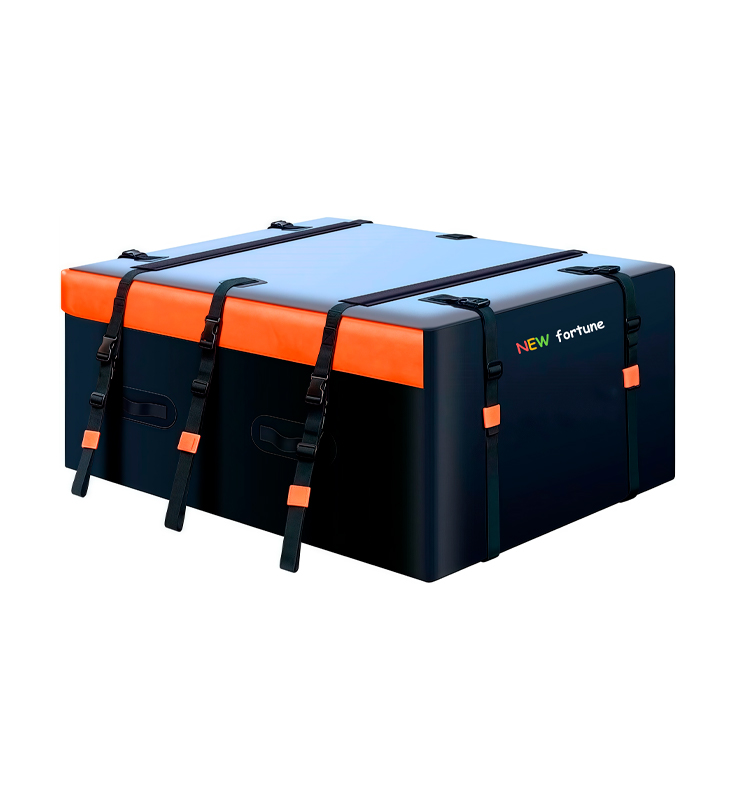 FO-9 Heavy-duty 500D PVC Waterproof Car Roof Bag with 21 cu ft CapacityThis 500D PVC-coated roof bag offers 21 cubic feet of storage, protective pads, door hooks, and a lock system, making it a practical choice for SUVs on long trips.View Product →
PVC-coated 500D polyester is the best all-round choice for a mainstream soft roof bag because it delivers full waterproofing and high tear resistance at a moderate cost, while TPU is the upgrade for hot climates and frequent folding.
For a clearer picture, the table below compares the three fabric families across the properties that matter most on the road.
| Property | PVC-Coated 500D | Oxford 300D-600D | TPU Laminated |
| Waterproofing | Excellent | Good only when coated | Excellent |
| Tear strength | High | Medium | High |
| UV and heat life | Good | Fair | Excellent |
| Packed size and weight | Moderate | Light | Light |
| Relative cost | Mid | Lower | Higher |
A soft roof carrier is safe only when the total roof load stays inside the vehicle limit, the strap system prevents forward and sideways movement, and the driver re-tightens everything after the first stretch of road.
Work through this checklist before every loaded trip:
Anti-slip mats and wide straps matter as much as the fabric. A mat protects the paint and resists sliding, while 50 mm webbing with ladder-lock buckles keeps tension better than narrow straps with plastic friction buckles.
New Fuda's roof carrier lineup includes models engineered around this behavior, such as the roof bag safety installation tips published alongside its product guides.
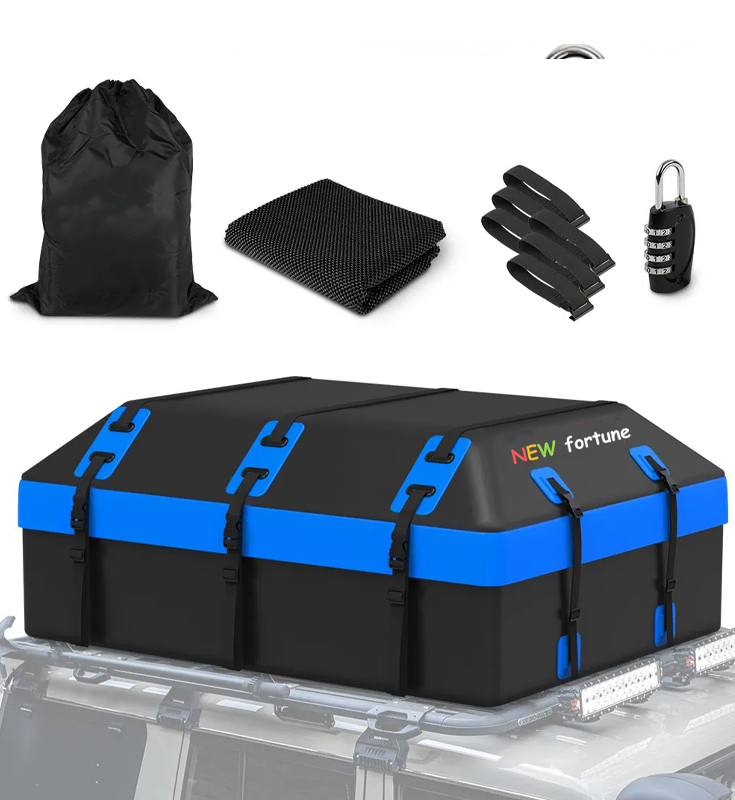
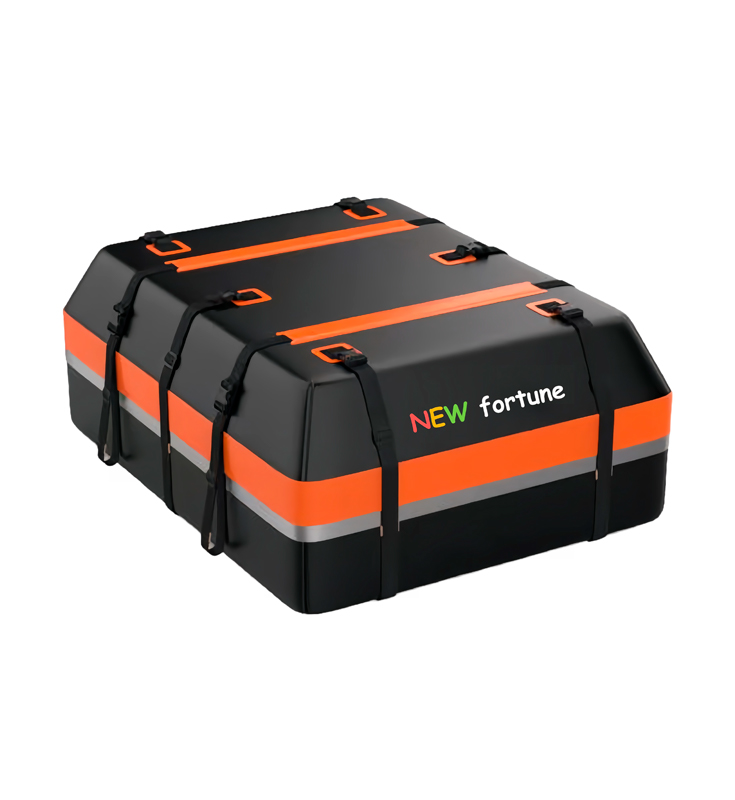 FO-14 Universal Waterproof Roof Cargo Bag with Anti-Slip MatFeaturing a 21-cubic-foot capacity and an anti-slip mat, this 500D grid PVC carrier suits SUVs, sedans, and vans, with straps and locks for secure mounting.View Product →
Match the carrier to the trip: a 15 cu ft PVC-coated bag fits weekend family travel, while a 20 to 25 cu ft reinforced model suits long expeditions, and TPU justifies its premium if you drive in intense sun or fold the bag often.
Apply these checks when comparing products:
For long trips, a heavy-duty universal carrier with reinforced straps gives the same protection as a factory roof box at lower cost and can be removed in minutes. Production depth matters here: New Fuda Luggages & Bags Co., Ltd. builds roof bags with both sewn assembly and high-frequency welding, which is the same process used for the welded seams that keep TPU and PVC bags airtight.
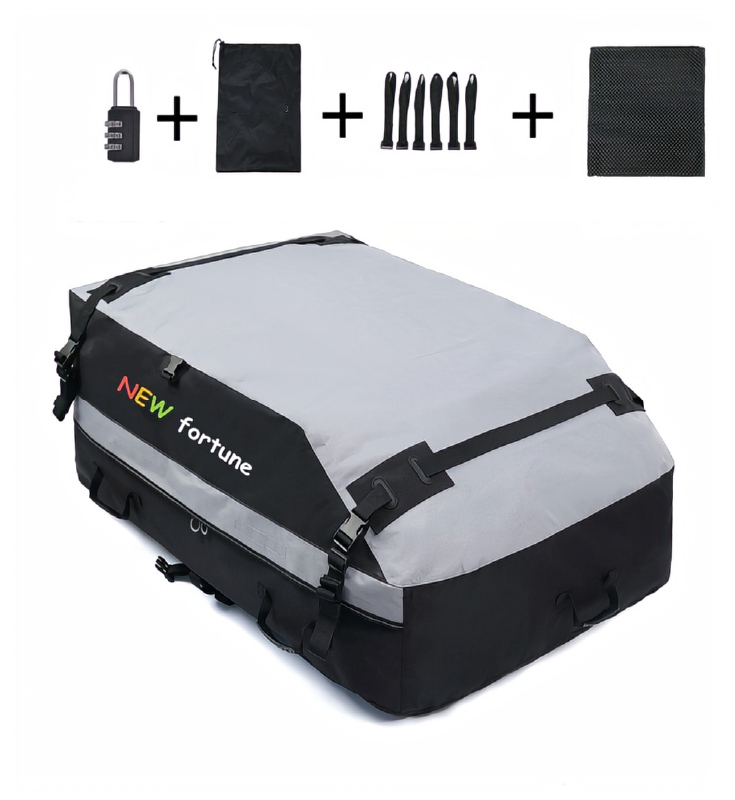
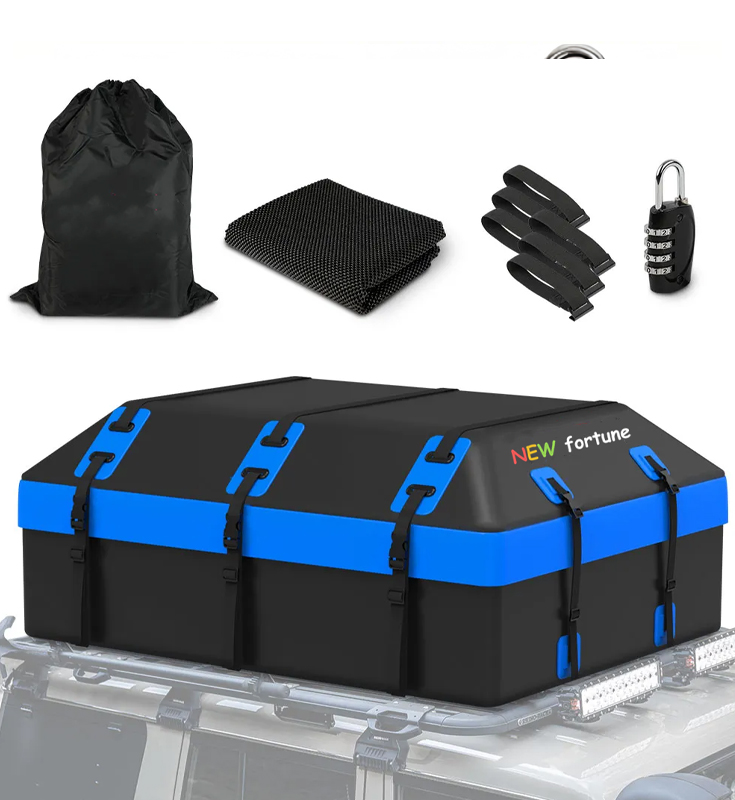 FO-29 Soft Rooftop Cargo Bag with Movable Straps and 20 cu ft SpaceThis durable 500D PVC roof bag provides 20 cubic feet of storage, movable straps, and locks for flexible, secure fitting across various vehicles during travel.View Product →
Most soft roof carriers are rated for 50 to 75 kg, but the real limit is the lower of the vehicle roof rating and the crossbar rating. Always check both numbers before loading gear.
A PVC-coated or TPU-laminated bag with welded seams stays waterproof, while plain Oxford bags rely on a coating that wears off with washing. Inspect the seam treatment and zipper flap on any model you consider.
Stay below 120 km/h (75 mph). Aerodynamic drag rises with the square of speed, so gusts and truck turbulence at highway speeds stress the straps far beyond city-driving levels.
Not when the mounting system includes a non-abrasive mat and the straps are tensioned evenly. Most quality roof bags ship with an anti-slip mat or pad to protect the roof finish.
Your email address will not be published. Required fields are marked *
* Your email is safe with us, we don't spam.

Professional R & D and manufacturing of outdoor sports, cycling, fishing, business, travelling sewing, high-frequency stamping series of luggage enterprises
E-mail: christine@fudabags.com
Phone: +86-13819351116
Add: No.2288 Xinggong Road, Pinghu City, Jiaxing City, Zhejiang Province, China
Copyright © 2025 by New Fuda Luggages & Bags Co., Ltd. Rights Reserved. Privacy Custom Durable Outdoor Travel Bag Manufacturers


 English
 Français
 Español