


Get A Quote

Content
A roof top bag typically costs between $80 and $150, yet most premature failures have nothing to do with the purchase price. Moisture trapped in the folds, grit working its way into the zipper track, and PVC that hardens after a season in direct sun account for most early retirements. The fix is a simple sequence: clean, dry, inspect, re-proof, and store. About fifteen minutes after each trip plus one deeper session before the season starts will keep a roof top bag usable for three to five seasons. The maintenance order below follows exactly that sequence.
The most common mistake is treating a roof top bag like a car wash. Dish soap, pressure washers, and stiff brushes strip the finish from Oxford cloth and attack the plasticizer in PVC-coated fabric. A bag that was washed aggressively will look clean and then start leaking at the seams because the protective coating is already gone.
Use a pH-neutral cleaner, a soft sponge, and lukewarm water. Rinse off loose dust first, then wash from the top of the bag downward so dirty water does not run across clean panels. The corners that touch the roof rack and the recesses around zippers need the most attention because road film, bug residue, and salt accumulate there.
Lay the bag flat on a tarp or clean concrete. Rinse the surface, wash with diluted mild detergent, and rinse thoroughly; soap residue attracts dust and makes the fabric stiff. For tree sap or bird droppings, soften the spot with a cloth dampened with isopropyl alcohol, then wash the area again. Always test the alcohol on a hidden corner first, because some PVC films react to it. Avoid citrus-based degreasers entirely; they can break down the flexibleizers in PVC and leave the coating brittle.
For PVC-coated models such as the 15-cubic-foot 500D grid PVC car roof bag, this mild wash is all the coating needs. Harsh chemicals will damage the surface faster than ordinary road grime ever will.
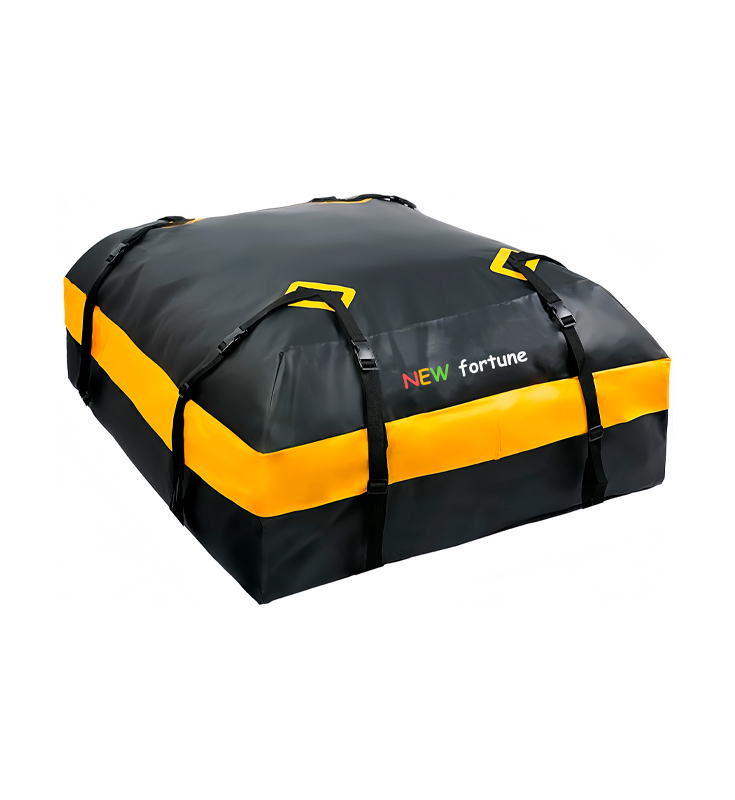 Wholesale Private Label FO-10 Waterproof 15 Cubic 500D Grid PVC Carrier Car RoofNew Fuda Luggages & Bags Co., Ltd is China Wholesale Private Label FO-10 Waterproof 15 Cubic 500D Grid PVC Carrier Car Roof Bag, SUV Roof...View Product →
While the bag is flat, scrub the zipper tracks with an old toothbrush and wipe the webbing straps with the same soapy water. Grit in the zipper teeth is one of the leading causes of zipper failure on soft luggage, because it grinds the teeth down from the inside where it is hard to see. Rinse the straps and metal buckles carefully; salt from winter roads and dried sweat corrode metal hardware over time.
Drying is the step most owners skip, and it is the step that causes the most damage. A bag folded while damp grows mildew inside the folds, and mildew attacks both the fabric coating and the stitching. Once mildew has developed, no waterproofing spray will restore the stained fibers or the smell.
Hang the bag over a padded sawhorse or the backs of two chairs with the zippers open and the buckles unlatched, so air moves through the interior. Wait until the inner lining, not just the outer face, is dry. The inside will feel cool or clammy if moisture remains, so test it with the back of your hand rather than guessing by time. If the weather does not cooperate, dry it with a fan in a ventilated room; never use a tumble dryer, because heat melts the coating and the buckles can scratch the fabric.
Wipe the affected area with one part white vinegar to three parts water, leave it for ten minutes, and then wash and dry as normal. For heavier growth, use a cleaner labeled for outdoor-gear mildew. Be realistic about the outcome: stains may remain visible and the odor can return in warm weather. The goal is to preserve the material, not to make the bag look like new.
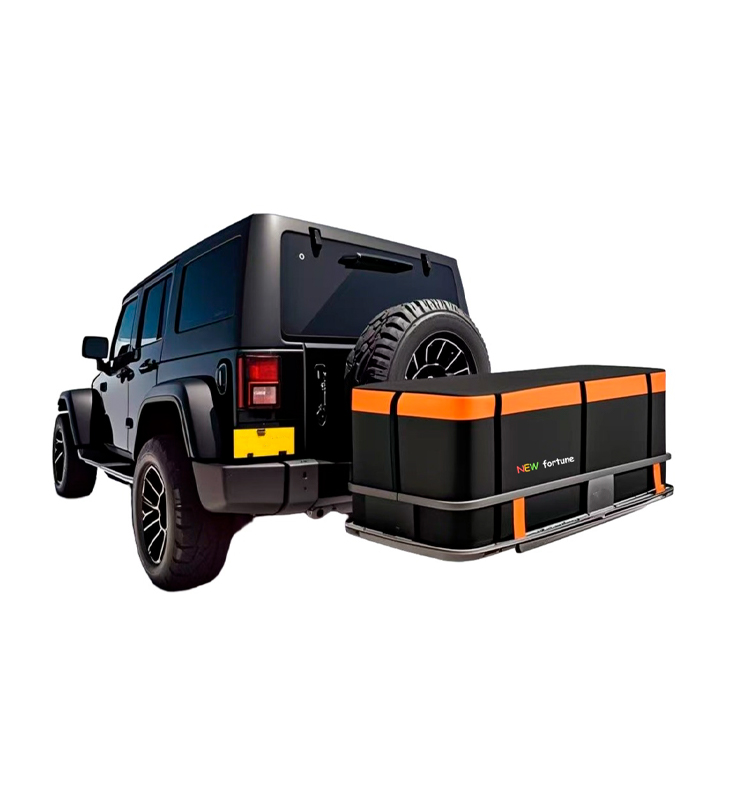
The same cleaning and drying rules apply to cargo carrier bags mounted on rear hitch platforms, where road spray is even more aggressive.
A roof top bag fails at its seams, zippers, and mounting loops long before the main fabric panels wear out. Inspection takes about two minutes during the drying pass, and it prevents the kind of failure that appears at highway speed.
If you used the recommended approach for installing a waterproof roof bag without a roof rack, give the strap routing around the door frames extra attention; those straps carry the whole load and wear faster than a rack-mounted setup.
Loose stitching can be re-sewn with a heavy needle and UV-resistant thread before it becomes a tear. An open seam needs professional repair or replacement; tape will not hold the load. A tear at a mounting point on a PVC bag should not be glued, because the repair will not hold and a failed fix costs more than a new bag.
Security hardware deserves the same attention. On a roof bag with a built-in safety lock, confirm that the lock pivots freely and the zippers seat flush before you latch them.
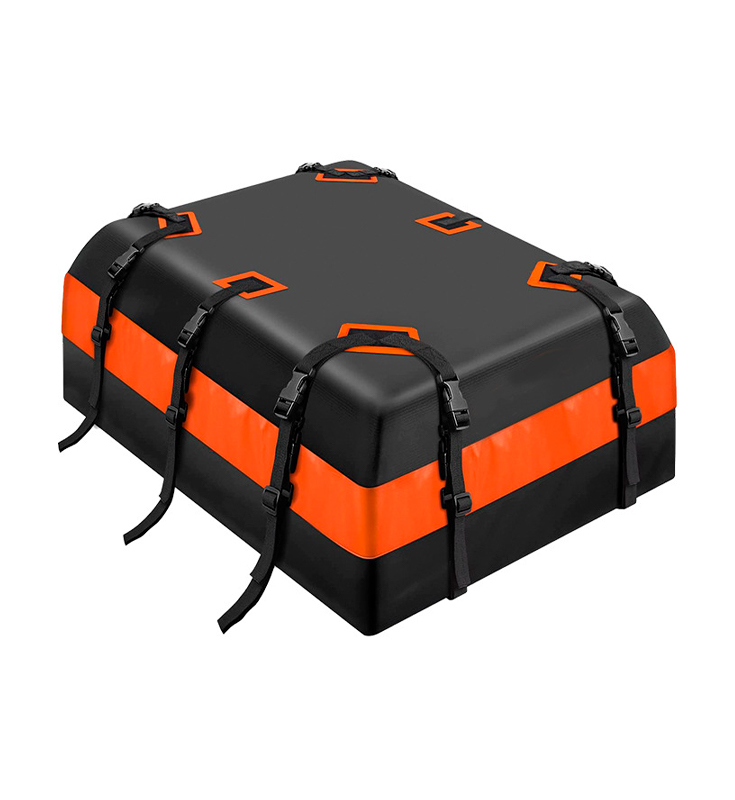 Wholesale Private Label FO-1 Waterproof Soft Rooftop Cargo Bag, Car Roof Bag WitNew Fuda Luggages & Bags Co., Ltd is China Wholesale Private Label FO-1 Waterproof Soft Rooftop Cargo Bag, Car Roof Bag With Safety Lock ...View Product →
Waterproofing fails gradually, not suddenly. The early signs are water beading on top but soaking through the seams, or a damp area where the bag touches the roof rack. When those signs appear, the bag needs a re-treatment before the next heavy trip.
Use a water-based spray-on waterproofing product made for outdoor fabrics. Apply two thin coats on the exterior and let the first coat dry completely before the second. Do not soak the bag; heavy coats leave residue that attracts dust. For stitched seams, apply a seam sealer from the inside, because the needle holes are the actual leak path.
PVC-coated bags are waterproof because of the vinyl layer itself, not because of any treatment. If the coating is intact, nothing needs to be done. If it is peeling, flaking, or cracking at the fold points, no spray will bond to it, and the bag has reached the end of its waterproof life. Checking for these cracks seasonally is the only realistic way to avoid discovering a wet suitcase at your destination.
When you compare waterproof car roof bags, the construction details matter for future maintenance: welded seams and reinforced webbing loops are easier to inspect and repair than models where the attachment points are simply glued.
How you store the bag over winter decides how many seasons it will last. Heat, direct sunlight, and repeated folding along the same crease lines are the main off-season killers.
Store the bag flat or loosely rolled along its original creases in a cool, dark, dry room. A garage is acceptable if it stays above freezing and the bag is not exposed to direct sun. Do not store it in a compression sack; tight folds leave sharp creases that become cracks in PVC. Use a cotton dust bag or a plain cardboard box instead of a sealed plastic bag, so residual moisture can still escape.
Before the first trip of the season, take the bag out, air it for a day, and run the full inspection sequence again. Buckles and zipper sliders can stiffen in cold storage, so test them before the bag is loaded. This is also the right moment to confirm the bag still fits the current roof rack configuration; adjusting a strap route at home is much safer than discovering a bad fit on the road.
If your bag relies on a separate anti-slip mat, inspect both surfaces before re-installing; embedded stones will scratch the roof paint. The large-capacity universal roof bag with an anti-slip mat is a useful example of why that component needs to be clean and dry before every install.
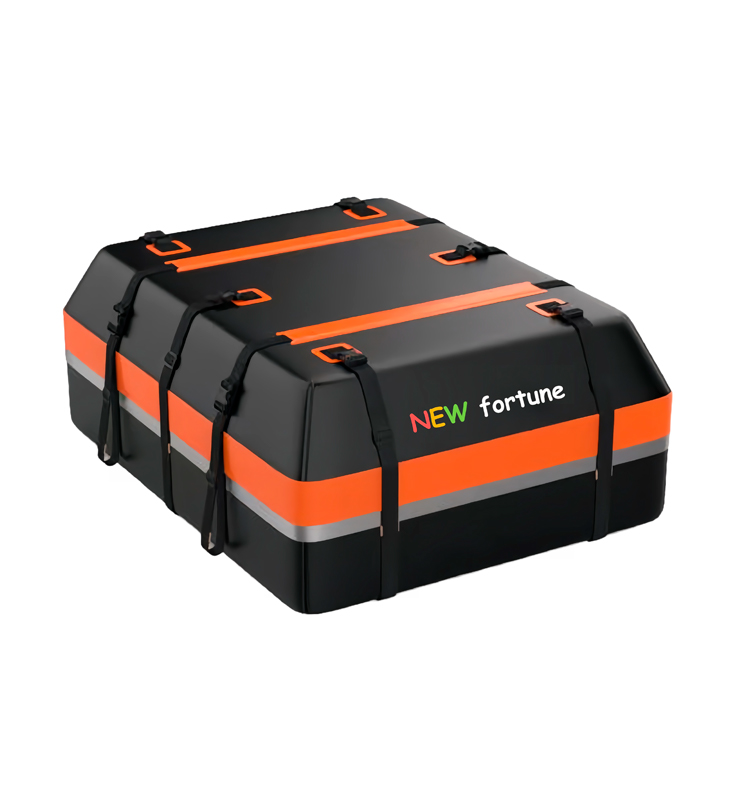 Wholesale Private Label FO-14 Large Capacity Universal Waterproof Car Roof CargoNew Fuda Luggages & Bags Co., Ltd is China Wholesale Private Label FO-14 Large Capacity Universal Waterproof Car Roof Cargo Luggage Carri...View Product →
This schedule spreads the work across the year and keeps every trip predictable.
| When | What to do | Why it matters |
|---|---|---|
| After every trip | Remove the bag, clean it, and dry it completely | Prevents mildew and stops road film from degrading the coating |
| Monthly during storage | Air it out and check zippers, straps, and buckles | Keeps crease points and hardware flexible |
| Before the first trip of the season | Full inspection plus waterproofing re-treatment | Catches winter damage before the bag is loaded |
| Once a year | Deep wash, seam inspection, zipper lubrication | Renews protection and extends the usable life |
Maintenance cannot override physical damage. Delamination of the PVC layer, a tear longer than about 25 mm on a seam, a broken mounting loop, or a zipper that will not track correctly are all reasons to replace the bag rather than repair it. A roof top bag that fails at highway speed is not a leaking problem; it is a safety hazard for the vehicles behind you.
Keep the routine simple: clean with mild soap, dry fully, inspect the load-bearing points, refresh the waterproofing before the rainy season, and store the bag flat in a cool, dark place. Most roof top bags are retired years too early because they were stored wet or washed with the wrong products. A properly maintained bag will deliver three to five seasons, and the total maintenance time works out to about one hour per year.
Your email address will not be published. Required fields are marked *
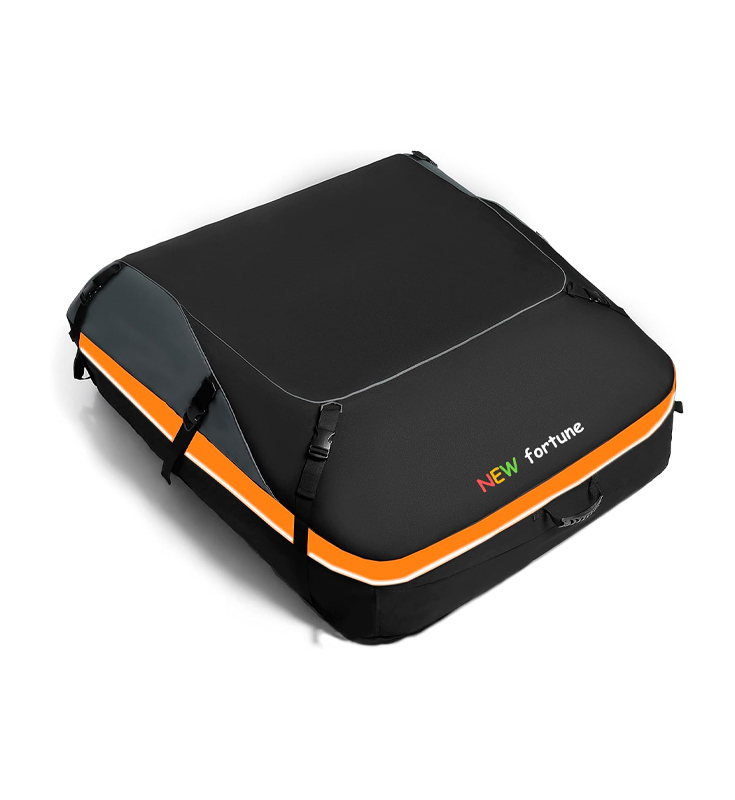

* Your email is safe with us, we don't spam.

Professional R & D and manufacturing of outdoor sports, cycling, fishing, business, travelling sewing, high-frequency stamping series of luggage enterprises
E-mail: christine@fudabags.com
Phone: +86-13819351116
Add: No.2288 Xinggong Road, Pinghu City, Jiaxing City, Zhejiang Province, China
Copyright © 2025 by New Fuda Luggages & Bags Co., Ltd. Rights Reserved. Privacy Custom Durable Outdoor Travel Bag Manufacturers


 English
 Français
 Español