


Get A Quote

Content
A 15 cubic-foot roof bag holds 425 litres. The 21 cubic-foot version holds 595 litres. That 170-litre gap is the difference between carrying a cooler, two duffels and a tent on the roof, or leaving the cooler at home on every trip.
Capacity, material and application answer that question in a fixed order. Most buyers reverse it: they choose a fabric, then a brand, then discover at the motorway services that the loaded bag sits 8 cm too tall for the boot lid. The sequence below is the one that survives real trips, fleet purchases and OEM sample rounds.
Three variables can be measured before money changes hands. Nominal volume sets how much you can carry, denier and coating set how long the shell survives ultraviolet light and motorway speed, and application decides the format: roof, hitch, boot, frame or shoulder.
Start with the load, then convert to volume: two adults on a long weekend need 15 cubic feet (425 litres), while four people plus camping gear need 21 cubic feet (595 litres) or more.
One cubic foot equals 28.32 litres, so the arithmetic is simple. What is not simple is usable volume. Tapered ends, zip curvature and lid overhang remove 10 to 15 percent of the nominal figure on most soft roof bags. A 21 cubic-foot bag therefore delivers roughly 510 to 535 litres of usable space once packed with rigid items such as coolers and crates.
| Nominal size | Volume | Typical load | Best application |
| 11 cu ft | 311 L | Two duffels and a pair of boots | Couples, short weekends, small hatchbacks |
| 15 cu ft | 425 L | Two duffels plus a 24 L cooler | Two adults, three to four days |
| 19 cu ft | 538 L | Three duffels plus a four-person tent | Small families, three-day road trips |
| 21 cu ft | 595 L | Four duffels plus camping gear | Family camping, estate and SUV roofs |
| 25 cu ft | 708 L | Camping plus fishing or dive gear | Long expeditions, roof platforms |
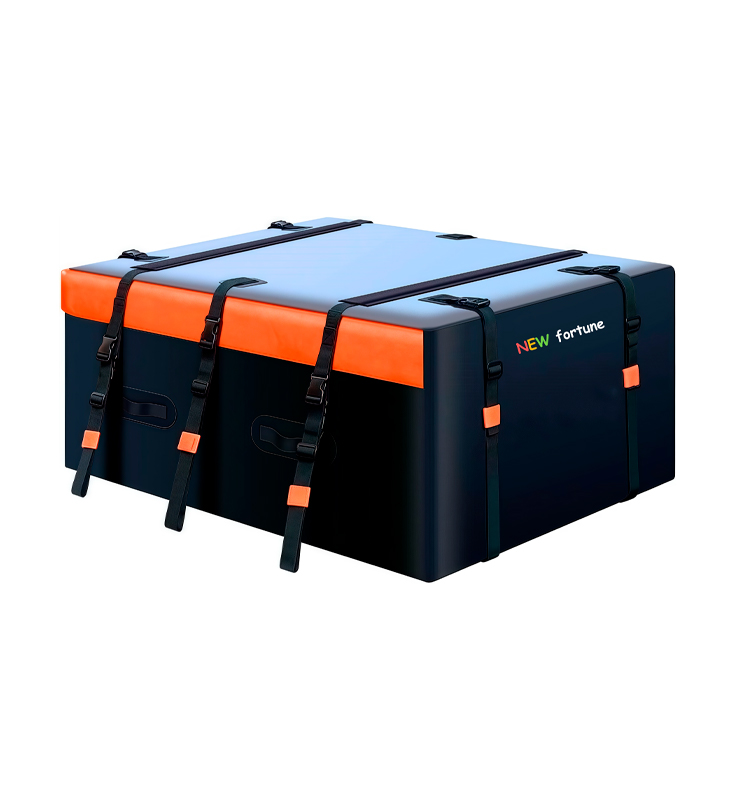
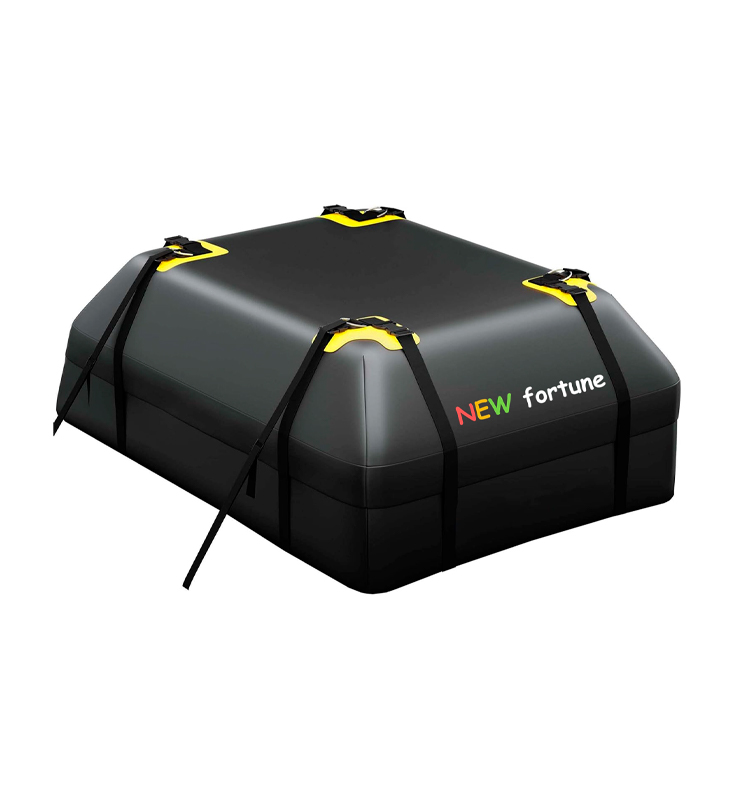 FO-12 15-Cubic-Foot Water-Resistant SUV Roof Cargo BagThis 15-cubic-foot roof bag offers weather-resistant external storage for SUVs, with heat-sealed seams, universal door-hook mounting, and a 75 kg load limit.View Product →
Capacity has an upper bound that has nothing to do with the bag. ISO 11154 covers roof load carriers and most passenger vehicles are rated for 50 to 75 kg of dynamic roof load, including the carrier and the empty bag. Gear packed at roughly 90 to 100 grams per litre pushes a full 25 cubic-foot bag toward 65 kg. Above that point the rack, not the fabric, is the limiting component.
Weigh the packed bag on a bathroom scale before the first trip. If the total exceeds the vehicle rating, move dense items such as tools, water and tinned food into the boot and keep the roof load to bulky, light gear.
Specify 500D to 600D polyester or Oxford cloth with a 0.5 mm PVC or PU coating for vehicle use; 300D shells and single-stitched seams are the two failure points that appear first at sustained motorway speed.
Denier measures yarn mass: 1 denier equals 1 gram per 9,000 metres of yarn. A 500D yarn therefore carries 67 percent more mass per unit length than 300D, which translates into higher grab tensile strength under ASTM D5034 and better resistance to abrasion from roof bars and ratchet straps. Coating weight matters as much as denier. A 0.5 mm PVC layer on 500D Oxford typically reaches a hydrostatic head well above 1,500 mm on the ISO 811 test, which is the threshold that keeps a two-hour drive in steady rain out of the luggage.
For a wider comparison of shell fabrics and coating weights across roof, boot and shoulder formats, the site's guide to waterproof outdoor storage bags breaks the same specifications down by product family.
A stitched seam creates needle holes every 3 to 4 mm. On an uncoated seam that is roughly 600 potential leak paths along a 2-metre zip line. Taping or welding closes them, and high-frequency welding fuses the two TPU layers into a single film with no perforation at all.
 F-013 TPU Soft Travel Cooler with Waterproof ZipperA lightweight TPU camping cooler with leak-proof waterproof zipper and EPE/EVA lining, available in 18-can and 24-can sizes for drinks.View Product →
Check three details on any sample: whether the zip is a coil or a moulded tooth type, whether a storm flap covers it, and whether the seam tape width is at least 20 mm. Those three features predict leak performance more reliably than the fabric label.
Match the format to how the bag is loaded and opened: roof bags for bulky volume away from the cabin, hitch and boot bags for weight carried low and reached often, frame and saddle bags for gear needed while moving.
Ask how often the bag is opened per day. A cooler opened eight times on a beach day needs a wide, flat lid and a single pull tab. A roof bag opened twice per trip can accept a roll-top closure and four straps. Formats that ignore retrieval frequency get used once and then stored in the garage.
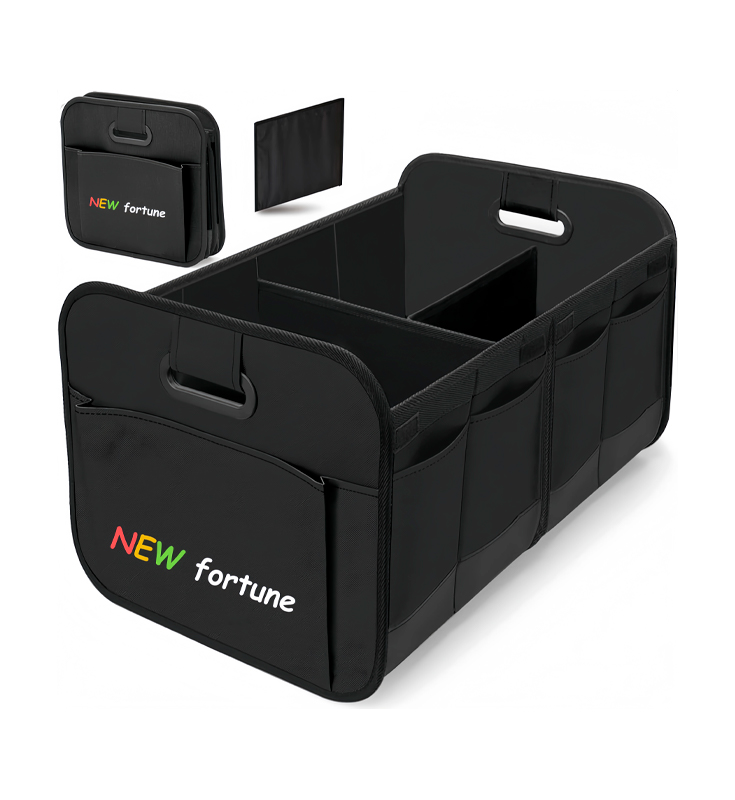
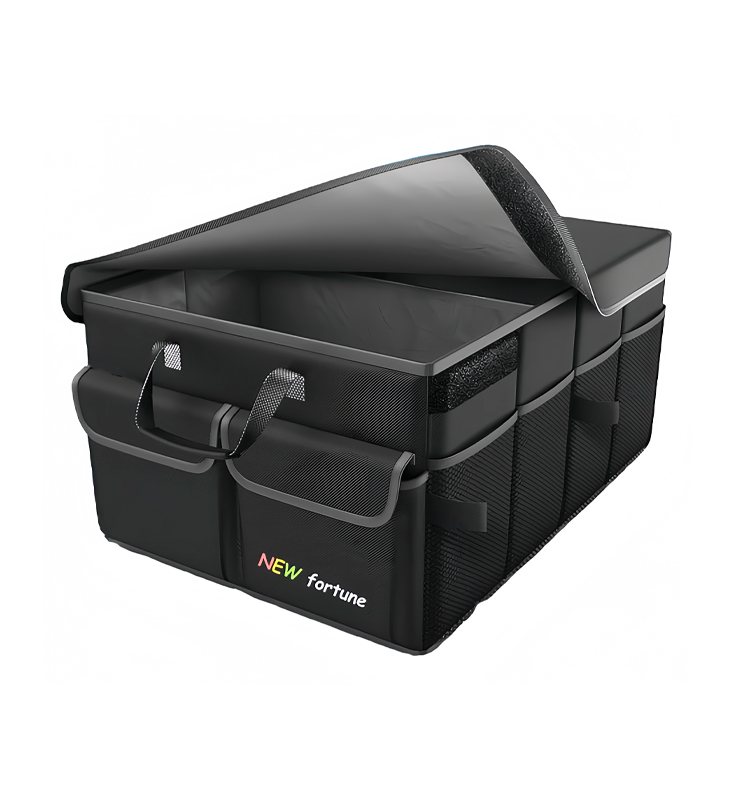
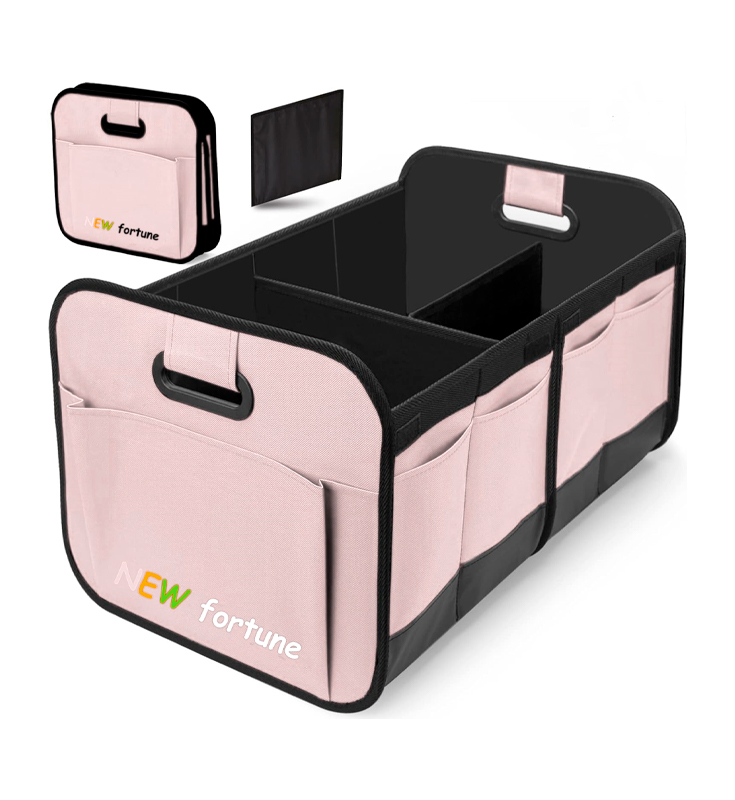
 H-05 Collapsible Multi-Compartment Car Trunk Storage BagA durable Oxford cloth trunk organizer with rigid dividers and multiple compartments, folding flat when unused and supporting up to 35 kg evenly distributed.View Product →
Weather sets the second filter. Coastal buyers should specify corrosion-resistant sliders and UV stabilised yarn tested to ISO 4892-3, because salt spray plus direct sun degrades untreated polyester within a single summer. Inland buyers carrying camping gear can prioritise abrasion resistance over UV resistance.
Five checks settle a sample in under two hours: fabric mass, hydrostatic resistance, seam pull strength, zip cycling and a 24-hour load test at rated capacity.
New Fuda Luggages & Bags Co., Ltd., the manufacturer behind newfuda.com, runs both stitched and high-frequency welded production lines from its Pinghu facility, which is why the sample protocol above separates fabric tests from weld tests rather than treating them as one check.
Record every result against the sample ID. Buyers who keep a one-page test sheet per sample cut their approval rounds from three to one in most OEM programmes.
Plan on 595 litres, or 21 cubic feet, for four people plus camping gear. That figure covers four duffels of roughly 90 litres each, a four-person tent and a stove, and it leaves the 10 to 15 percent taper allowance in reserve.
No. Above 600D the added abrasion resistance rarely justifies the weight and pack-size penalty for passenger vehicles. A 500D shell with a 0.5 mm coating and welded or taped seams outperforms an uncoated 600D shell on the ISO 811 test and weighs less per square metre.
For water resistance, yes. High-frequency welding fuses the film into one continuous layer with zero needle perforations, while stitching introduces roughly 600 holes along a 2-metre seam. For heavy abrasion against metal racks, a stitched and taped 600D Oxford panel is still the more durable choice.
Fill it to the rated load, hang it for 24 hours, then spray the closed bag with a garden hose for three minutes at a distance of one metre. Any damp patch on the inner lining identifies the exact seam or zip that will fail in real rain.
Capacity, material and application stay in that order for a reason. Volume is the only variable that cannot be fixed after purchase, while coatings, zips and seams can be specified and verified on a sample long before a production order is signed.
Your email address will not be published. Required fields are marked *
* Your email is safe with us, we don't spam.

Professional R & D and manufacturing of outdoor sports, cycling, fishing, business, travelling sewing, high-frequency stamping series of luggage enterprises
E-mail: christine@fudabags.com
Phone: +86-13819351116
Add: No.2288 Xinggong Road, Pinghu City, Jiaxing City, Zhejiang Province, China
Copyright © 2025 by New Fuda Luggages & Bags Co., Ltd. Rights Reserved. Privacy Custom Durable Outdoor Travel Bag Manufacturers


 English
 Français
 Español