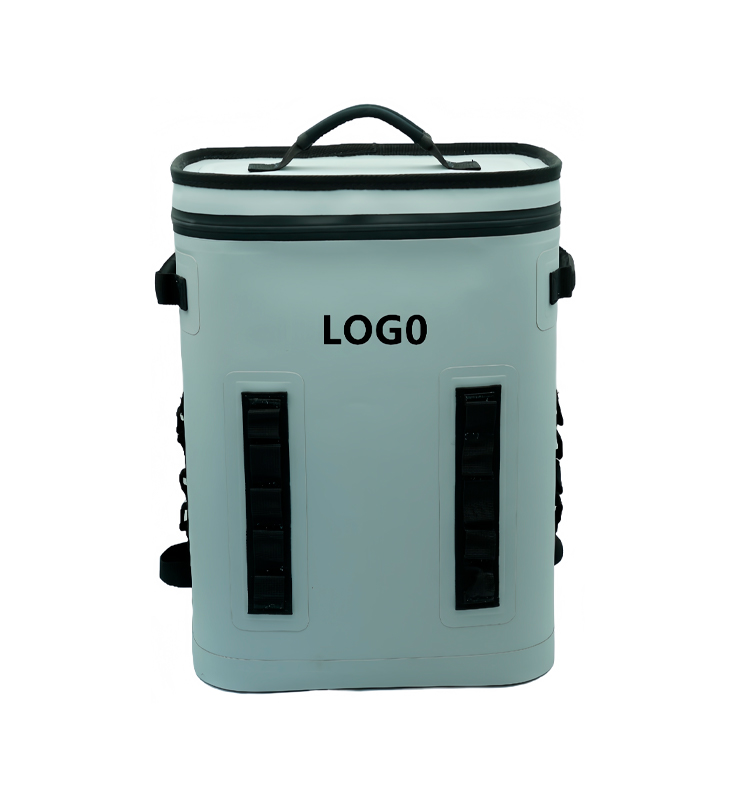
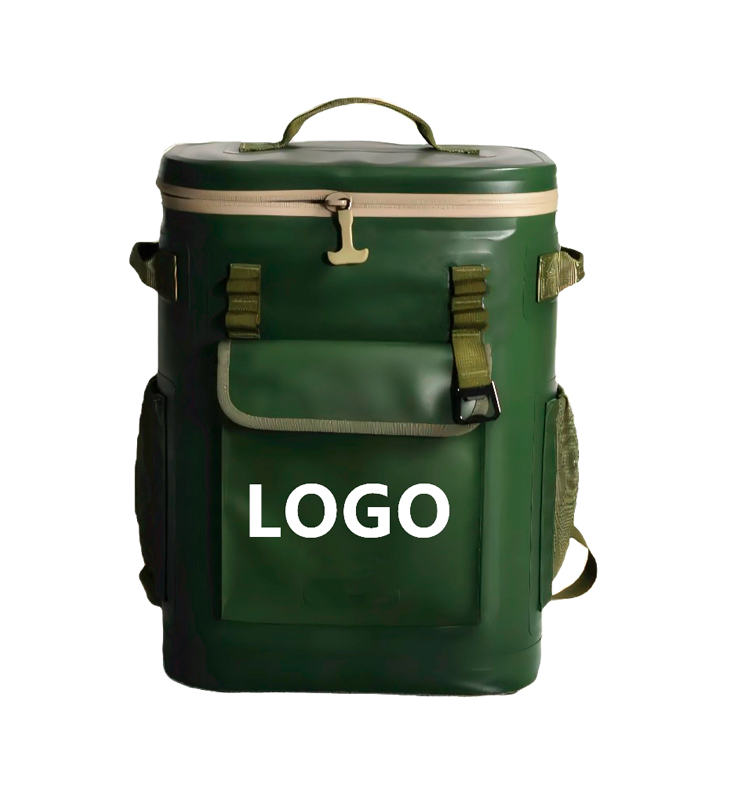
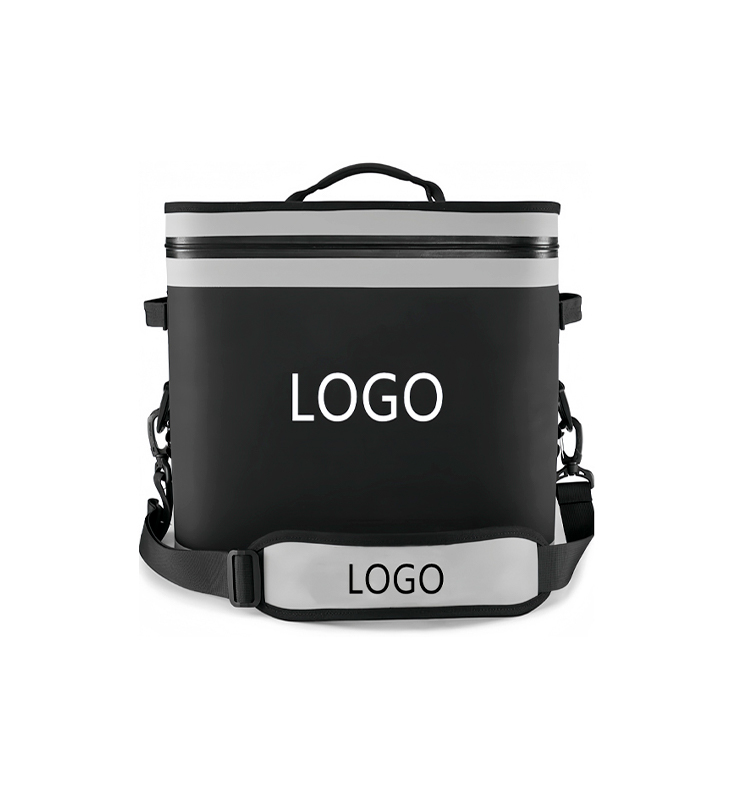
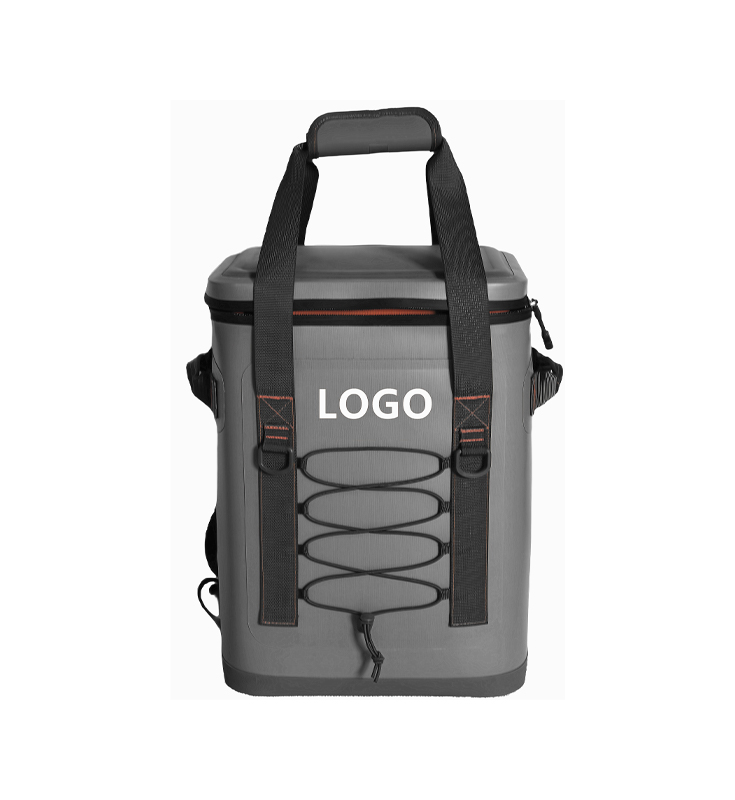
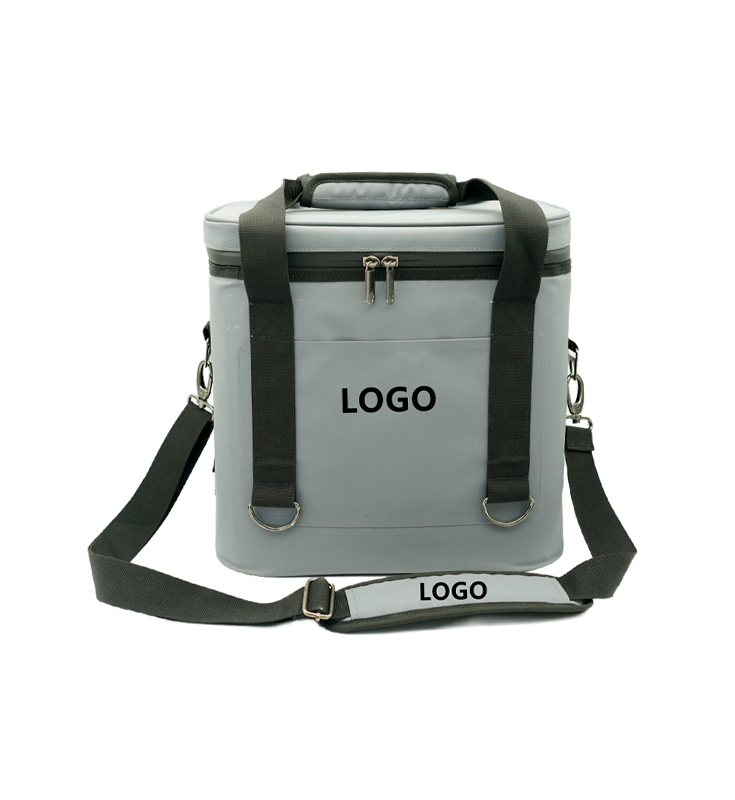
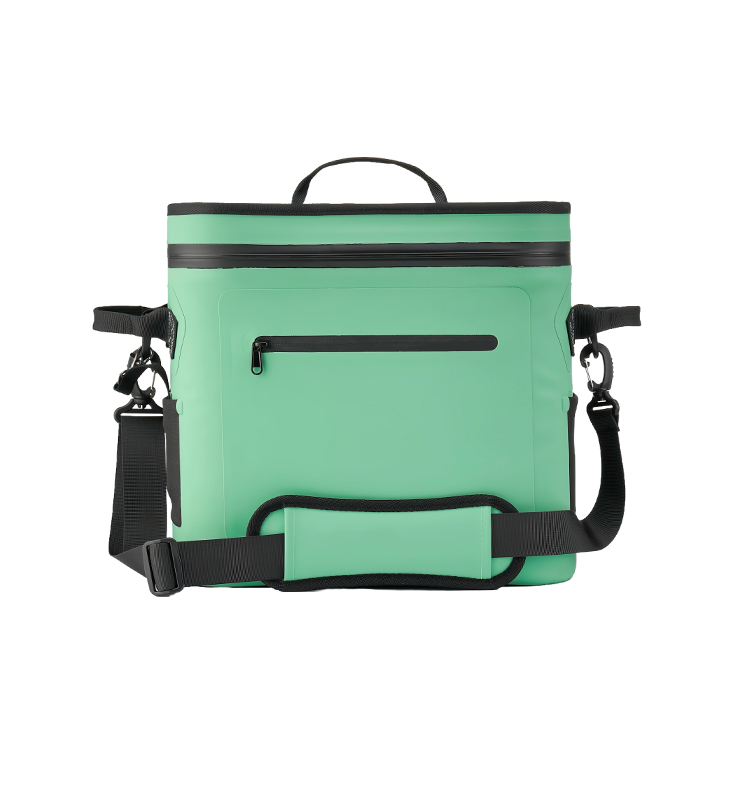
A TPU portable soft cooler is a flexible, lightweight insulated bag constructed with a thermoplastic polyurethane shell — a material that is soft and flexible, not rigid like conventional hard plastic. TPU gives soft coolers exceptional durability, waterproofing, and puncture resistance while keeping the bag packable and lightweight. For most day trips, beach outings, and travel scenarios, a TPU soft cooler delivers excellent cold retention and handling convenience that rigid hard coolers cannot match in portability terms.
Is TPU hard or soft plastic?
TPU (thermoplastic polyurethane) is a soft, flexible plastic — not a rigid one. It belongs to a category of elastomeric polymers that combine the strength of hard plastics with the flexibility and elasticity of rubber. This makes it fundamentally different from the rigid polyethylene or polypropylene used in hard cooler shells.
The key physical properties that define TPU in cooler applications:
- Flexibility: TPU bends and compresses without cracking or permanent deformation. A TPU soft cooler can be rolled, folded, or stuffed into a backpack when empty — impossible with any hard-shell cooler material.
- Tensile strength: Despite its flexibility, TPU has very high tear and puncture resistance — typically 3–5 times stronger than standard PVC at equivalent thickness. A 0.5 mm TPU film can withstand sharp gravel, fishhooks, and coral abrasion that would puncture cheaper nylon-coated cooler liners.
- Waterproofing: TPU is inherently impermeable to liquids and does not require an additional membrane coating. When TPU panels are RF-welded (radio-frequency welded) at the seams rather than stitched, the result is a fully waterproof enclosure with no needle holes — critical for keeping meltwater inside the cooler and external water out.
- Temperature resistance: TPU remains flexible across a wide range — typically from -40°C to +80°C — without becoming brittle in freezing conditions or tacky in summer heat. Standard PVC cooler liners become stiff and crack-prone below 0°C, which is precisely when a cooler is under ice load stress.
- Chemical resistance: TPU resists oils, fuels, salt water, and most food-safe chemicals — relevant for coolers used in marine, fishing, and outdoor environments.
TPU vs other soft cooler materials
| Material |
Flexibility |
Puncture resistance |
Waterproofing |
Cold performance |
Weight |
| TPU |
Excellent |
Excellent |
Excellent (RF-welded seams) |
Excellent |
Light–medium |
| PVC |
Good (warm temps only) |
Moderate |
Good |
Good |
Medium–heavy |
| Nylon outer / foil liner |
Very good |
Moderate |
Moderate (stitched seams leak) |
Moderate |
Light |
| TPE (thermoplastic elastomer) |
Excellent |
Good |
Good |
Good |
Light |
| Canvas / waxed cotton |
Excellent |
Low |
Low–moderate |
Low–moderate |
Medium |
TPU outperforms PVC and standard nylon-lined soft coolers in nearly every functional category relevant to outdoor use. Its primary trade-off is cost — TPU material and RF-welding manufacturing processes are more expensive than stitched nylon or PVC construction, which is why TPU soft coolers typically sit in a higher price bracket than basic budget cooler bags.
How to use a soft cooler effectively
Getting the best cold retention from a soft cooler requires pre-chilling, correct ice packing technique, and disciplined lid discipline. A quality TPU soft cooler can hold ice for 24–48 hours under typical use conditions — but poor packing technique can reduce that to 6–8 hours regardless of insulation quality.
Pre-chill the cooler before loading
The insulation in a soft cooler at ambient temperature absorbs heat on first contact with ice — spending the ice's cooling capacity warming the foam rather than chilling your contents. Pre-chill the cooler 30–60 minutes before your trip:
- Pack it with a small amount of sacrificial ice or ice packs the night before, then drain and reload with your actual supplies.
- Alternatively, store the cooler in a cool location (garage, basement, or air-conditioned room) overnight before packing.
- A pre-chilled cooler can extend ice life by 20–40% compared to loading at room temperature — a significant difference on a multi-day trip.
Ice packing technique
- Use the right ice-to-content ratio: A 2:1 ratio of ice to contents by volume is the practical minimum for good cold retention. For overnight or multi-day use, a 1:1 ratio by weight (equal parts ice and food/drink) is recommended. Under-icing is the most common reason soft coolers underperform.
- Layer correctly: Place a base layer of ice or ice packs at the bottom. Add contents in the middle, then top with more ice. Cold air falls — the top ice layer ensures the contents below stay cold as it melts.
- Use block ice over cubed ice where possible: Block ice has less surface area per unit weight and melts 2–3 times slower than cubed ice. For a day trip, cubed ice is fine. For 24–48 hours, use one large block combined with cubed ice to fill gaps.
- Pre-chill your contents: Never pack warm food or drinks directly with ice — they actively melt ice to equilibrate temperature. Chill everything in a refrigerator first.
- Keep foods separated from beverages: Drinks are accessed far more frequently than food, triggering heat exchange every time the cooler is opened. If possible, use a dedicated smaller soft cooler for drinks and a separate one for food.
Placement and handling during use
- Keep the cooler in shade: Direct sunlight can raise the exterior temperature of a soft cooler by 15–25°C compared to a shaded position — dramatically accelerating ice melt. Place it under a table, in a tent, or cover it with a reflective tarp.
- Minimise opening frequency: Every time you open the lid, warm humid air replaces the cold internal atmosphere. Brief, purposeful access — rather than browsing — meaningfully extends cold retention.
- Do not drain meltwater immediately: Cold meltwater (0–4°C) insulates remaining contents and slows further melting. Only drain when contents start to float or when accessing the bottom becomes impractical.
- Keep the cooler full: Air space inside the cooler warms faster than packed contents. If your cooler is half-full, fill the remaining space with extra ice, ice packs, or even crumpled newspaper to reduce air volume.
Cleaning and storage
- Rinse the interior with clean water after each use and allow to fully air-dry before storing with the lid open — moisture trapped inside promotes mildew and odour in the insulation foam layer.
- For odours or stains, wipe with a solution of 1 tablespoon baking soda per litre of warm water, then rinse. Avoid bleach on TPU surfaces — it can degrade the material over time.
- Store flat or loosely rolled (not compressed) in a cool, dry location. Avoid storing heavy objects on top of a soft cooler in long-term storage — sustained compression can permanently distort the insulation foam.
Should you get a hard or soft cooler?
For portability, travel, and daily use, a soft cooler is usually the better choice. For extended multi-day trips, high-capacity storage, or maximum ice retention, a hard cooler is worth the bulk and weight. The decision comes down to how you actually use the cooler, not which technology is objectively superior.
Where soft coolers win
- Portability and carrying comfort: A TPU soft cooler with shoulder straps or backpack harness can be carried hands-free — impossible with a rigid box. For hiking to a picnic spot, cycling to a beach, or navigating through crowds at a festival, a soft cooler's form factor is genuinely superior.
- Storage when empty: A soft cooler folds flat or compresses to a fraction of its loaded volume. A 30-litre hard cooler occupies 30 litres of storage space whether full or empty. For travellers, apartment dwellers, and anyone with limited storage, this matters significantly.
- Air travel and transit: Soft coolers fit in overhead bins, check in as standard baggage without special handling, and can conform to irregular luggage spaces. Hard coolers require checked luggage and are frequently too large for airline carry-on rules.
- Weight when loaded: A comparable-capacity TPU soft cooler typically weighs 1–2 kg less than a hard cooler before any contents are added — meaningful when you are carrying it any distance.
- Versatility: A quality soft cooler doubles as a dry bag, a grocery insulated tote, or a beach bag. Hard coolers have one function.
Where hard coolers win
- Ice retention duration: Premium rotomoulded hard coolers (Yeti, RTIC, Pelican) with 2–4 inches of polyurethane foam insulation and gasket-sealed lids can hold ice for 5–10 days. The best TPU soft coolers achieve 24–48 hours in typical outdoor conditions. For week-long camping or offshore fishing trips, hard coolers are the only practical option.
- Structural integrity: Hard coolers double as seats, steps, and stable work surfaces — a soft cooler cannot. In a boat or truck bed with shifting loads, a hard cooler stays put and protects contents; a soft cooler can be crushed.
- Bear resistance: In wilderness camping in bear country, certified bear-resistant hard coolers are required or strongly recommended in many national parks. No soft cooler meets bear canister certification standards.
- Large volume efficiency: Hard coolers scale efficiently to 100+ litre capacity without becoming structurally unwieldy. Large soft coolers above 40 litres lose structural shape when not full and become difficult to carry comfortably.
- Dry ice compatibility: Most hard coolers can be used with dry ice (which requires venting for CO₂ release). Dry ice is generally not recommended in sealed TPU soft coolers due to pressure buildup risk.
Decision guide by use case
| Use case |
Recommended type |
Reason |
| Day trip, beach, picnic |
Soft cooler |
Portability, shoulder carry, packs away easily |
| Weekend camping (2 nights) |
Soft cooler (quality TPU) |
48-hour ice retention sufficient; easier transport |
| Week-long camping or fishing |
Hard cooler |
5–10 day ice retention required |
| Air travel with perishables |
Soft cooler |
Fits carry-on or checks easily; folds flat when empty |
| Tailgating / sports events |
Soft cooler |
Carry through crowds; doubles as seat cushion |
| Boat / vehicle storage |
Hard cooler |
Structural integrity; stays in place under load |
| Wilderness backpacking |
Soft cooler |
Weight critical; bear canisters used separately for food |
| Commercial catering / events |
Hard cooler |
Large volume, extended retention, stackable |
The hybrid approach
Many experienced outdoors users own both — a TPU soft cooler for everyday use, travel, and day trips, and a rotomoulded hard cooler for extended backcountry or marine expeditions. The two products serve genuinely different needs rather than competing directly. If budget allows only one, consider your most frequent actual use: if 80% of your cooler use is day trips and weekend outings, a quality TPU soft cooler will serve you better than a hard cooler that spends most of its time in the garage.





 English
 Français
 Español